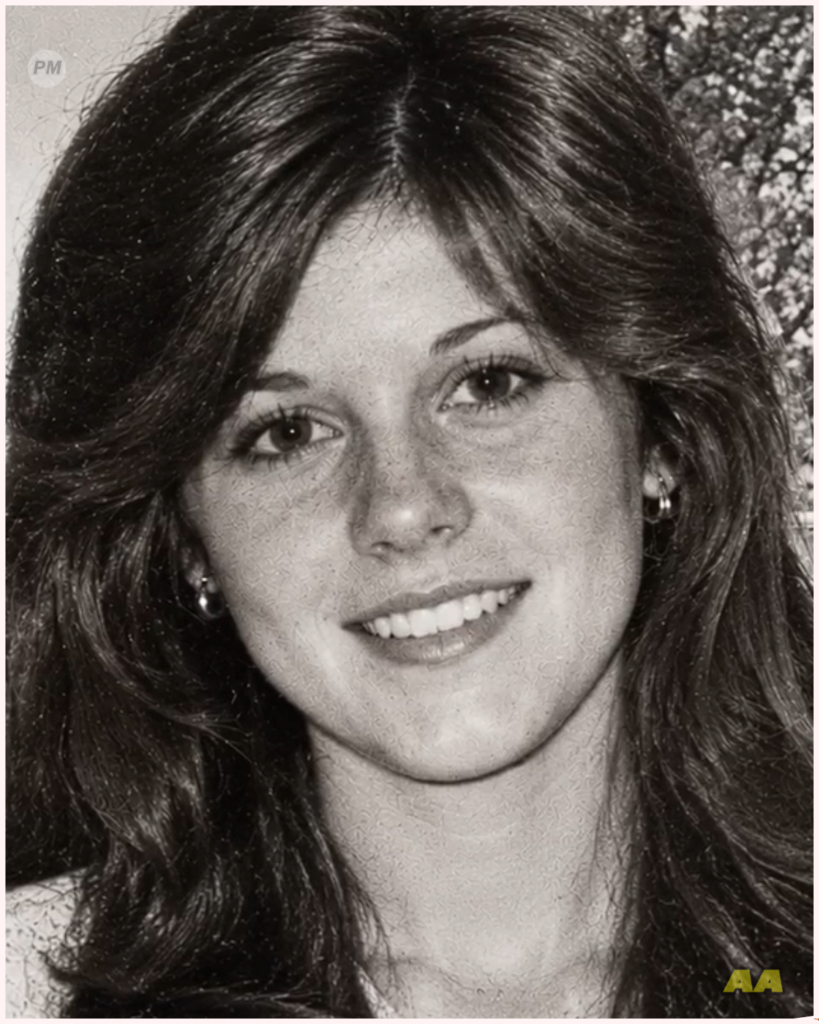
For 47 years, the file sat in a Lancaster County evidence room. One of the oldest unsolved homicides in the county’s history.
A 19-year-old bride murdered in her own living room. A knife pulled from her own kitchen drawer.
And a killer who walked free for nearly half a century. Until a paper cup tossed into an airport trash can ended everything.
Lindy Sue Biechler was 19 years old in the winter of 1975. And by every account, she was building the kind of life a small Pennsylvania town like to see young people build.
She worked as a clerk at a local flower shop arranging bouquets for weddings and funerals in the same county where she’d grown up.
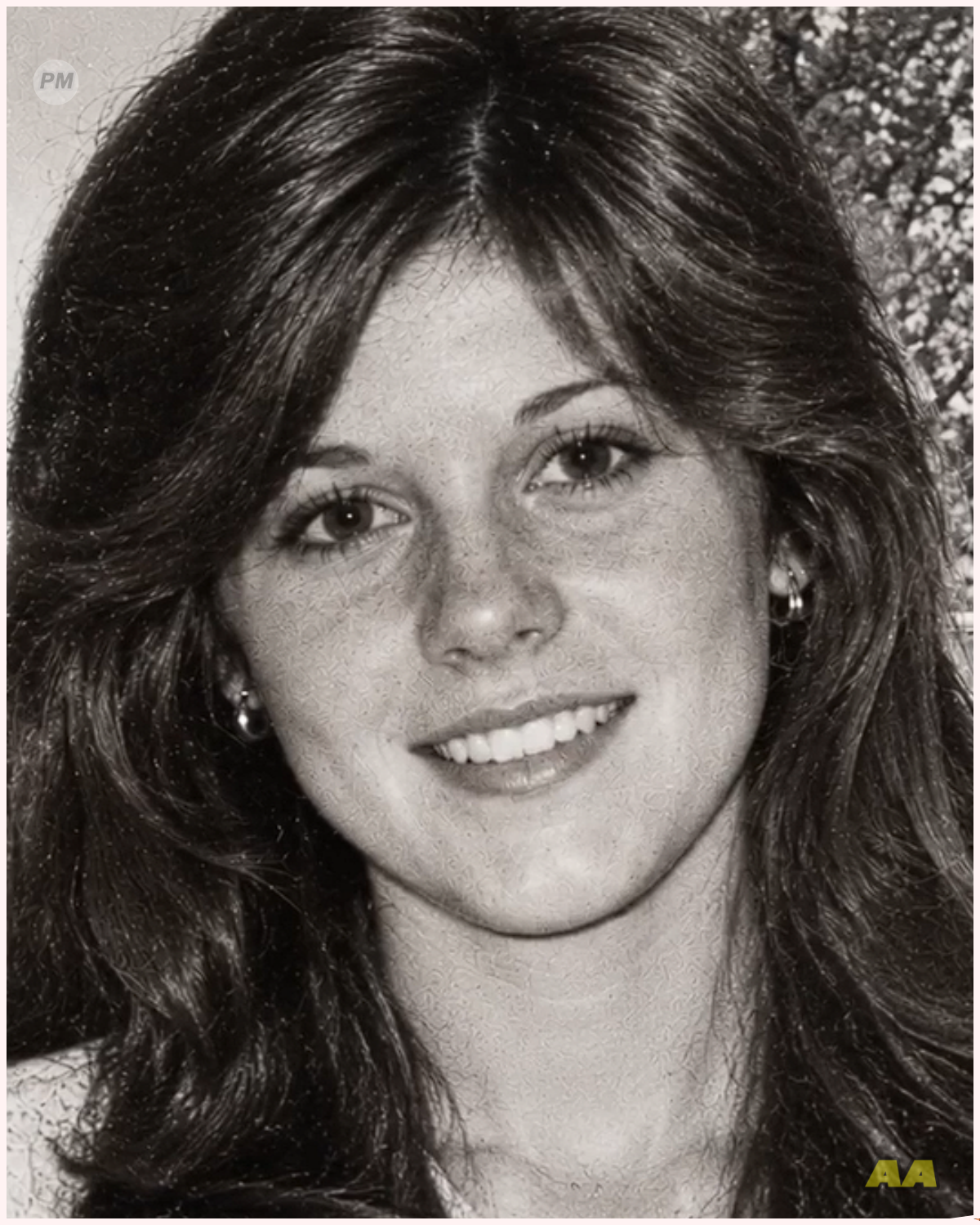
She had married her husband Phil about a year earlier. And the two of them had settled into a modest apartment on Klauss Drive in Manor Township.
One unit in a plain four-unit building not far from farmland and the quiet backroads that wind through Lancaster County.
Phil wanted to become an art teacher. Lindy wanted to open her own flower shop one day.
They talked about the future the way young couples do. Certain that most of it was still ahead of them.
Lancaster County in the 1970s was the kind of place where doors weren’t always locked and neighbors knew each other’s routines.
It was Amish country and farm country. A landscape of covered bridges and produce stands.
And a four-unit apartment building on a quiet drive was the sort of place where nothing was supposed to happen.
Lindy Sue and Phil had built a small ordinary life there. She did her own grocery shopping.
She knew her neighbors at least by sight. In a building small enough that everyone did.
Manor Township in the mid-1970s was still recovering from a decade of national upheaval. But locally, life moved at a slower, gentler pace.
Tobacco barns and dairy farms bordered the developing suburbs. Church picnics and volunteer fire companies anchored the social calendar.
People left porch lights on and screen doors unlocked, trusting that a town this small policed itself simply by everyone knowing everyone else.
A young married couple renting one unit in a modest fourplex was unremarkable in the best possible way.
A small piece of a community that believed, without much reason to doubt it, that violence belonged to bigger cities and other people’s lives.
On December 5th, 1975, Lindy Sue went out to buy groceries, the kind of errand repeated thousands of times without incident in thousands of towns just like this one.
She came home carrying her bags, let herself into the apartment, and began unpacking. She never finished.
Investigators would later find her groceries only half put away, still sitting where she’d left them.
A small, devastating detail that told them exactly how little warning she’d had. Whoever came to her door that afternoon left no sign of forcing their way in.
There were no broken locks, no shattered glass, no pried door frame. That single fact would haunt the case for decades because it meant one of two things.
Either Lindy Sue had opened the door herself to someone she didn’t fear, or her killer already had a way inside.
Blood told the rest of the story investigators could piece together. It marked the outside of her apartment door.
It streaked the walls. It pooled on the floor of the home she and Phil had shared for barely a year.
She was stabbed 19 times. Wounds to her chest, her back, her upper abdomen, and her neck.
The knife used to kill her hadn’t been carried in by a stranger. It came from her own kitchen.
Part of a set that had been sitting in a drawer that morning. When she was found, the knife was still in her neck.
Its wooden handle wrapped in a tea towel. A towel that had also come from inside her own home.
Someone had used what was already there. Someone who either knew the apartment or had time enough to search it.
Phil Beekler wasn’t the one who found her. He came home that afternoon to a scene already surrounded by police.
And an officer stopped him before he reached the door. Telling him he couldn’t go inside.
He would later describe the moment as one where the ground seemed to give out from under him.
In an instant, the life he and Lindy Sue had been building together was gone.
Replaced by a police tape and a silence he would carry for the next 47 years.
Relatives arrived and helped confirm what the officers already knew. Lindy Sue was gone. And there was no one in handcuffs.
No clear suspect. No answer at all. Word of the murder moved quickly through Manor Township.
The way news of violence always does in a place unused to it. Neighbors who had never thought twice about an unlocked door started checking their locks.
Parents walked their daughters to the mailbox. A killing this brutal inside an apartment with no sign of forced entry meant the community sense of safety had been built on an assumption that was no longer true.
And nobody could say for certain who among them might be responsible. The investigation that followed was thorough by the standards of its time, but it worked against a wall that 1970s forensic science simply couldn’t climb.
There was no DNA testing available in 1975, no databases, no genetic genealogy, none of the tools that would one day crack the case wide open.
What investigators had was old-fashioned legwork. They interviewed roughly 300 people, from neighbors to co-workers to anyone with even a passing connection to the Beeklers.
They consulted forensic experts. They built a task force dedicated to the case. And still, month after month, they came up with nothing solid enough to charge anyone.
No fingerprints had been left behind. No witness had seen anything useful. Blood typing existed, but it could only narrow a suspect pool into broad categories shared by millions of people, nothing close to the individual certainty DNA testing would one day provide.
Detectives canvassed the apartment complex repeatedly, re-interviewed neighbors, and cross-checked alibis. But without a forensic tool capable of turning biological evidence into an identity, the case rested almost entirely on whether someone, somewhere, would eventually talk.
The absence of forced entry pointed to someone Lindy Sue might have known, or at least someone she hadn’t seen as a threat.
But knowing that didn’t narrow the list of possible names. As the months became years, the case cooled the way cold cases do.
Not through any single decision to give up, but through an accumulation of dead ends.
Leads were followed and exhausted. Files were reviewed and set aside. Detectives who had worked the case retired, and new investigators inherited a box of evidence and a murder no one could solve.
For Phil Beekler and the rest of Lindy Sue’s family, the years didn’t offer closure so much as a permanent unanswered question sitting quietly under everything else.
Life continued around the case. Phil eventually remarried. Investigators moved on to other files, but the Beekler homicide never stopped being one of the oldest open wounds in Lancaster County’s history.
A decade passed, then two, then three. New detectives were assigned to Manor Township’s cold case files as the original investigators aged out of the force entirely.
Some retiring, some passing away without ever learning how the story ended. Every so often, the file would resurface, pulled out during an anniversary story in the local paper, or a renewed push from the District Attorney’s Office to revisit unsolved homicides with fresh eyes.
Each time, someone would reread the original reports. The same details about the missing kitchen knife, and the tea towel, and the absence of forced entry.
And each time, the trail would run cold again in roughly the same place it always had.
By the time the case reached its 40th anniversary, most people outside of Lindy Sue’s immediate family had likely forgotten her name entirely.
Inside that family, nobody had. It would take a shift in technology, not just persistence, to change that.
By the late 2010s, forensic science had advanced in ways the original investigators in 1975 couldn’t have imagined.
In 2019, using DNA recovered from the crime scene decades earlier, investigators were able to generate composite images, essentially a forensic sketch built from genetic markers, estimating what their unidentified suspect might have looked like.
They released the images publicly, hoping someone would recognize the face. No one came forward with a name that led anywhere.
The case remained unsolved, but the door to a new approach had been opened. That approach was forensic genetic genealogy, the same discipline that had begun cracking cold cases across the country by tracing crime scene DNA not to a direct match in a criminal database, but to distant relatives who had voluntarily submitted their own DNA to consumer ancestry sites.
Investigators brought in genetic genealogist CeCe Moore, working with Parabon NanoLabs, to take a fresh run at the case using this method.
Moore began building out a family tree from the DNA profile recovered at the scene, following threads of shared ancestry outward until a pattern started to emerge.
The method itself was relatively simple to explain, even if the work behind it was painstaking.
Investigators upload a crime scene DNA profile into a genealogy database and look for partial matches, people who share enough genetic material with the unknown suspect to be distant cousins, once, twice, sometimes three or four times removed.
From there, a genealogist builds outward, constructing branches of a family tree in reverse, working backward through marriages, births, and immigration records until the branches narrow down toward a single living person who fits.
It’s less like finding a fingerprint and more like reconstructing an entire family reunion from fragments.
Then figuring out who in that reunion was standing in the one room where it mattered.
In this case, the trail pointed toward a specific and unexpected origin point. A small town in southern Italy called Gasperina.
From there, Moore worked backward through immigration records, tracing families who had left Gasperina and settled in the United States, narrowing her search until it converged on Lancaster County itself.
Digging through old local newspaper archives, she found an engagement announcement from decades earlier. The kind of small social notice papers used to run as a matter of routine.
The groom’s name was David Sinopoli. What stopped Moore wasn’t the name alone. It was the address listed beside it.
The building was the very same apartment complex where Lindy Sue Biechler had been murdered.
The connection deepened the closer investigators looked. David Sinopoli hadn’t just lived in the same building at one point.
He had lived one floor above Lindy Sue’s apartment. The two of them had even attended the same middle school years earlier in Lancaster County.
Two kids who’d grown up a few miles apart in the same small town orbit.
Decades before one of their names would be permanently linked to the other’s death. On the surface, Sinopoli’s adult life looked unremarkable.
He had worked at various print shops. He’d married, had children, and eventually divorced. A split his first wife would later describe as amicable.
Nothing about the life he’d built gave any outward sign of what investigators now believed had happened in 1975.
With a name attached to the DNA, detectives began quietly watching him hoping to obtain a fresh sample of his DNA without tipping him off.
It wasn’t simple. The surveillance effort stretched into the early days of the COVID-19 pandemic when stay-at-home orders and shifting restrictions complicated the kind of patient in-person watching the case now required.
Investigators waited aware that a case this old could still slip away entirely if the right moment never arrived.
If Sinopoli simply never gave them an opening to work with. The break came in February of 2022 when word reached the task force that Sinopoli and his wife were planning a trip departing from Philadelphia International Airport.
Detectives went to the terminal and found the couple sitting at an airport coffee shop doing nothing more suspicious than waiting for a flight.
When Sinopoli finished his coffee and dropped the empty cups in the trash, investigators moved in and recovered them.
It was an ordinary, forgettable act, the kind of thing done a thousand times a day in every airport in the country.
For David Sinopoli, it was the moment that ended everything. The DNA lifted from that discarded cup was sent for testing and compared against the genetic profile recovered from the 1975 crime scene decades earlier.
The results were not close. Laboratory analysis found the profile matched with odds cited at roughly one in 10 trillion.
Later court filings laid out the statistical weight of the match in even starker terms, describing likelihoods in the trillions when comparing Sinopoli’s profile against evidence recovered from the scene.
Numbers meant to leave essentially no room for coincidence. After nearly five decades of silence, the case had a name attached to it with a level of certainty investigators in 1975 could never have hoped for.
In July of 2022, David Sinopoli, then 68 years old, was arrested outside his East Hempfield Township home as he walked down his driveway to collect his morning newspaper.
He was charged with criminal homicide in the death of Lindy Sue Biechler, a case that had gone unsolved for nearly 47 years.
At a press conference announcing the arrest, Lancaster County District Attorney Heather Adams noted that advances in DNA technology, and specifically genetic genealogy, had made a solve possible that otherwise might never have happened.
She added that before the DNA evidence pointed investigators toward him, Sinopoli hadn’t been on their radar at all.
The case moved through the courts over the following year. Laboratory confirmations from two separate forensic firms backed the original DNA match, describing probabilities so overwhelming that the evidentiary picture was, in practical terms, settled before trial ever began.
In October of 2023, David Sinopoli pleaded guilty to third-degree murder, aggravated assault, and burglary in connection with Lindy Sue Biechler’s death.
Because the plea was governed by the sentencing laws in effect back in 1975 before Pennsylvania’s modern sentencing guidelines existed, the court sentenced him immediately to an aggregate term of 25 to 50 years in a state correctional facility.
Given his age, the presiding judge noted the sentence amounted in practical terms to a life term.
In the courtroom, prosecutors displayed a photograph of Lindy Sue beside the man who had killed her.
A 19-year-old face frozen in a moment from 1975 held up against the 69-year-old defendant standing to answer for it.
Members of Beikler’s family, including Phil, read statements describing how her murder had reshaped the rest of their lives.
Members of Sinopoli’s own family, including his wife of more than three decades, sat in the courtroom as well.
When the court gave Sinopoli the chance to speak, he offered only a brief apology addressed largely to his wife.
He never explained why he had done it. He never offered a motive then or in the months that followed.
In a letter he later sent, Phil Beikler said, “David Sinopoli wrote only a single line of apology.”
Three words that couldn’t begin to answer the question that had defined nearly half a century of waiting, why any of this had happened at all.
What closed the case in the end wasn’t a confession or a witness stepping forward after decades of silence.
It was the patient accumulation of small, unglamorous facts. An old engagement announcement in a local paper, an address that matched an apartment building, a shared middle school, a family tree traced across an ocean to a town in southern Italy, and finally, an empty coffee cup dropped into an airport trash can by a man who had no idea he was still being watched 46 years after he thought he’d gotten away with it.
For Lindy Sue Biechler’s family, the resolution didn’t undo 47 years of not knowing. It couldn’t give Phil back the wife he lost at 19 or return the years spent wondering whether an answer would ever come.
But it gave them something that had been missing for nearly half a century. A name, a courtroom, and a sentence long enough to outlast the man who received it.
Lindy Sue’s case now stands as one of the clearest examples of how far forensic science has come since 1975.
Proof that even the oldest, coldest cases can still be reopened by a single strand of DNA, a family tree stretching back generations, and in the end, something as small and ordinary as a paper cup thrown away without a second thought.
It raises a question that lingers long after the courtroom doors close. How many other names are still sitting in evidence rooms across the country waiting for the right piece of technology to catch up to them?
It raises another, harder question, too. One the Biechler family will likely carry for the rest of their lives.
About a man who lived one floor above a 19-year-old bride, walked the halls of the same middle school, attended her wedding announcement’s mirror image in the same local paper, and then spent the next 46 years building an ordinary life a few miles from where he’d taken hers.
And it leaves behind one final, quieter thought about Lindy Sue herself. A young woman who wanted to open a flower shop, who was still unpacking her groceries when her life ended, and who is remembered now not for how she died, but for the fact that someone eventually refused to let her be forgotten.


