The date was February 14th, 1976. It was a Saturday and it was Valentine’s Day.
Late that night, two 14-year-old girls were seen walking together near 9th Avenue and 12th Street Southeast in Calgary, heading toward downtown.
By the next morning, both of them were lying side by side on the pavement beneath the Happy Valley underpass, just west of the city.
Nobody had tried to hide them. For decades, the official [music] story of what happened to Eva Dvorak and Patsy McQueen was that there might not be a crime at all.
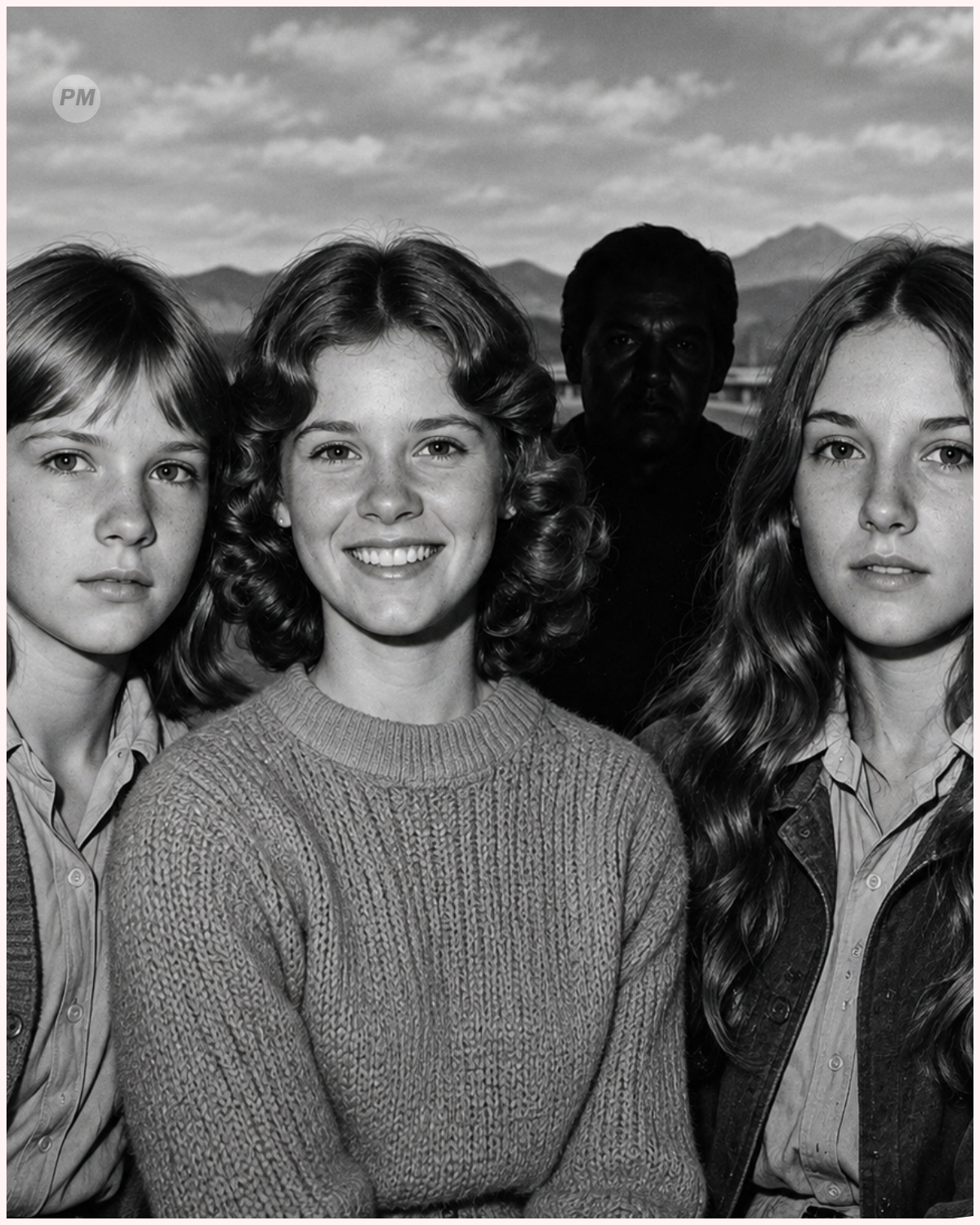
A medical examiner leaned toward a drug-related accident. A coroner’s jury could not decide how they died.
A judge at the inquest suggested the real problem was that girls so young had been allowed to run free.
Seven months later, a 20-year-old woman who had set out to hitchhike to the mountains was found in a ditch beside a gravel road west of Calgary.
In her hand, investigators found a clutch of long black hairs. They were not hers.
Five months after that, a 19-year-old bank worker from Cape Breton was found dead just outside the city limits near the airport.
Four young women were killed in just over a year. There were hundreds of officers and hundreds of suspects and there was no arrest.
Then came a second date, May 17th, 2024. That day at the headquarters of the Royal Canadian Mounted Police in Edmonton, police put four photographs on display and named one man.
He was an American fugitive who had slipped into Canada illegally, who used nine different aliases, [music] and who had been dead for 13 years.
Across 48 years and 853 suspects and persons of interest, his name had never once been written in the file.
This is the story of Eva, Patsy, Melissa, and Barbara, of the man with nine names, and of the file he was never in.
To understand how he stayed invisible for so long, >> [music] >> you have to start with who these four were, and with the city they were living in.
Welcome to Cold Case Redemption, >> [music] >> where we follow the cases that sat unsolved for decades all the way to the answer.
If you have ever wondered how a man hides in plain sight [music] for half a century, subscribe now, because this case shows you exactly how.
Now, Calgary in the mid-1970s was an oil boom town, and it pulled young people in from all over the country.
Hitchhiking was a popular way to get around. In 1976, the Mounties formed a special squad to look for patterns in the killings of young women across Western Canada, cases sometimes grouped together as the Yellowhead murders.
The highway at the center of so many of them would later be known as the Highway of Tears.
Keep that in mind, because it shaped not only who was vulnerable, but who would later be blamed.
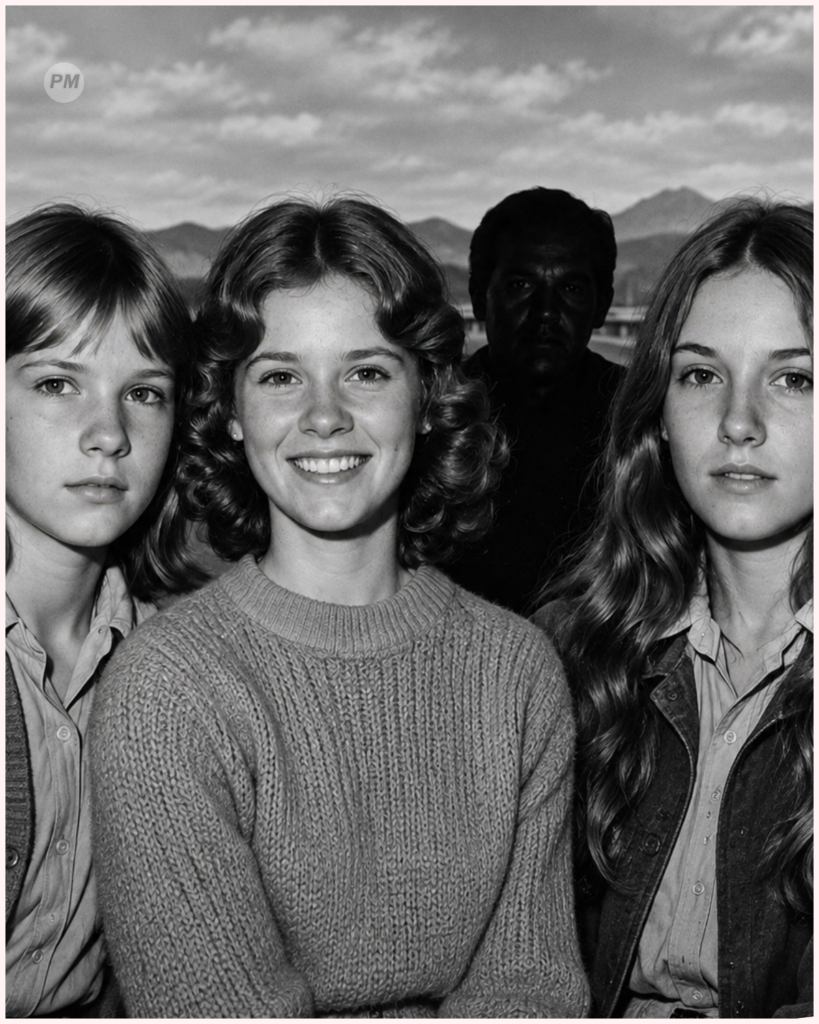
Eva Violet Dvorak and Patricia Marie McQueen were students at Ian Bazalgette Junior High School >> [music] >> in the southeast Calgary community of Dover.
Everyone called Patricia Patsy. She was one of 11 children. Her family remembers a typical teenager, full of life, adventure, and curiosity, who loved sports, music, singing, and dancing, and who could make any of them laugh at themselves or at each other.
She was, they said, strong and independent at 14. She could not wait till she was old enough to be able to travel and see the world, her family wrote.
Eva was the one who never sat still. Her family describes a bright smile and a bubbly personality that lit up a room, and a girl who was always dancing and singing at any time of day.
She loved swimming, roller skating, and ice skating with her sisters and her cousins. She had sisters, including an older sister, Martha, who would one day keep a stash of the newspaper clippings written about her.
On Thursday, February 12th, 1976, the two friends were caught drinking at school and sent away.
They did not go home. For the next few days, they stayed together, moving between the homes of friends around the city.
A missing person’s report was filed. They were 14 years old. Melissa Ann Rehorek was 20.
She moved to Calgary from Windsor, Ontario, in the spring of 1976, looking for new opportunities, and found work as a housekeeper at the International Hotel.
She lived in a residence downtown. Her mother kept trying to bring her home to Windsor, and Melissa kept putting it off.
She was enjoying herself. She had a line on a job in child care. Her family says she was fun-loving, adventurous, hard-working, and trusting, [music] and that she loved going to Banff for the nature and for the sheer curiosity of seeing Canada.
Late that summer, she wrote a letter to her mother. She signed it, “A happy Melissa.”
Barbara Jean McLean was 19, from Inverness on Cape Breton Island in Nova Scotia. Her father, Dr.
Jim McLean, was a family doctor and surgeon, who had also served as a member of the provincial legislature.
He later explained why she left. Inverness, he said, was a run-down former mining town without many opportunities for a young girl fresh out of high school.
And she wanted to get away from home and stand on her own two feet.
She had been in Calgary about 6 months living with her two brothers. She worked in a restaurant first, then at a bank.
She was homesick, and she had a 2-week visit home planned for early March. The longer plan was to return home and start university the following year.
Her brother, also named Jim, put it simply. She was full of life and smart as hell.
Newspapers at the time described her as friendly and outgoing. Her brother, Bobby, called her a trusting girl, perhaps too trusting.
Eva and Patsy were best friends. But as far as any record shows, Melissa never met them.
And Barbara never met any of the other three. Four young women from three provinces, living separate lives in the same city, were connected only by the man who would take them.
Which brings us back to that Saturday night. Around midnight, as Valentine’s Day turned into Sunday, Eva and Patsy were seen walking near 9th Avenue >> [music] >> and 12th Street Southeast, heading toward downtown.
It is the last confirmed sighting of either girl alive. If Eva, Patsy, Melissa, and Barbara already feel like people to you, >> [music] >> and not just names in a police file, hit the like button.
It helps more people meet them the way you just did. Now, it was Sunday, February 15th, 1976.
Shortly before a quarter to 11:00 in the morning, a man driving toward Cochrane spotted them at the side of the road beneath the Happy Valley underpass on Highway 1.
Eva and Patsy were lying face down side by side on the cold pavement. Their clothes were undisturbed.
There was no obvious sign of a struggle. There were tire tracks pressed into a shallow crust of ice.
Investigators examined the tire impressions and interviewed witnesses. Autopsies found that both girls had died of asphyxia.
Biological evidence belonging to an unknown man was recovered and preserved in both cases. In 1976, that kind of evidence could be collected and stored.
It could not be turned into a name. Toxicology showed the girls had been drinking and had taken drugs.
And that single finding would shape the next four decades of this case. Seven months later, Melissa had a couple of days off from the hotel.
She packed her toothbrush, her wallet, and some toiletries into a red plastic shopping bag and told people she planned to hitchhike west and spend her days off in the mountains.
A roommate saw her before she left to hitchhike. A Calgary Transit driver later told investigators he may have dropped her off in Bowness near Highway 1 on September 15th.
The next morning, people driving on a remote gravel road 22 km west of Calgary found her lying in a ditch.
This time, investigators knew immediately that it was murder. There were signs of a struggle on the road and a man’s shoe print in the dirt left by a North Star shoe.
She had been struck in the head and strangled. Nothing had been taken. Her wallet was still there, with $5.50 inside.
And in her hand, there were the hairs. She was holding a clutch of long black hairs that were not hers.
Police believed they had come from the man who killed her. Five months after that, on the night of February 25th, 1977, Barbara was at the Highlander Hotel with her boyfriend and her brother Bobby.
She argued with her boyfriend and left on her own, heading to a party. She was last seen walking away from the hotel alone in the early hours of February 26th.
About 6 hours later, a man walking his dog found her near 6th Street and 80th Avenue Northeast, close to the Calgary Airport and just meters [music] outside the official city limits.
Her jacket was on inside out. There were bruises on her arm and her neck, and the fingers of her left hand were bloodied.
She had fought back. She had been strangled. And once again, investigators [music] recovered black hair that was not hers.
Years later, the Mounties would lay out what the four cases had in common. All four victims were young.
All four were taken while walking late at night. All four were found on the outskirts of Calgary, fully clothed with no attempt to hide them.
Each had been attacked by [music] the same man. Each had died of asphyxiation. And in every case, the killer left DNA evidence behind.
Police in 1977 connected Melissa and Barbara almost immediately. By late March, the Calgary Herald was reporting that the Mounties and city police believed Barbara’s killer might be responsible for other deaths as well.
The pattern was visible. The physical evidence was already sitting in exhibit bags. It should have been enough.
It was not. If this case is already getting under your skin, subscribe to the channel because what comes next is the part where an inquest into two dead 14-year-olds ended up talking about the girls instead of the man who left them on a highway.
Now, back to the underpass. The day after the girls were found, a Mountie Corporal named Roy Penoyer told reporters there was a possibility of murder.
It was only a possibility. Investigators learned the girls had been sent from school for drinking and had spent the following days with friends [music] around the city.
One newspaper headline announced that the girls had taken acid, marijuana, and alcohol. The Chief Medical Examiner found that the girls had asphyxiated, which could have meant strangulation or smothering.
But he concluded that a drug-related accident was more likely. The drugs they had taken were not known to be fatal, so police wondered whether some new substance was killing people without showing up in testing.
In the middle of the 1970s, with the drug scene changing fast, it sounded plausible.
That is exactly what made it dangerous. That fall, a coroner’s jury could not decide how Eva and Patsy died.
[music] But it made a point of saying the girls had spent the last days of their lives with little regard for their personal safety.
The judge presiding over the inquest, Kenneth Plomp, went further. >> [music] >> He called it a disgusting situation that girls this young can be allowed to run so free.
Two 14-year-old girls had been found dead on a highway [music] with the traces of an unknown man recorded in the file, and the official conversation was about their freedom.
With drugs seen as the probable cause, the only crime on paper was the way someone had disposed of their bodies.
Eva and Patsy were quietly set apart from everything that came next. And this seemed small at the time.
After Melissa was killed, police told reporters there was only a remote possibility her death was connected to the girls at Happy Valley.
Because Melissa hitchhiked, they looked more closely at another case, that of Pauline Brazeau, a 16-year-old Métis mother from Saskatchewan who had moved to Calgary with her baby daughter and who was found stabbed to death outside the city that January.
That theory was wrong. Pauline’s killer turned out to be a different man entirely, Ronald James Edwards, who in March 2025 pleaded guilty to manslaughter in her death.
He was sentenced to 6 and 1/2 years. Two different killers were on the rural roads west of Calgary in the same year.
When Barbara died, police linked her to Melissa at once. Both were young women walking alone at night.
Both were strangled and left fully clothed on the edge of the city. And there was black hair at both scenes.
Investigators interviewed everyone Barbara had been with that night. They checked known offenders in the area.
They questioned hundreds of taxi drivers on the theory she had taken a cab. And more than 600 black-haired men gave hair samples, which police hoped could be matched to what they had found.
In 1977, hair could only be compared under a microscope, one sample beside another. None of them matched.
Across the four cases, dozens of officers chased down more than 800 tips, took 500 statements, and investigated 853 suspects and persons of interest well into the 1980s.
Linking cases between police agencies meant searching by hand through boxes of documents and index cards.
And in 1981, one of the officers working the Calgary cluster, Sergeant Ray Forsythe, offered reporters a theory about why the killings had stopped.
It’s possible that if there is one culprit, he’s now in jail and we won’t find him.
Hold on to that sentence. In 2003, new DNA testing finally confirmed what police had suspected for a quarter century.
The same man had killed Melissa and Barbara. His genetic profile had no name attached to it, so he became simply profile A.
The profile was entered into Canada’s national DNA databank, which compares crime scene evidence against the DNA of convicted offenders.
The Mounties later described what happened next in a single line. [music] The profile was uploaded into the databank and went without a hit for over 20 years.
Eva and Patsy’s evidence, meanwhile, stayed locked away at the Mounties detachment in Cochrane, untested by the new science.
The case went quiet. The man it belonged to did not. Now, pay attention to this next part because it explains everything that happened after.
The man police had been hunting since 1976 was never hiding in the shadows. He was living in plain sight under names that were not his for most of the years they were looking.
His name was Gary Allen Srery. Srery. He was born in 1942 in Oak Park, Illinois, just outside Chicago, the first of three children, and moved with his family to California in the mid-1950s.
He married in the early 1960s, had a son, and divorced [music] in 1969. Melissa and Barbara came west to Calgary to start their lives.
Srery came north to get out from under his. In 1965, in Los Angeles, he was convicted of forcible rape, kidnapping, and related offenses.
The state of California formally classified him as a mentally disordered sex offender and committed him to a mental health facility.
There were more charges, more custody, and time in San Quentin. Then, in 1974, he attacked a woman who was hitchhiking in the San Fernando Valley.
He was charged. He posted bail. And he vanished. Sometime between the summer of 1974 and February of 1976, he crossed into Canada illegally.
There is no official record of him entering the he was in Calgary. And he was not Gary Srery anymore.
In Calgary, he was Willie Blackman. He was Rex Long. He also went by Travis Blackwell, David Blackwell, and Gary Delorme.
By the Mounties’ count, >> [music] >> he used nine different aliases in his lifetime.
Under those names, he obtained illegal identification and social assistance, [music] worked occasionally for cash as a cook and kept changing his appearance, his address, [music] and his car.
Photographs from before 1976 show him with long dark hair parted in the middle, >> [music] >> wearing a headband.
Later, ones show a full beard, then a clean-shaven face with short hair. The evidence sat in exhibit bags.
During those same decades, the man who left it was living his life. From about 1979, he moved around British Columbia through Vancouver, the Sunshine Coast, and the Fraser Valley, including Halfmoon Bay, Abbotsford, and Chilliwack.
He worked odd jobs and told people he cooked [music] and that he worked for the British Columbia Ferry Service.
He had relationships. Former partners described him to police as charming. >> [music] >> In 1998, he was convicted of a violent offense against a woman in New Westminster, British Columbia, and sentenced to 5 years.
>> [snorts] >> On June 30th, 2000, while he was serving that sentence, Canada’s National DNA Data Bank opened.
In 2003, profile A was uploaded into that database. And in 2003, Gary Allan Srey finished his sentence and was deported to the United States.
Think about that for a second. The public record does not explain why his DNA and profile A never met.
It only records that they didn’t. For the Mounties, the most troubling part was simpler still.
Apart from that one case, Srey appears to have had no meaningful contact with Canadian police from the day he crossed the border until 1998.
More than 20 years went by and nobody knew he was here. Nobody was looking for Gary Srery.
But four families had never stopped looking for an answer. In July of 1977, five months after Barbara died, her father spoke to the Albertan newspaper.
Dr. Jim Maclean made a prediction. “It may take two or three years, but I’m confident that the murderer will be behind bars,” he said.
“I know the man will be found. It’s all a matter of time.” In the same interview, he said it had been a terribly painful experience for him and his wife.
“They had called the Mounties in Calgary several times,” he said, “and knew no more than they had on the day she died.
They had stopped calling for a while because it kept things too stirred up.” Dr.
Maclean died in 2000 at 79, the same year Canada’s DNA Data Bank opened. He never learned the man’s name.
In Calgary, the girls’ families carried their own version of that waiting. >> [music] >> In February 2016, on the 40th anniversary, Eva’s older sister, Martha Dvorak, pulled out a stash of yellowed newspaper clippings for a reporter from the Canadian Broadcasting Corporation.
The early coverage had been heavy. Then it faded until the only stories left were the ones written on round number anniversaries.
>> [music] >> “It just seems like nobody cares, you know?” She said. “And I mean, it’s 40 years and it still hurts for both of the girls.”
Patsy’s older brother, Gord McQueen, said he thought about it all the time and that his brothers and sisters did, too.
“We don’t know what happened. That’s the thing,” he said, [music] “and that kind of eats at you.”
Over Over years, the Mounties said, tips came [music] in and everyone was followed up.
None led to an arrest.” Martha still hoped that someone would come forward. 40 anniversaries of February 15th came and went.
For 40 years, the families wondered what Eva and Patsy would have become. As the years went by, Patsy’s family would later write, “They came to think [music] they would never find out in their lifetimes what happened.”
But they never gave up hope. She would have [music] turned 62 in 2024. Her family still wonders whether she would have been a grandmother by now.
Then, in the fall of 2022, another of Eva’s sisters, Anita Vukovich Kohut, picked up the phone and called police to check on the case.
She was told the file had already been reopened. She had no idea why. The reason was a name written in a prisoner’s notes.
If the patience of these families hit you the way it hit me, give this video a like.
People like Martha, Gord, and Anita are why cases like this stay open. And the next part is where their waiting finally meets the science.
Now, 2 months before Anita’s call, the Mounties had received a tip. An inmate had found Patsy McQueen’s name >> [music] >> in the notes of another inmate.
The tip itself went nowhere. But the investigator handling it went back into the file and realized there were exhibits from the Happy Valley case that had never been tested with modern DNA technology.
The head of the Mounties Historical Homicide Unit would later say he was grateful for that tip because it made them open the box.
Around the same time, inspired by the capture of California’s Golden State Killer, a case cracked in 2018 when genealogists traced a former police officer through the DNA of his distant relatives, the Mounties and the Calgary Police Service turned a newer tool on Melissa and Barbara’s killer.
It is called investigative genetic genealogy and it works in a completely different way from the data bank.
A national data bank can only find a man who is alr- already in it.
It compares crime scene DNA against convicted offenders. >> [music] >> And if the killer’s sample was never collected, it can search forever and come back empty.
For 20 years, that is exactly what happened to profile A. Genetic genealogy goes sideways instead.
Ordinary people take consumer DNA tests to find relatives and some of them share their results in databases that investigators are permitted to search.
A killer’s DNA will partly match his cousins and his cousin’s cousins. Genealogists then build out family trees from public records, births, marriages, obituaries until the branches close in on one household and then one person.
Working with a firm called Convergence Investigative Genetic Genealogy, investigators built a family tree of more than 6,400 people related to the unknown man reaching back to the early 1700s.
It was the same firm that had helped identify Pauline Brazeau’s killer. It took 6,400 names to find one.
Within months, they had narrowed it down to a small group of brothers. One of those brothers had already made headlines for a long record of violent crimes against women.
His name was Gary Allan Srery. Meanwhile, the results came back from Happy Valley. The evidence preserved from Eva and Patsy in 1976 match profile A.
The same man was responsible for all four. Nearly half a century after a medical examiner called it a likely accident, the deaths of Eva Dvorak [music] and Patsy McQueen were finally recognized as homicides.
What followed was a cross-border investigation. Police placed Srery in the Calgary area at the time of all four killings.
They reviewed the cases of eight women who had survived attacks by him. And with the help of Interpol and the Idaho State Police Forensic Services, Srery’s own DNA was confirmed as a match to the unknown male profile found in all four Calgary cases.
Staff Sergeant Travis McKenzie, who leads the Historical Homicide Unit of the Alberta Mounties, later put it this way.
In the investigation world, we have the saying that your suspect’s name is in the file.
But Srery’s name was never in the file. He was never interviewed. He truly went unnoticed.
He was not one of the 853. He was not one of the 600 men who gave their hair.
There would be no arrest. Gary Allan Srery had been dead since 2011. The last time Gary Srery stood in a courtroom, it had nothing to do with Calgary.
In June 2008, he was 65, living in Plummer, Idaho, and registered in that county as a violent offender.
At the Mousetrap Bar in Coeur d’Alene, he met a 44-year-old woman who was on crutches and drove her home.
Inside her house, he attacked her for hours. A few minutes after 5:00 in the morning, her boyfriend came home, heard her crying for help, and confronted [music] him.
Schuyler ran. A jury convicted him. In October 2009, he stood before Kootenai County District Judge Charles Hosack.
At 67, he was still a big man, 6 ft tall and 225 lb. His hair dyed an unnaturally dense black.
The woman he attacked walked to the witness box leaning on a cane. She had suffered a stroke since the attack [music] and it had left her impaired on her left side.
She said his name over and over until he looked at her. Then she said, “You damaged me and I can’t be repaired.”
Prosecutor Terry Laird asked for life, telling the judge that as long as he was in society, >> [music] >> he was a risk to women.
The judge noted his tendency to target women who were especially vulnerable. Schuyler did not speak.
Judge Hosack sentenced him to life in prison with parole eligibility after 8 years. Afterward, the woman told a reporter she felt she had done her job and that her job had been protecting all the other women.
Nobody in that courtroom could have known about Calgary. Nearly 15 years later, on May 17th, 2024, Superintendent [music] David Hall, Inspector Brianne Brown, and Staff Sergeant McKenzie stood in front of reporters in Edmonton and walked through all four cases one by one.
They showed photographs of the victims, of the places they were found, [music] and of the killer and asked anyone who had known him under any of his names to come [music] forward.
Hall said plainly that identifying the killer would not bring Eva, Patsy, Melissa, or Barbara back.
Mackenzie admitted that he would have loved nothing more than to announce that they had just put handcuffs on him and sent [music] him to face a Canadian court.
That is not how this one ends. It is worth being precise about what that announcement was and what it was not.
It was an official police determination based on DNA. It was not a verdict. Gary Allan Schary was never charged with these killings, never tried for them, and never had the chance [music] to answer them.
No defense lawyer ever tested the evidence in front of a jury. What the Mounties can say is that his DNA was confirmed as a match to the unknown male profile in all four cases.
What that DNA cannot say is how he found them, where he took them, or what happened in the hours in between.
Those answers died with him. Staff Sergeant Mackenzie said it simply, “We don’t use the word closure because you don’t ever get closure when someone in your family is murdered, but you do get answers.”
Gary Allan Schary died of natural causes in an Idaho state prison in 2011 while serving that life sentence.
According to the Mounties, no family came forward to claim his body and he was buried behind the institution where he died.
The investigation did not end with his name. The Mounties took the unusual step of releasing a detailed timeline of where he lived, his known aliases, and photographs of him across the decades.
Within a month, more than 50 tips had come in from Alberta, British Columbia, and the United States.
Investigators said they were keeping a close eye on two unsolved cases in southwestern British Columbia that seemed to match how he operated.
As of the announcement, the Mounties had not linked him to any other specific homicide.
At the time, >> [music] >> there were 231 unsolved homicides in Alberta alone. Even his own son, Richard, has described him as one of the most charismatic and convincing people he ever encountered and has said he still wonders how many victims nobody knows about.
And here is the complication this case cannot resolve. Between Barbara’s murder in 1977 and his arrest in British Columbia two decades later, there is a gap of more than 20 years in which almost nothing is known about what Gary Srery did.
Investigators have said they believe [music] it is unlikely, even impossible, that he simply stopped.
Sergeant Forsyth’s guess in 1981 was wrong. [music] The killer was not in jail. He was in British Columbia under another name.
And Dr. MacLean was right that the man would be found. He was only wrong about the bars.
The four families asked for privacy and spoke only through statements released by the Mounties.
One line from Barbara’s family was addressed to all of them. We are four families who share a connection of the worst kind, one of pain, grief, and suffering over many years.
Everything began on Valentine’s Day, 1976. For decades, the official story of Eva Dvorak and Patsy McQueen was about two girls who ran too free, who took the wrong drugs, who had little regard for their own safety.
None of that was the reason they died. They were killed by a man with a long criminal record who was hiding in Calgary under a false name.
Eventually, the Mountie said, “Toxicology ruled out drugs as a factor in their deaths.” And then there are the hairs in Melissa Rehor- Rehorek’s hand.
Police believe that they had come from the man who killed her. And they went looking for him the only way they could, one black-haired man at a time.
More than 600 men gave samples. The evidence was never the problem. The problem was that the one man they needed was never on the list and never in the file.
In the end, he was found not by a strand of his own hair, but by a family tree of more than 6,400 strangers, by a name in a prisoner’s notes, and by families who never stopped asking.
Eva Dvorak was 14. She never sat still. She danced and sang [music] at any time of day, and she loved skating with her sisters.
Patsy McQueen was 14. She was one of 11 children, and she made all of them laugh.
She wanted to travel and see the world. Melissa Rehorek was 20. She cleaned hotel rooms, loved the mountains, and wrote home to her mother as a happy Melissa.
Barbara McLean was 19. She worked at a bank. She was full of life and smart as hell.
And in early March, she was supposed to go home to Cape Breton. Their names are Eva Dvorak, Patsy McQueen, Melissa Rehorek, and Barbara McLean.
And they deserve to be remembered for who they were, not just how their stories ended.
If this story stays with you, subscribe and share it with someone who still believes the names in a cold case file are worth remembering.
This has been Cold Case Redemption. Until next time, remember them.