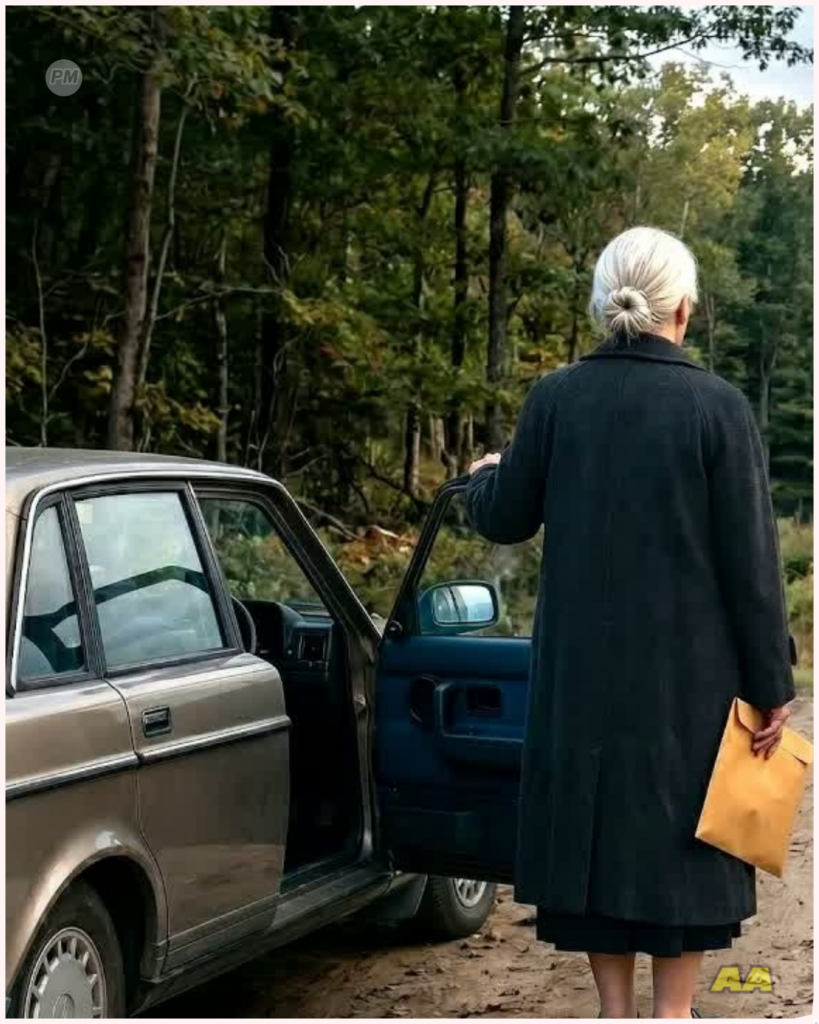
Two hours after her husband’s funeral, Eleanor got into the car still wearing black and started driving.
No destination, no plan, just the silence he left behind. She passed familiar roads, then unfamiliar ones, until the fuel light came on and she kept going anyway.
When the engine finally died, she coasted to a stop in front of a place she hadn’t seen in 40 years, a place she was never supposed to return to.
And as she stepped out of the car, keys still in her hand, she realized it hadn’t been forgotten.
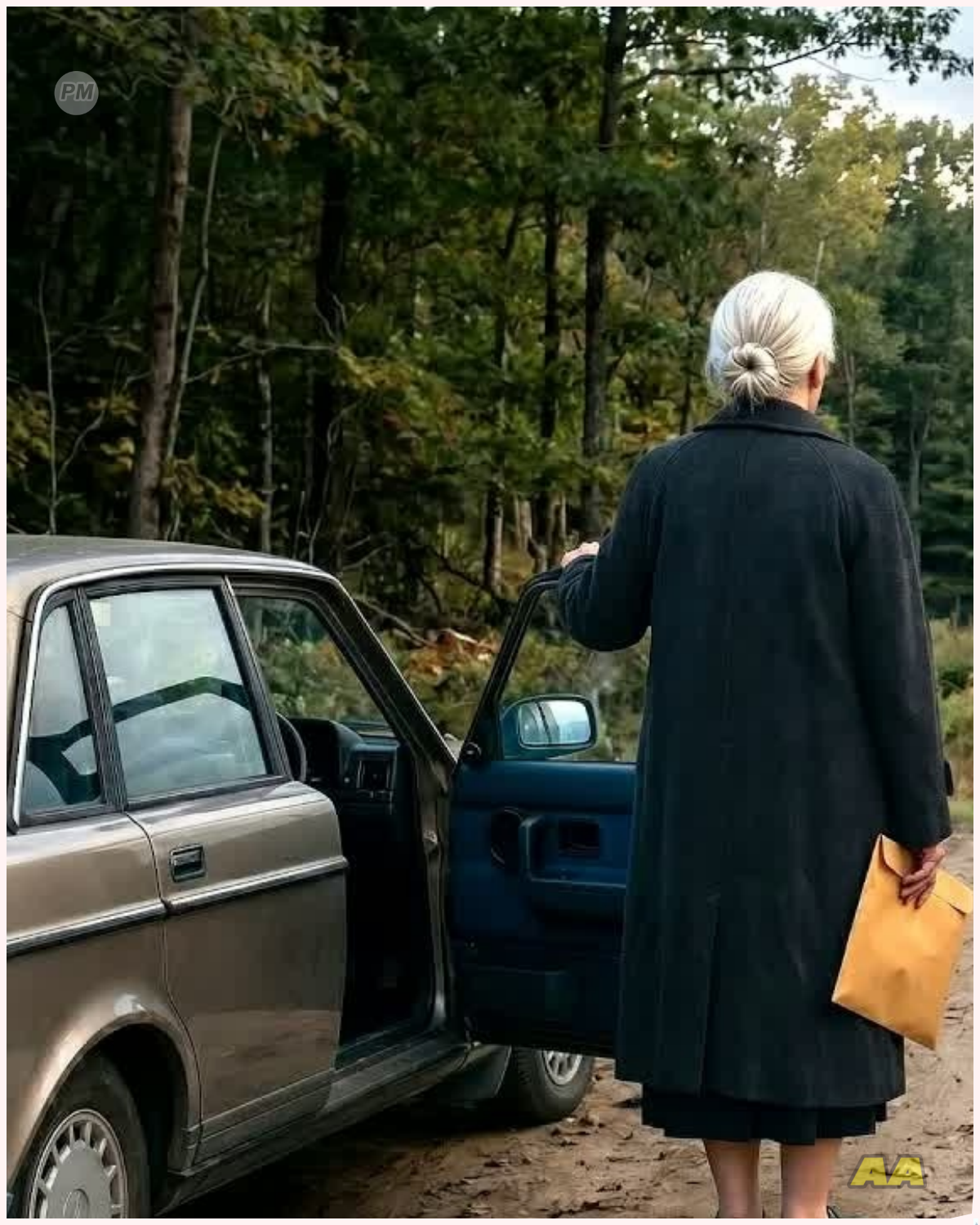
It had been waiting. The cottage sat at the end of a gravel lane 20 ft from the shore of Cedar Lake.
White clapboard, stone chimney, a porch with a swing that creaked in the wind. Eleanor stood beside her dead car and stared at it, her black heels sinking into the soft dirt of the shoulder.
She hadn’t planned this, hadn’t thought about this place in years, or at least that’s what she told herself.
But her hands had turned the wheel and her foot had pressed the gas, and somewhere between Columbus and here, her body had remembered what her mind refused to.
The cottage was supposed to be gone, torn down, sold, collapsed into itself the way old things do when nobody tends them.
That’s the story Eleanor had told herself for four decades, because the alternative meant she’d abandoned something that was still alive.
But here it was, standing, whole, and unless her eyes were lying to her, the garden along the front walk was blooming.
She took a step forward, then another. The gravel crunched under her funeral shoes. The air smelled like lake water and pine and something else, something that hit her so hard she had to stop walking.
Bread. Someone was baking bread. That morning felt like it belonged to another woman’s life.
Frank in the mahogany casket, his hands folded the way he never folded them in life.
He was a man who gestured when he talked, who drummed his fingers on every surface, who couldn’t sit still through a whole movie.
Seeing those hands locked together over his chest had been worse than the eulogy, worse than the hymns, worse than the line of people who squeezed her arm and said he was in a better place.
He wasn’t in a better place. He was in no place, and Eleanor was in every place they’d ever been together, which was the same as being nowhere at all.
The house afterward had been full of people. Frank’s colleagues from the engineering firm, neighbors carrying casserole dishes wrapped in foil.
Their son, Nathan, flying in from Denver with his wife and two boys who barely knew their grandfather.
Their daughter, Claire, organizing everything with the same efficiency she brought to her marketing job in Chicago.
Paper plates, plastic forks, a folding table of cold cuts someone had ordered from the deli on 5th Street.
Eleanor had stood in her own kitchen and felt like a guest. People spoke to her and she answered.
People hugged her and she hugged back. But there was a glass wall between her and all of it.
A separation so complete that she could have been watching the scene on a television screen.
At 2:00 in the afternoon, she picked up her purse, walked out the back door, got in the car, and drove.
Nobody saw her leave. Or if they did, they didn’t stop her. She drove south on the highway for an hour, then turned east without knowing why.
The suburbs thinned into farmland. The four-lane became a two-lane. She passed a gas station and thought about stopping, but didn’t.
The fuel light came on somewhere past a town she couldn’t name, and she watched it glow orange on the dashboard and kept her foot on the pedal.
When the engine coughed and died, she let the car roll. It drifted to the shoulder, slowed, and stopped.
She sat there for a long time with her hands on the wheel, listening to the ticking of the cooling engine and the sound of wind in the trees.
Then she looked up and saw where she was. Now she stood on the gravel path and stared at the cottage and couldn’t make her legs move the last 50 ft to the front porch.
The swing rocked gently. A hummingbird feeder hung from the eve, full and red. The flowerbeds along the walk held marigolds and zinnias, the same flowers her grandmother had always planted, the same colors, the same arrangement.
That was impossible. Helen had been dead for 38 years. The front door opened. A woman stood in the frame, small, white-haired, straight back despite her age.
She wore a flannel shirt tucked into work pants and boots that had seen real dirt.
Her face was lined and sun-browned, and her eyes were the clearest blue Eleanor had ever seen on anyone over 70.
The woman looked at Eleanor standing in the lane in her black funeral dress, and she didn’t look surprised.
She looked like she’d been expecting her. “I was wondering when you’d get here,” the woman said.
Eleanor’s mouth opened. No sound came out. The woman stepped onto the porch and came down the steps with the careful, measured pace of someone who knew her knees weren’t what they used to be.
She stopped at the bottom and studied Eleanor the way you study a photograph you’ve been carrying in your wallet for decades.
“You look like her,” the woman said, “around the mouth especially. Helen always had that same expression when she was trying not to cry.”
“Who are you?” Eleanor managed. “June Hewitt. I lived up the road from your grandmother for 41 years.
She was my closest friend.” June tilted her head toward the cottage. “Come inside. You look like you haven’t eaten since last week.”
Eleanor didn’t move. “The cottage? How is it still here?” “Because I take care of it,” June said simply.
“For 40 years?” “38 technically. Helen took care of it herself the first two.” June paused.
“After you left and before she died.” The words landed like stones. “After you left.”
“Before she died.” The two facts Eleanor had spent her adult life keeping in separate rooms of her mind, never allowing them to touch.
“I can’t,” Eleanor said. I shouldn’t be here. And yet here you are, June said.
Car ran out of gas right in front of the drive. That’s either bad luck or good timing and I stopped believing in bad luck about 30 years ago.
She turned and walked back up the steps leaving the front door open behind her.
Eleanor stood there. The wind came off the lake and moved through the trees along the shore, a sound she hadn’t heard in four decades but recognized instantly the way you recognize a voice you grew up with.
Cedar Lake in the evening. The water lapping the rocks, the wind sorting through the pines.
She walked up the path, climbed the porch steps and went inside. The smell almost dropped her.
Beeswax and wood smoke and dried lavender hung in bundles from the ceiling beams, exactly where Helen had always hung them.
The kitchen was straight ahead, visible through the open archway. A loaf of bread sat cooling on a wire rack on the counter.
You bake bread, Eleanor said. Your grandmother taught me. June said from the kitchen. Same recipe?
Flour, water, salt, honey. She said anything more than that was showing off. Eleanor walked through the living room slowly.
The stone fireplace with its deep mantle, the built-in bookshelves on either side still filled with Helen’s books, the rocking chair by the window that faced the lake, its wood worn smooth from decades of use.
She ran her fingers along the back of the chair and felt the groove where Helen’s thumbnail used to rest.
Helen rocked and read every evening and her right thumb would press into that same spot on the armrest.
The groove was an inch deep. She sat in that chair every night until the end, June said watching from the kitchen doorway.
Reading or watching the lake or just sitting. When did she die? Eleanor asked. She knew the date she got in the call from a lawyer but she’d never asked anyone who was there.
March 9th, she was 81. It was a Tuesday. June’s voice was steady. She went to sleep in that chair after dinner and didn’t wake up.
I found her the next morning with a book open on her lap. She looked peaceful.
She looked done. Eleanor pressed her hand flat against the chair’s back and closed her eyes.
“I didn’t come to the funeral.” She said. “I know. I should have.” “Maybe.” June said, “but Helen didn’t hold that against you.”
Eleanor opened her eyes. “How can you say that I left? I promised her I’d stay and I left and she died alone.”
“She didn’t die alone.” June said quietly. “I was here. Tom Briggs from the hardware store checked on her every Saturday.
Margaret Chan brought groceries twice a week. The pastor came on Sundays.” June crossed her arms.
“Your grandmother had people, Eleanor, right up to the end. But not me.” “No. Not you.”
June held her gaze. “And she missed you every day. But missing someone and blaming them are different things and Helen never once did the second.
The kitchen table was the same one Eleanor had eaten every meal at from the age of 8 to 27.
Oak, scarred with knife marks and water rings, one leg shimmed with a folded piece of cardboard because the floor was uneven.
Helen had always said she’d fix it properly and she never had and now the same piece of cardboard was still there, yellowed and compressed but doing its job.
June set a cup of tea in front of Eleanor, strong, black with a spoonful of honey.
Helen’s recipe. Eleanor wrapped her hands around the mug and felt the heat seep into her fingers.
Her hands had been cold all day. Cold since this morning, since the funeral, since the moment she understood that the house she shared with Frank would never sound the same again.
“Your husband.” June said. It wasn’t a question. “Frank. He died 4 days ago, heart attack.
He was in the garage working on the car and he just fell down.” Eleanor stared into the tea.
“69 years old. We were married for 38 years. He was a good man. I’m sorry, June said.
Everyone’s sorry. Everyone has been sorry all week. Eleanor’s voice cracked. I don’t know what to do with all the sorry.
June sat down across from her. You don’t have to do anything with it. You just have to sit here and drink your tea.
So Eleanor did. She sat in her grandmother’s kitchen in her funeral dress drinking tea made with honey from a jar that probably came from the same beekeeper Helen used to buy from.
The light through the window turned gold as the sun dropped toward the ridge on the far side of the lake.
Why? Eleanor finally asked. Why did you keep this place up? All these years you could have let it go.
June looked at her. Because Helen asked me to. She asked you to maintain an empty cottage for 40 years.
She asked me to keep it ready. June’s eyes were steady and clear. She said you’d come back when you were ready.
She didn’t say when that would be. She just said to make sure the door was unlocked and the garden was planted when you did.
Eleanor set the mug down. She couldn’t have known I’d come back. She knew you, June said.
That was enough. The silence stretched. Outside, a loon called from somewhere on the lake.
The sound was so specific, so exactly right, that Eleanor felt something crack open in her chest that had been sealed shut for a very long time.
There’s something else, June said. She stood and walked to the counter, reached behind the bread, and picked up an envelope.
It was yellowed at the edges. Eleanor’s name was written across the front in a handwriting she would have recognized anywhere.
Careful cursive, slightly forward leaning, the E of Eleanor always a little taller than it needed to be.
Helen’s handwriting. She left these all over the house, June said, setting the envelope on the table between them.
One for each room. She wrote them in her last months when she knew she was running out of time.
She told me not to read them. June smiled slightly. So, I didn’t. Not a single one in 38 years.
Eleanor looked at the envelope, her name in her grandmother’s hand. A message from a woman who had been dead for nearly four decades waiting in a kitchen that smelled like fresh bread and honey.
She said you’d know the order, June added. She said you’d start in the kitchen because that’s where you two always started everything.
Eleanor reached for the envelope. Her fingers trembled. The paper was soft with age, the seal brittle.
She slid her thumb under the flap and opened it. Inside was a single sheet of paper folded once.
Helen’s handwriting smaller now, the letters tighter. Written by hands that were getting tired. Eleanor unfolded it and began to read.
My dear Eleanor, the letter began. If you are reading this, then you found your way back to the kitchen.
I knew you would. This table is where we started every important conversation, every birthday morning, every hard talk, every plan.
You probably remember the wobbly leg. I never did fix that. I hope June kept the cardboard.
Eleanor glanced down at the shimmed leg. She almost laughed. Almost. I want to say this clearly so you hear it in my voice and not in your guilt.
I was never angry with you for leaving. I was proud of you. You met a man who made your eyes change and you chose to follow that.
That is exactly what I raised you to do. I raised you to love bravely, even when it costs something.
Eleanor’s hand went to her mouth. I know you think you broke a promise. You promised to stay and help me with the cottage and then you left.
But Eleanor, I never wanted a promise. I wanted you. And wanting someone means letting them go when it’s time, even if it hurts.
You were 27. You had a whole life ahead of you. I would have been a selfish old woman to hold you here.
The tears came without warning. They fell onto the letter darkening the paper in small circles, and Eleanor pulled it away quickly afraid of damaging the ink.
June stood at the counter with her back turned washing a dish that was already clean.
The letter continued. I wrote these letters because I know you. I know that when something hard happens, you will come looking for me even if I’m gone.
And I know that when you get here, the first thing you’ll feel is guilty.
So, let me tell you now from this kitchen where I am writing this at 3:00 in the morning because my hands work better when it’s quiet.
You did not abandon me. You grew up. That’s what children do. The ones who never leave are the ones who never grow, and I didn’t raise you to stay small.
There is more to find, but don’t rush. Walk through the house the way you used to when you came home from school, one room at a time.
I left something in each one because each room has its own story, and you need to hear all of them.
Start with the sunroom. You always loved the light in there. All my love, always, Grandma Helen.
Eleanor set the letter down on the table and pressed both palms flat against the wood.
Her shoulders shook. She cried the way people cry when the thing they’ve been carrying for decades suddenly gets named quietly and completely with no sound except breathing.
June didn’t say anything. She poured more tea, set it beside Eleanor’s elbow, and sat down to wait.
When Eleanor finally lifted her head, her eyes were red and her face was swollen, but something in her expression had shifted.
The tight set of her jaw, the one she’d worn all day at the funeral and probably for months before that had loosened.
She wasn’t angry. Eleanor said, “No.” June said, “She wasn’t. I spent 40 years thinking she died hating me.”
June shook her head slowly. Helen Marsh didn’t have that in her. She had sadness, sure.
She missed you something fierce, but hate? That woman didn’t know how. Eleanor picked up the letter and read it again, slower this time, hearing Helen’s voice in the careful penmanship.
The H’s with their rounded tops, the way she crossed her T’s with a single quick stroke.
She said to go to the sunroom next, Eleanor said. Then that’s where you go.
Eleanor stood on legs that felt unsteady and walked through the living room to the small room at the back of the cottage that faced the lake.
The sunroom had three walls of windows, floor-to-ceiling with white frames that Helen had painted every spring.
The glass was old, the kind that had slight ripples in it, and the evening light came through those ripples and laid shifting patterns on the wooden floor.
The room held a wicker love seat with faded cushions, a side table with a reading lamp, and a low shelf of books.
On the windowsill sat a row of clay pots, each holding a dried stem or a dead plant that had once been something green.
“I kept the house up,” June said from the doorway, “but I never could keep the sunroom plants alive.
Helen had the touch. I have the opposite of the touch.” Eleanor smiled despite herself.
She ran her hand along the windowsill until she felt it, an envelope tucked behind the last clay pot pressed flat against the wall.
Same yellowed paper, same handwriting. She opened it. “Eleanor, this room is where I want to tell you about your grandfather.
You barely remember James. He died when you were nine, but I want you to know what happened to me after because I think it will matter to you someday.
When James died, I was 42 years old. I had run this cottage for 15 years, and I had done it with him beside me.
He fixed the roof. He stacked the wood. He was the one who talked to strangers when they came to the door because I was shy and he wasn’t.
After he died, I couldn’t look at the lake. I couldn’t sit in the sunroom.
Everything in this house had his fingerprints on it, and every room reminded me that he wasn’t in it anymore.
I decided to sell. I called a real estate agent in town. He came out and measured the rooms and wrote a number on a piece of paper and said he’d list it on Monday.
That was a Saturday night. I was packing boxes in the kitchen when someone knocked on the door.
It was a woman I’d never met. She was maybe 30 wearing a coat too thin for the weather with a bruise on her cheek she tried to cover with makeup.
She said her car had broken down on the road. She asked if she could use the phone.
I let her in. I made her tea. And by the time she’d stopped shaking it was midnight and I told her she could sleep in the spare room.
She stayed 3 days. She didn’t tell me her name until the second day. She didn’t tell me about her husband until the third.
On the morning she left she stood on the porch and said something I’ve never forgotten.
She said, “This house saved my life.” I called the real estate agent on Monday and told him to tear up the listing.
That was 39 years ago. Since then I’ve lost count of how many people have come through this door needing a quiet place and a warm meal and someone who would listen without asking too many questions.
Some stayed a night. Some stayed a month. I never charged anyone and I never turned anyone away.
The cottage isn’t a building Eleanor. It’s a purpose. And purposes don’t die when the person who carries them does.
They just wait for the next person to pick them up. I think you might be that person.
But only if you choose it. Not out of guilt. Out of love. More to find.
Keep going. Helen. Eleanor lowered the letter. Through the sunroom windows the lake was turning silver in the fading light.
A heron stood at the water’s edge motionless watching for fish. “Did you know about this?”
Eleanor asked. “The people she took in?” “I knew all of them.” June said. “I was usually the one who drove them to the bus station when they were ready to leave.
Some of them wrote letters afterward. Some came back years later to say thank you.”
She paused. “There’s a guest book. Helen started it about a year after James died.
It’s in the cabinet in the living room if you want to see it. Eleanor nodded, but she didn’t move yet.
She stood in the sunroom holding her grandmother’s letter and looking at the lake and trying to absorb the idea that this cottage, this place she’d thought of for 40 years as the monument to her greatest failure, had been alive the whole time, alive and serving a purpose she’d never known about.
How many people? She asked. June thought about it. Over the years, dozens, maybe more.
A woman running from a bad marriage, a kid who got thrown out by his folks for being who he was, a farmer who lost everything in the flood of ’94, a couple whose baby died and who couldn’t stand to be in their own house anymore.
June looked out the window. Grief doesn’t drive you nowhere. It drives you exactly where you need to be.
That’s what Helen always said. And this cottage was where a lot of people needed to be.
Eleanor turned the words over in her mind. Grief doesn’t drive you nowhere. It drives you exactly where you need to be.
She thought about her own drive that afternoon. The aimless turning of the wheel, the highways that weren’t aimless at all.
I want to see the guestbook, she said. June led her back to the living room and opened a low cabinet beside the fireplace.
Inside was a hardbound book, dark green. It’s cover soft with handling. Eleanor took it and sat in Helen’s rocking chair and opened the first page.
The entries started in 1988. Each one was different. Some were a single line, some filled a whole page.
But they all said some version of the same thing. Thank you for the bed and the bread and the quiet.
I came here broken and left with enough pieces to start over. Your grandmother fed me pot roast and let me cry for 3 hours straight and never once told me to stop.
This house gave me back something I thought I’d lost. I don’t even know what to call it.
Maybe hope. Eleanor turned the pages slowly. Years of entries. Years of strangers passing through this cottage and leaving their gratitude pressed into the paper.
The handwriting changed from entry to entry, some elegant, some barely legible, some in pencil, some in ink.
A few had small drawings. One had a pressed flower taped to the margin. The last entry was dated 2 weeks before Helen died.
Stayed for 4 days while my mother was in the hospital. Helen sat with me every evening and told me stories about her granddaughter who lived in the city.
She said her granddaughter was a teacher who was good with children and had a husband who loved her.
She said she was proud of her every day. Eleanor closed the book and held it against her chest.
She talked about me, Eleanor whispered. All the time, June said, to anyone who’d listen, she’d say, “My Eleanor is a teacher in Columbus.
She married a good man. She kept every letter you sent, every photograph. They’re in a box upstairs.”
“I didn’t send enough,” Eleanor said. “You sent what you could, and she treasured every one.”
Outside, the light was almost gone. The cottage was growing dim, lit only by the lamp in the kitchen and the glow from the sunroom windows.
“You should eat,” June said. “I’ll make something. There’s food in the pantry. I restock it every Tuesday.”
“You restock an empty pantry every Tuesday.” “I restock the cottage pantry every Tuesday,” June corrected.
“In case someone shows up.” She smiled. “Today, someone did.” While June moved around the kitchen, pulling out canned soup and a loaf of the bread she’d baked, Eleanor sat in the rocking chair and let her body settle into its curve.
The chair fit her the way it had fit Helen, the arms at the right height, the angle of the back just steep enough to support without pushing.
She pulled out her phone. It had been off since she’d left the house that afternoon.
When she turned it on, 17 missed calls appeared. 12 from Claire, three from Nathan, two from numbers she didn’t recognize.
She called Claire. Her daughter picked up on the first ring. “Mom, where are you?
We’ve been calling for hours. Nathan drove to the house and you weren’t there. Your car is gone.
We thought you were Claire’s voice broke. We thought something happened. I’m all right, Eleanor said.
Where are you? Eleanor paused. I’m at Grandma Helen’s cottage. Silence on the line. The cottage, Claire repeated slowly.
And that town you grew up in, that’s 3 hours away. I know. Mom, why?
You just buried Dad this morning. You can’t just disappear and drive to some cottage in the middle of nowhere.
I didn’t plan it, Eleanor said. I just drove and this is where I ended up.
That doesn’t make sense. I know it doesn’t. Claire exhaled hard. Are you safe? Is there someone with you?
A woman named June. She was Grandma Helen’s friend. She’s making me soup. A stranger is making you soup?
She’s not a stranger, Eleanor said quietly. She’s been taking care of this place for almost 40 years.
Claire went quiet. Eleanor could hear her processing, sorting, trying to make this fit into the organized category she used to manage her life.
It wouldn’t fit. Eleanor knew that. I need to stay here for a little while, Eleanor said.
Mom, I know it sounds strange, but I need this. How long is a little while?
I don’t know yet. Another silence. Then Claire said, I’ll come check on you tomorrow.
It’s a 3-hour drive. I know how far it is. I’ll come check on you tomorrow.
Her voice softened. Just don’t turn your phone off again, please. I won’t. After they hung up, Eleanor sat with the phone in her lap and listened to June moving in the kitchen.
The clink of a pot on the stove, the soft thump of a cabinet closing.
Sounds that belonged to this house, that this kitchen had been producing for decades. June brought two bowls of soup to the table, thick with potatoes and carrots.
They ate in the kind of silence that doesn’t need filling. Through the kitchen window, the last light faded from the lake and the first stars appeared over the ridge.
“Is there somewhere I can sleep?” Eleanor asked. “Your old room is upstairs. Second door on the left.
The bed has sheets. I change them every month.” June caught Eleanor’s expression. “I told you she said to keep it ready.”
Eleanor climbed the narrow stairs, her hand on the wooden banister she gripped a thousand times as a child.
The hallway was dim. She found her room and opened the door. It was small.
A single bed with a white quilt, a dresser with a mirror above it, a window that faced the lake.
On the nightstand sat a framed photograph of Helen holding a young Eleanor on her hip.
Eleanor was maybe 10, laughing at something outside the frame. Helen was looking at her with an expression Eleanor now recognized, pride, simple, uncomplicated pride.
She sat on the bed. The mattress gave under her weight with a familiar creak.
She was still wearing her funeral dress. She had no other clothes. She had nothing except a purse with her wallet and her phone and the car keys to a car with an empty tank parked at the end of the drive.
She lay down on top of the quilt and stared at the ceiling. The plaster had a crack in it shaped like a river, and she remembered tracing it with her eyes as a girl, imagining it was a map to somewhere far away.
Now she was far away, and the crack in the ceiling was the same, and the sound of the lake through the open window was the same, and for the first time in four days, the silence didn’t feel like something Frank had left behind.
It felt like something the cottage had been holding for her. She didn’t remember falling asleep.
In the morning, Eleanor woke to the sound of a hammer, rhythmic, confident, coming from somewhere outside.
She sat up in the white quilt and looked out the window. The sun was just clearing the ridge across the lake, laying a band of gold across the water.
In the yard below, a man in his early 30s was replacing a fence post near the garden.
He worked with the easy confidence of someone who’d been swinging a hammer since he could hold one.
A tool belt hung around his hips and a pickup truck was parked beside the barn with lumber in the bed.
Eleanor washed her face in the bathroom sink, smoothed her funeral dress as best she could, and went downstairs.
June was already in the kitchen, coffee on. “That’s Sam,” June said, nodding toward the window.
“My grandson. He does the heavy work around here. Carpentry mostly. Built that fence originally when he was 16, and it’s been falling down in stages ever since.”
Eleanor took the coffee June offered and stood at the kitchen window watching Sam work.
He moved a post into the hole he’d dug, checked it with a level, and started packing dirt around the base.
“Does he know who I am?” Eleanor asked. “He’s heard about you his whole life,” June said.
“He grew up on Helen’s stories same as I did. Different versions of the same thing.
The granddaughter who moved to the city, the teacher with the good husband.” June sipped her coffee.
“I told him you were here last night. He wanted to come meet you, but I told him to wait until morning and bring his tools instead.
Smart woman. I didn’t keep this place for 38 years by being stupid.” Eleanor set her mug on the counter and looked at June.
“You said you kept it for me, but you must have spent thousands of dollars over the years.
The roof alone, the plumbing, the garden.” “Helen left money,” June said. “An account at the bank in town earmarked for cottage maintenance.
It ran out about 10 years ago. After that, Sam and I covered what needed covering.”
She shrugged. “It wasn’t charity. I made a promise to Helen.” June met her eyes.
“I didn’t keep it for her. I kept it for you.” The words sat between them.
Eleanor turned them over feeling their weight. “There are more letters,” Eleanor said. “There are more rooms,” June answered.
Eleanor walked to the living room. The mantel above the fireplace was deep, made of a single slab of rough-cut oak that Helen’s husband, James, had hewn from a tree on the property.
On it sat three things: a photograph of James and Helen on their wedding day, a small ceramic vase with dried wildflowers, and a brass compass.
The compass. Eleanor picked it up. It was heavy in her hand, tarnished green at the edges, the glass face scratched but intact.
Helen had kept it on the mantel for as long as Eleanor could remember. It had belonged to James’s father, a man who’d surveyed land in this part of the state a century ago.
Eleanor had loved this compass as a child. She used to take it off the mantel and carry it into the woods, pretending she was an explorer.
Helen always let her as long as she brought it back before dinner. When Eleanor left the cottage at 27, she’d almost taken the compass with her.
She’d held it in her hands standing at the front door with her suitcase. Then she put it back on the mantel and walked out.
Now she turned it over. On the back, scratched into the brass in Helen’s careful hand, were four words: It still points home.
Eleanor’s breath caught. She ran her thumb over the scratched letters. Helen had added this after Eleanor left, maybe days after, maybe years, but the message was clear.
She opened the compass. The needle still moved, settling north after a slow spin, and tucked beneath the needle housing, folded impossibly small, was another envelope.
Eleanor’s hands shook as she eased the paper out. Same yellowed stationery, same handwriting on the front.
She unfolded it and sat down on the stone hearth, the compass in one hand and the letter in the other, while the morning sun came through the windows and lit the room where her grandmother had lived and loved and waited.
Eleanor, the letter read. This is the compass letter. Your grandfather, James, gave this compass to me on our wedding day.
He said, “If you ever get lost, this will bring you home.” He meant it as a joke because I had no sense of direction, and he was right.
I could get turned around in a grocery store. But after he died, I kept it on the mantel, and I looked at it every day, and I realized he was right in a way he never intended.
It always pointed north, and north was here, this cottage, this lake, this life. I want to tell you something I never told you while you were here.
I want to tell you about the night you told me about Frank. You were 26.
You’d been going to the city on weekends for months, and I knew something was happening because you came home with light in your face that hadn’t been there before.
Then one evening you sat down at the kitchen table and said, “Grandma, I met someone.”
I knew before you said another word. I knew by the way your hands moved when you talked about him, the way you couldn’t stop smiling even when you were trying to be serious.
You loved him, and it was the real kind, the kind that rearranges your life.
You asked me if I’d be all right. You asked me if the cottage would survive without you, and I told you I’d be fine, and the cottage would be fine because that’s what grandmothers say.
But what I didn’t tell you was that I cried for 2 days after you left.
Not because you hurt me, because I remembered what that kind of love felt like, and I was so glad you’d found it.
Eleanor, I went to your wedding. I know you didn’t see me. I sat in the back row of the church on the left side behind a tall man in a gray suit who blocked most of my view.
But I saw enough. I saw you walk down the aisle. I saw your face when you looked at Frank.
And I left before the reception because I didn’t want to make it complicated. You had your life, and you deserved to live it without worrying about whether your grandmother felt left out.
I drove back here that night and sat in this very chair and held this very compass, and I was happy, truly happy, because you were loved, and that was all I ever wanted for you.
She never once called you ungrateful. She called you brave. That was what June had said the night before, and now Eleanor understood what she meant.
Helen hadn’t been sitting in this cottage for 2 years feeling abandoned. She’d been sitting here feeling proud, watching from a distance, choosing to let Eleanor go.
Eleanor folded the letter carefully and placed it inside the compass. Her face was wet, but she wasn’t sobbing anymore.
The tears came quietly, steadily, with a calmness that surprised her. June appeared in the doorway with a paperback.
“I drove to town this morning,” she said. “Picked up a few things you’ll need if you’re staying longer than one night.”
She held up the bag, clean shirt, pants, toothbrush, socks, nothing fancy. Everything from the general store, so the fashion choices are limited.
Eleanor looked down at her black funeral dress, wrinkled and streaked with dust from the gravel lane and tears from the kitchen and dirt from where she’d sat on the hearth.
“Thank you,” she said. “Don’t thank me. Thank Helen’s credit at the general store. The owner’s daughter still honors it.
Says she owes Helen for something that happened in 1992, and she’ll never let the account close.”
Eleanor changed in the bathroom upstairs. The shirt was cotton, dark blue, a size too big.
The pants were work khakis with an elastic waist. She looked at herself in the mirror above the dresser in her old room and barely recognized the woman looking back.
Not because of the clothes, but because of the expression. Something had loosened behind her eyes.
She found Sam in the yard finishing the fence post. He straightened when he saw her and wiped his hands on his jeans.
“You must be Eleanor,” he said. His handshake was firm and his face was open.
My grandmother talks about you like you’re a character in a book she read a long time ago.”
“I feel like one,” Eleanor said. “She’s glad you’re here. She won’t say it in so many words because that’s not how she operates, but she is.”
He looked toward the cottage. She’s been coming here every Tuesday for as long as I can remember, sweeping, gardening, airing out the rooms.
When I was a kid, I thought the cottage was ours. She had to explain it wasn’t.
She said she was keeping it for someone, for me, for you. He smiled. I have to say, it’s nice to finally meet the someone.
He went back to work and Eleanor walked to the edge of the property where the yard met the shore.
The lake was still in the mid-morning air, its surface barely moving. A canoe was tied to a post at the water’s edge, old but sound, its green paint peeling.
Helen’s canoe. Eleanor had learned to paddle in it when she was 10. Helen would sit in the back and steer, and Eleanor paddle in the front with her small arms burning, and they’d go out to the middle of the lake where the water was deep and dark and the world felt enormous.
Eleanor reached down and touched the gunwale. The wood was smooth under her fingers. She needed to see Helen.
June told her the cemetery was a mile and a half east, on a hillside above the old church.
Eleanor walked. The road was quiet, two lanes with no shoulder, lined with maples that were just beginning to turn.
A pickup truck passed and the driver raised two fingers from the steering wheel in greeting.
Eleanor raised hers back. The cemetery sat behind a white clapboard church with a steeple that leaned slightly to the left.
A low iron fence surrounded the plots, and the gate was open. The grounds were mowed and tended, the headstones a mix of old slate and newer granite.
She found Helen’s stone in the third row. It was simple, gray granite polished on the face, rough on the sides.
Helen Marie Marsh, born April 12th, 1908, died March 9th, 1989. Beloved grandmother. The cottage endures.
The cottage endures. Helen had chosen those words for her own headstone, not loving wife, not devoted mother, the cottage endures.
Eleanor knelt on the grass and put her hand flat on the stone. It was warm from the sun.
“I’m sorry it took me so long.” She said. A man was trimming grass near the back fence with a pair of hand shears.
He was old, slow-moving with a sun-faded ball cap and dirt on his knees. He looked over when Eleanor spoke and then looked away again, giving her privacy.
After a while, he walked over, not intruding, just moving in that direction because the work brought him there.
“You knew Helen?” He asked. “She was my grandmother.” He nodded slowly. “Good woman. My wife was sick for a long time years back.
Helen brought food to the house three times a week. Never made a fuss about it.
Never asked to be thanked. Just left a dish on the porch and drove home.”
He looked at the headstone. “People around here remember that sort of thing.” “I didn’t know.”
Eleanor said. “She didn’t do it to be known.” He tipped his cap and went back to his shears.
Eleanor stood at the grave for a long time. The wind moved through the maples and the church steeple threw a thin shadow across the grass.
She thought about Helen writing those letters late at night, hiding them in the cottage rooms, trusting that Eleanor would come back someday and find them.
The faith that required. The patience. If you’ve made it this far into Eleanor’s story, hit subscribe because what happens next is the part I’ve been waiting to tell you.
She walked back to the cottage with a purpose she hadn’t felt that morning. The grief was still there, Frank’s absence still a cold space behind her ribs, but it had shifted.
It wasn’t the only thing she was carrying anymore. In the kitchen, she rolled up her sleeves and started cleaning.
Not because the cottage was dirty. June had kept it immaculate. But because Eleanor needed to touch every surface to reacquaint her hands with the counters and window and windowsills she’d known as a girl.
She wiped down the kitchen cabinets, she swept the sunroom floor, she dusted the bookshelves in the living room pulling out each book and putting it back.
June watched from the rocking chair without comment. “You’re nesting.” June finally said. “I’m cleaning.”
“Same thing.” Eleanor found Helen’s apron hanging on a hook behind the pantry door. Blue cotton with white stripes faded almost to transparency.
She put it on and tied it at the waist and her hands did it without thinking, the same knot Helen had always tied.
She opened the pantry, canned tomatoes, dried beans, rice, honey, flour, the basics, enough to feed someone for a week, which was, she now understood, exactly the point.
Helen had always kept the pantry stocked for whoever might need it. Eleanor made bread.
She used the recipe she’d memorized at 12 years old, the one Helen had taught her, the one June still used.
Flour, water, salt, honey. She kneaded the dough on the wooden cutting board that bore decades of knife marks and while she kneaded she cried and while she cried she kept kneading because Helen had always said you couldn’t stop once you started or the dough would know.
Sam came in for water and saw her at the counter, flour on her arms and tears on her cheeks, working the dough with steady hands.
“You all right?” He asked. “I’m making bread.” She said. He nodded and left her to it.
The bread rose. Eleanor punched it down and shaped it and put it in the oven.
The same oven Helen had used with its door that stuck and its temperature that ran 20° hot on the left side.
She adjusted without thinking. Her hands remembered what her mind had filed away. While the bread baked, she called Claire.
“I’m still here.” Eleanor said before Claire could ask. “I know. I can see on the phone tracker.”
“You’re tracking my phone.” “You disappeared in a funeral dress with no luggage, Mom. Yes, I’m tracking your phone.
Eleanor almost smiled. Fair enough. I want to tell you about this place. She told Claire about the cottage, about Helen, about the letters.
She told her about June tending the property for decades, about the guest book full of strangers gratitude, about the compass with its scratched message.
She told her daughter things she’d never told anyone, about leaving at 27, about the promise she’d broken, about the guilt she’d carried every day since.
Claire listened. For once, she didn’t interrupt or organize or solve, she just listened. “Grandma Helen was at your wedding,” Claire said when Eleanor finished.
“Back row, left side. She left before the reception. You never knew.” “I never knew.”
Claire was quiet for a moment. “I want to see the letters,” she said. “I want to read them.”
“Come whenever you’re ready.” “I said I was coming today.” “Then come today.” Eleanor hung up and took the bread out of the oven.
It was golden on top, slightly dark on the left side where the oven ran hot.
She set it on the wire rack to cool, the same rack June had used the day before, the same rack Helen had probably used for 40 years before that.
She stood in the kitchen and looked at the bread and thought about how many loaves had been baked in this room, how many people had eaten them, how many conversations had happened at this table with its wobbly leg and its shimmed piece of cardboard.
Home isn’t where you ran from, it’s where you stop running. The thought came clearly, simply as though Helen had spoken it aloud.
Eleanor held on to it. That afternoon, she went upstairs to her old bedroom. She sat on the bed and looked at the floor.
Wooden boards, wide pine, with gaps between them that let cold air through in winter.
Helen had always laid a braided rug over the worst spots. The rug was still there, faded now, its colors muted to a soft blend of rose and gray.
Eleanor knelt and pushed it aside. In the far corner, near the baseboard, there was a loose board.
Eleanor knew it was there because she’d loosened it herself when she was 14. She’d pried it up with a butter knife and hollowed out a space underneath, a hiding spot for the things a teenage girl didn’t want her grandmother to find.
Notes from friends, a diary, a photograph of a boy she’d liked in school. She pressed the edge of the board and it tilted up.
The space underneath was empty except for one thing, an envelope, sealed, thicker than the others.
On the front, in Helen’s handwriting, were the words, “Read this last. You’ll know when.”
Eleanor held it. The paper was heavier than the other letters, the seal still intact after nearly four decades.
Helen had known about the hiding spot. Of course she had. Grandmothers always know. Eleanor set the letter on the nightstand beside the photograph of her and Helen.
She wasn’t ready. She could feel that the way you feel weather changing, a shift in pressure behind the eyes.
She would read it, but not yet. Below, she heard a car pull into the gravel drive and a door open and close.
Then Claire’s voice calling from the porch. “Mom.” Eleanor came downstairs and opened the front door.
Claire stood on the porch in a tailored jacket and dark jeans, her car parked behind Eleanor’s dead sedan.
She had a small overnight bag over her shoulder and sunglasses pushed up on her head.
She looked like she’d driven 3 hours expecting a crisis. “You drove all the way here,” Eleanor said.
“I told you I was coming.” Claire looked past her into the cottage. “This is it?
This is where you grew up?” “From 8 to 27.” Claire stepped inside and stopped.
Her eyes moved over the living room, the stone fireplace, the bookshelves, the rocking chair.
She looked at the ceilings, the beams, the bundles of dried lavender. “It smells like a church,” she said.
“It smells like your great-grandmother.” June emerged from the kitchen wiping her hands on a towel.
You must be Claire. Your mother has your chin. Or I have hers, Claire said.
She shook June’s hand with the automatic firmness of someone who shook a lot of hands professionally.
Thank you for looking after her. I’m standing right here, Eleanor said. I meant the cottage, June said smoothly.
But I’ve been looking after your mother, too, since you asked. Claire set her bag down and walked through the room slowly.
Eleanor watched her take it in. The sunroom with its rippled glass, the kitchen with its scarred table, the old photographs on the walls.
Claire paused in front of a framed picture near the staircase, a black-and-white shot of Helen standing on the porch with a toddler on her hip.
Is that you? Claire asked. I was about three. My parents had just died. Helen took me in.
Claire studied the photograph. You look just like her. Around the eyes. Eleanor hadn’t heard that before.
June had said around the mouth. Now Claire saw it around the eyes. Maybe they were both right.
Maybe the resemblance was everywhere, spread through Eleanor’s whole face, invisible to her because she saw it every morning in the mirror without knowing what she was looking at.
Mom, sit down. Tell me everything. They sat at the kitchen table and Eleanor did what she’d started to do on the phone.
She told the whole story. Not just the facts, but the feelings. How Helen had raised her after the accident.
How the cottage had been the only home she’d known. How she’d met Frank at a cousin’s wedding in the city.
How falling in love with him had felt like stepping into a warm room after a long time in the cold.
How leaving had been the hardest thing she’d ever done. And how the guilt of it had stayed with her for four decades.
Claire listened without interrupting. She held her coffee mug in both hands, the same way Eleanor held hers, the same way Helen had held hers.
You never talked about this place, Claire said when Eleanor finished. I couldn’t. Not once in my entire life.
You never mentioned a cottage, a lake, a grandmother who raised you. I know why.
Eleanor looked at the table. Because talking about it meant admitting what I’d done. I left her.
I left this place. And then she died, and I didn’t come to the funeral.
And after that, it was easier to pretend none of it existed. “That’s not easier.”
Claire said. “That’s just a different kind of hard. You sound like your father. Dad would have driven you up here himself if he’d known.”
Eleanor’s throat tightened. “I know he would have.” She got up and retrieved the letters from the mantel where she’d placed them all three and the compass.
She set them on the table in front of Claire. “Read them.” She said, “in order.”
June left the kitchen without being asked. She knew when a room needed to hold only two people.
Claire read the kitchen letter first. Her face changed slowly as she moved through Helen’s words.
The tight, worried expression she’d worn since arriving gave way to concentration, then surprise, then something softer.
She finished the first letter and looked up. She wasn’t angry. You spent 40 years thinking she was angry, and she wasn’t.
No. Claire picked up the second letter, the sunroom letter about James’s death and the woman who knocked on the door.
She read it more slowly. When she set it down, her eyes were wet. “She ran a shelter.”
Claire said. “Your grandmother ran an informal shelter out of her cottage for decades. She would have hated that word.
She just opened the door.” Claire picked up the compass, turned it over, read the scratched words on the back.
“It still points home.” She opened it and watched the needle settle north. “And the third letter.”
Eleanor said, “the one from inside the compass.” Claire read it. Her face changed again when she reached the part about the wedding.
She set the letter down and pressed her fingers against her eyes. “She was at your wedding.”
Claire said, her voice thick. “She sat in the back row and watched you get married and then drove home alone.
She didn’t want to complicate things. That’s not complicating things. That’s love. That’s the most stubborn, patient kind of love I’ve ever heard of.
Eleanor sat down across from her daughter and folded her hands on the table. There’s one more letter, she said, upstairs.
She hid it in a spot she knew I’d find, but it says to read it last and I’m not ready.
Claire nodded slowly. She looked around the kitchen at the bread cooling on the rack, at the window facing the lake, at the apron hanging on the pantry hook.
I owe you an apology, Claire said. For what? For what I said on the phone, about this being a shack in the middle of nowhere.
She shook her head. This isn’t nowhere. This is somewhere that matters. They walked to the lake together down the short path through the grass to the shore.
The afternoon light was on the water and the canoe rocked gently at its post.
They stood side by side the way they used to stand at the kitchen counter in Columbus doing dishes together, a ritual from Claire’s teenage years that had survived into adulthood.
I keep thinking about Dad, Claire said, about what he’d say if he could see you here.
He’d say I need to get the car towed. Claire laughed, a real laugh, the first one Eleanor had heard from her since the funeral.
It came out startled and a little guilty, the way laughter does when grief is still fresh, and then it settled into something genuine.
He’d say that, Claire agreed, and then he’d find the toolbox and start fixing the porch railing.
He would. They stood there watching the water. Mom, do you want to stay here?
Eleanor thought about it, really thought about it for the first time without the panic of arrival or the fog of grief or the weight of Claire’s worry pressing down on her.
I think I need to, she said, at least for a while. What about the house in Columbus?
It’s a house. It’ll wait. Claire turned to look at her. This isn’t running away, I’ve been running away for 40 years, Eleanor said.
This is the first time I’ve stopped. Claire studied her face for a long time.
Then she nodded. Okay, she said. Okay, but I’m coming back to visit a lot.
I’d like that. And I’m sending you clothes, real clothes, not whatever June got you from the general store.
These are fine. Mom, you’re wearing elastic waist khakis. Your great-grandmother wore elastic waist khakis every day of her life, and she was the finest woman I ever knew.
Claire pulled her into a hug. They held each other on the shore of the lake, and it was different from the hugs at the funeral.
Those had been obligatory, performed, part of the ritual of public mourning. This one was private and necessary and real.
Claire stayed for dinner. June cooked, and the four of them ate at the kitchen table.
June and Sam and Claire and Eleanor crowded around the oak surface with its knife scars and water rings.
Sam told Claire about the fence and the roof and the three times the porch swing had fallen off its hooks.
June told stories about Helen that made Eleanor laugh and cry in the same breath.
Claire asked questions. Good questions. The kind that came from genuine curiosity, not from trying to assess a situation.
After dinner, Claire said goodbye on the porch. The sun was behind the ridge, and the air was cooling.
Crickets had started in the grass along the shore. Call me tomorrow, Claire said. I will.
And the day after, I will. Claire started toward her car, then stopped and turned back.
Mom, I’m glad you came here. I didn’t understand it at first, but I do now.
You don’t have to earn the right to come back, June said from the doorway, and both Eleanor and Claire turned to look at her.
You just have to show up. That’s what Helen always said. That’s what this place is for.
Claire looked at June for a long moment, then nodded. She got in her car and drove down the lane, and Eleanor watched the tail lights disappear through Through trees.
The cottage was quiet. Sam had gone home with June. Eleanor was alone for the first time since she’d arrived.
The cottage ticked and settled around her. The sounds of old wood adjusting to the cool night air.
She went upstairs. The sealed letter was on the nightstand where she’d left it. The photograph of her and Helen was beside it.
In the photo, Eleanor was laughing. Helen was looking at her with that expression of pride and love and knowing.
Eleanor sat on the bed and picked up the envelope. She turned it over in her hands.
Read this last. You’ll know when. She knew. She broke the seal and unfolded the letter.
It was longer than the others. Two full pages in Helen’s careful hand. The writing steadier than the other letters, written on a day when her hands were strong and her mind was clear.
My darling Eleanor, if you are reading this, then you have read the others and you know that I was never angry, and you know that I went to your wedding, and you know about the people who came through this door.
So, now I can tell you the last thing. The thing I saved for this room because this is where you slept as a girl and this is where you’ll sleep when you come home.
I know when you’ll come back. You’ll come back when grief brings you. I know this because grief brought me.
When James died, I almost left. I told you about that in the sunroom letter.
What I didn’t tell you is that the reason I stayed wasn’t the cottage. It wasn’t the lake or the view or the garden.
I stayed because grief needed a place to go and this cottage gave it one.
Grief walked through the door every night for a year and I let it sit in the kitchen and drink tea and eventually it stopped being a stranger and became a guest and then it became a memory and then it became part of the furniture.
It’s still here. It will always be here. But, it doesn’t take up the whole room anymore.
Your grief will come the same way. It will follow you here and it will be enormous and you will think it will never fit inside these walls.
But, it will. This cottage has held more grief than you know and it has never once run out of room.
The cottage doesn’t need you, Eleanor. It stood for decades before you were born, and it will stand after you’re gone.
But, I made sure it would be here when you need it. I asked June.
I left money. I hid these letters. I did everything I could to make sure that when the worst day of your life came, you would have somewhere to go.
Plant something in the spring. Leave the door unlocked. Someone will knock. They always do.
Some doors stay open longer than you deserve. That’s not luck, Eleanor. That’s love. I am so proud of you.
I have been proud of you every day since you were 8 years old and climbed out of a social worker’s car and took my hand and said, “Is this where I live now?”
Yes, this is where you live now. This is where you’ve always lived. You just took a long way home.
All my love, forever and after, Grandma Helen. Eleanor set the letter in her lap.
She sat on the bed in the small room with the crack in the ceiling and the window facing the lake and the braided rug on the floor, and she let the tears come without fighting them.
They weren’t the sharp, breathless tears of the first night. They weren’t the quiet, steady tears of the morning.
These were the deep ones, the ones that come from the bottom of the well, from the place where 40 years of guilt and grief and love and longing had been sitting in the dark waiting to be found.
She cried for Helen. She cried for Frank. She cried for Frank. She cried for the 27-year-old woman who had stood at this door with a suitcase and a compass and walked away.
She cried for the 67-year-old woman who had driven here with nothing and found everything.
When it was over, she washed her face, went downstairs, and walked out to the porch.
The lake was dark, lit only by the stars and the thin edge of a moon coming up over the ridge.
The air smelled like pine and lake water and the last trace of bread from the kitchen.
She sat in Helen’s rocking chair. The wood fit her body. The creak of the runners on the porch boards was a sound she’d heard 10,000 times as a child, falling asleep to its rhythm, trusting it without knowing she was trusting anything.
For the first time since Frank died, she felt something other than empty. She felt ready.
3 months later, the crocuses came up along the front walk. Eleanor noticed them on a Tuesday morning, pushing through the cold soil in clusters of purple and white, exactly where Helen had always planted them.
She [snorts] knelt in the garden with dirt on her knees and her grandmother’s trowel in her hand, and she touched the green shoots with a tenderness that surprised her.
She hadn’t planted these. June hadn’t either. They were Helen’s bulbs, still alive under the soil after all these years, coming up on their own because that’s what bulbs do.
They wait, and then they bloom when the time is right. Eleanor sat back on her heels and looked at the cottage.
It looked different now. Not a different building, but a building that had been woken up.
Sam had replaced the porch boards in January and repainted the railing in February. Eleanor had washed every window inside and out until the rippled glass caught the light and threw it across the rooms in patterns she remembered from childhood.
The front door had a new coat of red paint, the same shade Helen had always used, matched from a chip Eleanor found under seven layers in the door frame.
She had moved in for good. The Columbus house was sold. Claire had handled the real estate, flying in twice to oversee the packing and the closing.
Nathan had taken the furniture he wanted and shipped the rest to a storage unit.
Eleanor had kept Frank’s reading glasses, his worn leather wallet, and a photograph of the two of them at the lake in Michigan, where they’d spent their anniversaries.
Everything else, she let go. It wasn’t easy. Selling the house meant closing a chapter that had lasted 38 years.
Every room held a conversation, a dinner, a Sunday morning with the paper spread across the kitchen island.
Frank’s workshop in the garage still smelled like sawdust and machine oil. His coffee mug sat in the dish rack where he’d left it the morning he died.
But Eleanor had learned from Helen’s letters that holding on to a place doesn’t mean you hold on to the person.
Frank lived in her memory, not in the walls of a house in Columbus. And the walls of this cottage needed her more.
The first few weeks had been hard. Winter on the lake was quiet in a way that could tip into lonely if you let it.
The wind came off the water at night and rattled the windows and the furnace ran constantly.
And Eleanor lay in her small bed upstairs and listened to the house creak and pop and settle around her.
But she was not alone. June came every Tuesday as she always had. And now she stayed for lunch.
Sam came on weekends to work on the cottage, always finding something that needed fixing, always refusing payment.
Claire called every evening at 7:00. Nathan called on Sundays. The rhythm built slowly, the way rhythms do, one repeated action at a time until the pattern held.
Eleanor cooked. She made Helen’s bread twice a week and left loaves on June’s porch and at the church and at the general store in town.
She made soup from the garden vegetables she’d canned in the fall. She made the pot roast that Helen had served to every person who’d ever walked through the cottage door needing a warm meal.
And people came. The first was a woman from two towns over whose husband had left her with three kids and no savings.
She’d heard about the cottage from her pastor. She showed up on a Saturday afternoon in a minivan packed with everything she owned and stood in the driveway looking lost.
Eleanor walked out to meet her. “Are you hungry?” She asked. The woman nodded. “Come inside.
I just made soup.” The woman and her kids stayed for a week. Eleanor gave them the spare bedroom in the sunroom.
And she made meals and watched the kids and didn’t ask questions unless the woman wanted to talk.
When the woman left, she wrote in the guest book that Helen had started decades ago.
Eleanor had placed it on the table by the front door, open and ready. “Thank you for the bed and the quiet and the bread.
My kids smiled for the first time in weeks.” The second visitor was an older man who’d lost his wife to cancer and couldn’t stand the emptiness of their house.
He stayed 3 days, mostly sitting in the rocking chair by the window watching the lake.
He didn’t talk much. He didn’t need to. On the morning he left, he shook Eleanor’s hand and said, “Your grandmother helped my wife back in ’91.
I always meant to come back and say thank you. I guess I’m saying it to you instead.”
The third was a teenage girl dropped off by a social worker who’d run out of placements.
She was angry and scared and wouldn’t look anyone in the eye. Eleanor gave her a room and left her alone.
On the second day, the girl came down to the kitchen and watched Eleanor make bread without speaking.
On the third day, she asked if she could help. By the fifth day, she was kneading dough and talking about school and a teacher who believed in her and a mother she missed.
Each person who came left a mark in the guest book, and each mark was different, but they all said some version of the same thing.
You opened the door. That was enough. Eleanor didn’t advertise. She didn’t put up a website or a flyer or a sign on the highway.
Word moved the way it always had in small towns, through pastors and teachers and the woman at the general store who heard things and passed them along.
Someone needed a place to land, and the cottage was there. June came one afternoon and found Eleanor in the garden turning the soil for spring planting.
The old woman stood at the fence and watched Eleanor work for a long time before speaking.
“Your grandmother would say you’re right on time,” June said. Eleanor looked up. Her face was sun-brown now, her hands rough from work.
She wore the same kind of flannel shirts and work pants June wore, practical clothes for a practical life.
She looked different from the woman who’d stepped out of a dead car in a funeral dress 3 months ago, stronger.
“I don’t feel right on time,” Eleanor said. “I feel 40 years late.” “Late is just a word for people who think there’s a schedule,” June said.
“Helen didn’t keep a schedule. She kept a door open. Now you’re keeping it open.
That’s all that matters.” June sat down in the garden chair Sam had built from reclaimed wood.
She looked tired. She was nearly 80, and the years showed in her hands and her knees and the careful way she lowered herself into the seat.
“I’m glad you came back,” June said. “I was starting to worry I’d run out of time before you did.”
“Run out of time? I’m 79, Eleanor. I’ve been keeping this cottage going for 38 years.
My knees are shot. My back complains every morning. Sam does the heavy work, but I’ve been the one showing up every Tuesday, and I was beginning to wonder how many more Tuesdays I had in me.”
Eleanor set down the trowel and looked at June. “You could have stopped anytime.” “No, I couldn’t.”
June’s voice was firm. “I made a promise to Helen. And Helen made a promise to you, and promises don’t expire just because your knees do.”
“Well,” Eleanor said, “you can retire from Tuesday duties now.” “I’m not retiring. I’m just shifting to supervisory.”
June smiled. “I’ll still come Tuesdays, but I’ll sit in the kitchen and drink tea while you do the sweeping.”
“Deal.” They sat in the garden together watching the lake. A pair of ducks moved across the water, their wakes cutting thin lines in the surface.
“Do you miss Frank?” June asked. “Every day,” Eleanor said, “but it’s different now. When I was in Columbus, missing him was like standing in an empty room and hearing the echo of his voice.
Here, it’s more like carrying a photograph in my pocket. I know it’s there. I can reach for it whenever I want, but it doesn’t take up the whole room.”
She paused, hearing Helen’s words in her own. Grief didn’t take up the whole room anymore.
Helen had written that in the final letter. Eleanor hadn’t realized until this moment that she’d absorbed it, that Helen’s wisdom had moved from the page into her bones.
On a morning in late March, Eleanor drove to the cemetery. She’d gotten the car towed and refueled back in January, and now she used it for trips to town and to visit Helen’s grave.
She brought daffodils from the garden, the first of the season, yellow and bright against the gray granite of the headstone.
She set them in a small jar she’d brought from the kitchen and placed it at the base of the stone.
The cottage endures. She read the words and smiled. You were right, she said to the stone, about everything.
You were right that I’d come back. You were right that grief would bring me.
You were right that grief would bring me. You were right that grief would knocked, Grana, and I opened the door every time.
Someone would knock. She touched the smooth face of the grana. A lot of people have knocked, Grana.
She stood there for a while listening to the wind in the maples. The groundskeeper was nowhere in sight today.
The cemetery was empty except for Eleanor and the rows of stones, each one marking a life that had mattered to someone.
I brought Frank’s picture, she said. I put it on the mantel next to your compass.
I hope you don’t mind sharing the space. She drove home. Home. The word came naturally now, without hesitation, without the internal flinch that had accompanied it for the first few weeks.
The cottage was home. The lake was home. The kitchen with its wobbly table and its bread-scented air was home.
40 years is a long time to carry a key to a door you think is locked.
Eleanor had carried hers without even knowing it, tucked inside a guilt so old and heavy that she’d mistaken it for her own skin.
But the door had never been locked. Helen had made sure of that. Sam finished the sign in April.
He’d been working on it in his shop for weeks, shaping a piece of cedar into a smooth plank, routing the letters by hand, sealing it with marine varnish so it would weather without rotting.
He mounted it on a post at the end of the gravel lane, just visible from the road.
It said two words, “The Cottage.” “Does it need more than that?” Sam asked, stepping back to check his work.
“No,” Eleanor said. “That’s exactly right.” He looked at her. “Grandma June says you’re planning to keep doing what Helen did, taking people in.”
“I’m not planning it. I’m doing it. People show up and I open the door.
You sound like her, like Helen, I mean.” “I’ll take that as the highest compliment anyone’s ever given me.”
Sam grinned and drove off, his truck rattling down the lane and Eleanor stood at the sign and ran her fingers over the routed letters.
That evening, a car pulled into the drive. Eleanor watched from the kitchen window. A young woman stepped out, late 20s, thin, her face drawn with exhaustion.
She stood beside her car and looked at the cottage and the lake and the garden and the sign, and she didn’t move as though she wasn’t sure she was in the right place.
Eleanor dried her hands on Helen’s apron and walked out to the porch. “Can I help you?”
She called. The woman looked up. Her eyes were red. She’d been crying recently, maybe for hours, maybe for days.
“I don’t know,” she said. “Someone told me there was a place, a cottage where you could stay if you needed to.
I didn’t know if it was real.” “It’s real,” Eleanor said. “Have you eaten?” The woman shook her head.
“Come inside. I just made bread.” The woman climbed the porch steps slowly and Eleanor held the door open for her.
And as she passed through, she looked around the living room with the same overwhelmed expression Eleanor had worn 3 months ago.
The fireplace, the bookshelves, the rocking chair. “It smells like someone’s home,” the woman said.
“It is,” Eleanor said. “It’s yours tonight.” She led the woman to the kitchen table and set a plate of bread and butter in front of her and a cup of tea with honey.
And she sat across from her and didn’t ask any questions. The woman ate. She drank.
She looked out the window at the lake turning gold in the sunset. “My husband left.”
She said after a long silence. “Two weeks ago. I’ve been driving since this morning.
I didn’t know where to go.” “You’re here now.” Eleanor said. “That’s enough.” The woman looked at her.
“Why are you doing this? You don’t know me.” Eleanor thought about the night she’d arrived standing in the lane in her funeral dress with an empty gas tank and the lifetime of guilt.
She thought about June opening the door. She thought about Helen’s letters hidden in every room patient and certain.
“Because someone did it for me.” Eleanor said. “And someone did it for her. And it’s the kind of thing that only works if you keep passing it on.”
After the woman was settled in the spare room, Eleanor walked out to the porch and sat in the rocking chair.
The lake was dark. The stars were out. The spring air carried the smell of turned earth and lake water and the first wild flowers opening along the shore.
She thought about that afternoon three months ago driving south from Frank’s funeral with no direction and no plan.
How her hands had turned the wheel. How the fuel light had glowed orange and she’d kept going.
How the car had died in exactly the right place at exactly the right time.
In front of a door that had been left unlocked for 40 years by a woman who knew her granddaughter better than her granddaughter knew herself.
Eleanor reached into her pocket and took out the brass compass. She opened it. The needle swung, steadied, pointed north.
Toward the cottage, toward the lake, toward the place where a guest book sat open by the door filling slowly with the handwriting of strangers who arrived lost and left found.
She closed the compass and held it in her palm feeling its weight, feeling its warmth from her body.
Inside the young woman was sleeping in a clean bed in a safe room with a full stomach and a door that didn’t lock because Eleanor had taken the lock off the spare room the first week, the same way Helen had.
Nobody who needed refuge should have to ask for the key. Up the road, June’s kitchen light was on.
She’d be reading or sleeping in her chair or standing at the window looking down toward the cottage the way she’d done every night for 38 years, checking that the lights were on, that someone was home.
The porch swing creaked in the wind. The lake lapped the shore. The crocuses Helen had planted decades ago were blooming in the garden, purple and white, coming up year after year because that’s what they were made to do.
Eleanor rocked the chair slowly, feeling the familiar creak of the runners on the porch boards, the same sound Helen had heard, the same rhythm, the same view of the lake and the ridge and the stars.
She had driven until the gas ran out and where she stopped had been waiting for her.
It had always been waiting. And now it was her turn to wait for whoever came next, to keep the bread baked and the door open and the garden planted, to sit in this chair on this porch and trust that the people who needed this place would find it the way she had, the way Helen had all those years ago when grief knocked on her door dressed as a stranger and she answered it anyway.
Eleanor set the compass on the arm of the chair and closed her eyes. The lake breathed against the shore.
The cottage held its ground and the door stayed open and the door stayed open.
If this story touched your heart, hit that subscribe button and share it with someone who needs to hear it.
Sometimes the place you ran from turns out to be the place that saves you and sometimes the person you save ends up saving you right back.
Thank you for listening.


