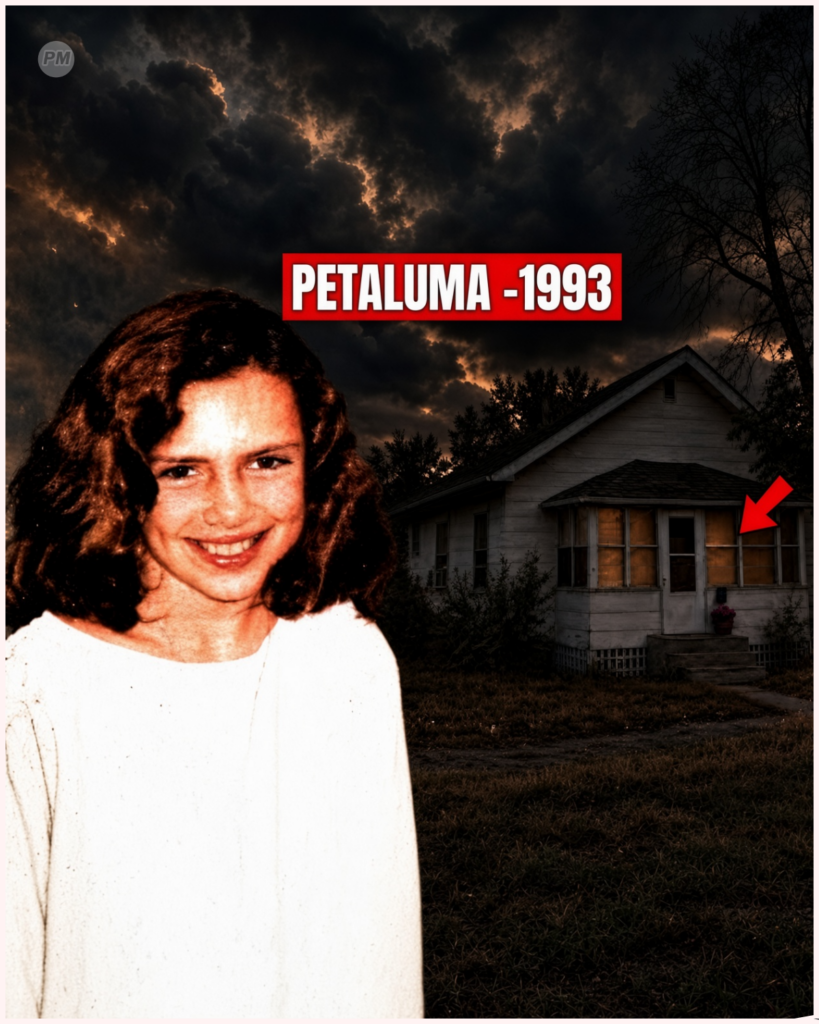
On the night of October 1st, 1993, an urgent bulletin went out across Sonoma County.
A 12-year-old girl had been taken from her bedroom. Two sheriff’s deputies stood face to face with the man who took her.
They ran his name, saw his record, and doubted his story, but the bulletin never reached their radios.
They watched him drive away, and investigators would later come to believe Polyclass was hidden in the brush just yards from where they stood.
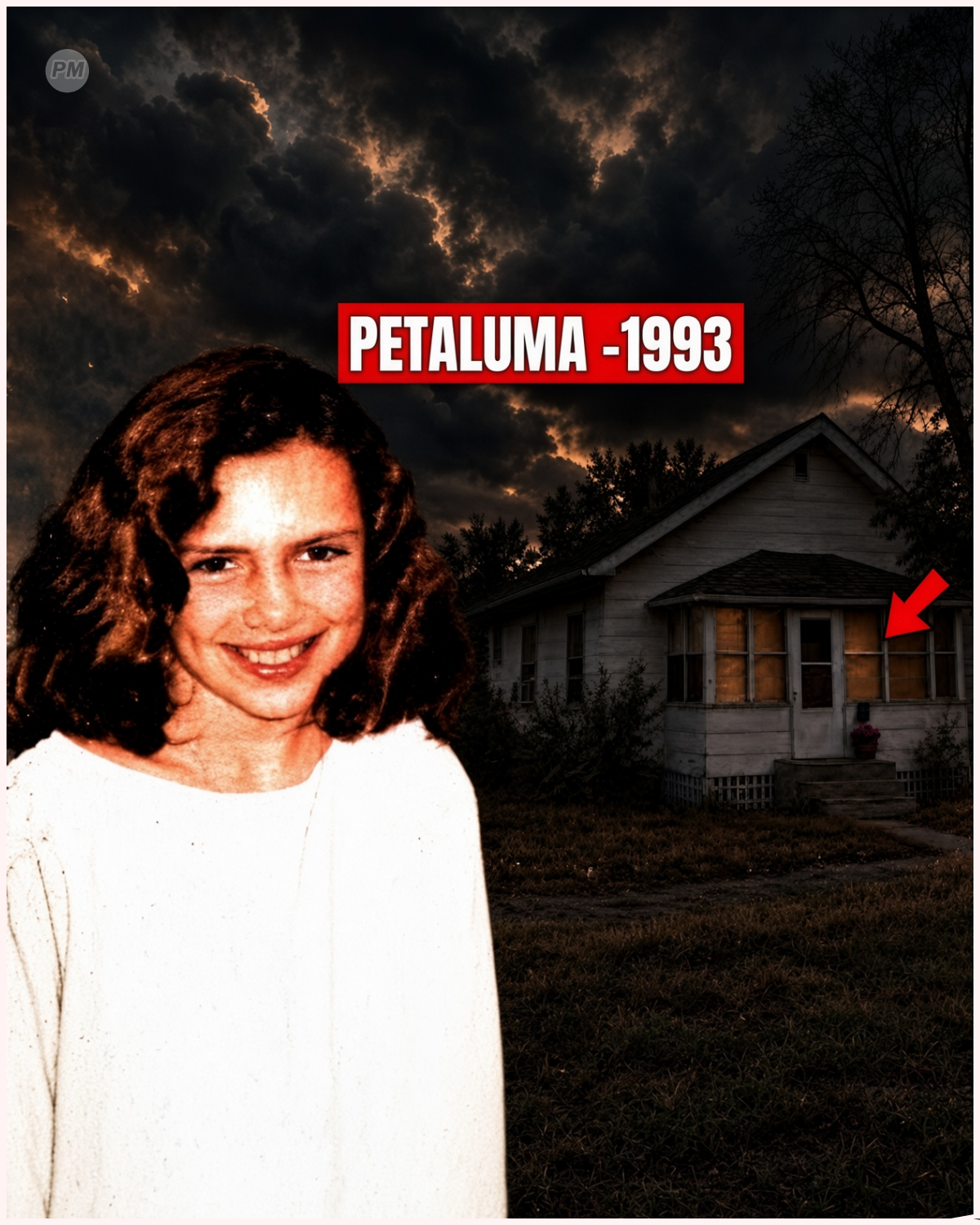
A slumber party child killer who blindfolded a group of little girls about age 12, drags one out and strangles for dead, set to walk free over my cold dead body.
On the night of October 1st, 1993, in a quiet house in Paluma, California, everyone was safe behind locked doors except for one window.
Upstairs, three 12-year-old girls were still awake, laughing behind a closed bedroom door. They never heard the window open.
Think back to when you were 10, maybe 11 years old, and your parents finally said yes to a sleepover.
Popcorn, a movie, staying up long past the hour anyone was supposed to be asleep.
For most of us, those nights were the safest kind of freedom we’d ever know.
In that quiet Northern California town, 12-year-old Polly Class had two friends over for exactly that kind of night.
Her mother had gone to bed. Her little sister was already asleep. The three girls shut the bedroom door and kept talking.
The way kids do when the house finally goes still. Then at around 10:30, that door opened.
The person standing there didn’t belong in that house. He didn’t belong anywhere near it.
And before the night was over, he would cross paths with the one group of people who could have ended everything right there.
They didn’t. This is the story of Polyclass, a true crime documentary from Graved Docks.
Before we open this case, tell me where you’re watching from tonight. And if you want more true crime documentaries told with care, subscribe to Grave Docks.
Now, let’s go to Paluma. Pauliey’s mother, Eve, had a house in Paluma, a small town in Soma County about an hour north of San Francisco.
In the fall of 1993, it was the kind of place people moved to so they could stop worrying.
Main street storefronts, quiet neighborhoods, kids riding bikes until the street lights came on. That Friday night, inside the house, everything felt the way it was supposed to.
Polly and her two friends spent the evening hanging out, making popcorn, and watching movies.
As it got later, Pauliey’s little sister, Annie, went up to bed. Not long after, Eve called it a night, too.
The girls were nowhere near tired. They headed up to Pauliey’s bedroom, closed the door, and kept talking.
The way 12-year-olds do when the rest of the house has gone dark, and the night still feels like it belongs to them.
Nothing about that house was out of place. Nothing about that street was out of place.
But somewhere in Paluma that night was a man who had spent almost his entire life being exactly that, out of place.
And every time the system had a chance to keep him away from people, it let him go.
His name was Richard Allen Davis. In 1993, he was 39 years old and his story started in San Francisco.
By the accounts that later came out, both of his parents drank heavily, and the home he grew up in was violent and unpredictable.
Punishments there weren’t about discipline. When he was still a toddler, one of them was so cruel that people who heard about it years later struggled to repeat it.
Instead of scaring him straight, that childhood seemed to push him in only one direction.
He watched his parents fight until they finally divorced when he was 11. By 12, he was on probation for burglary.
At 15, it happened again. At 17, he was caught with a stolen motorcycle, and a judge gave him a choice, juvenile detention or the army.
He chose the army. He lasted about 13 months before he was discharged. In 1973, he was at a party where a young woman died of a gunshot wound.
Her death was ruled a suicide, but some of the people there that night never stopped wondering about Davis, and those questions were never answered.
What isn’t in doubt is what came next. In 1976, he forced a woman named Francis Maize into his car at Knife Point and drove her to a secluded area.
Somehow, she got hold of the knife, got out of the car, and ran for the highway.
She survived. Davis went to prison. And then he got out. Then he went back.
Then he got out again. Burglaries, stolen property, sentences that sounded long on paper but kept ending early.
He later told a psychiatrist that stealing gave him a kind of comfort, almost like a compulsion that filled something missing inside him.
He was diagnosed with antisocial and skitsoid personality disorders. By any reasonable measure, everyone who dealt with him had been warned.
In 1982, he was released again. This time, he wasn’t alone. He and a girlfriend named Sue Edwards started committing robberies together, and the violence started to escalate.
In 1984, they forced their way into the Redwood City home of a woman Edwards knew through her sister, a woman they believed had money.
With members of her family in the house, they threatened her. And when she resisted, Davis struck her with a gun hard enough to leave a wound that needed stitches.
They made her clean herself up, then drove her to the local bank and waited while she withdrew $6,000 for them.
She would later describe Davis’s eyes as cold and the look on his face as something close to enjoyment.
Not long after, he was pulled over for a broken tail light and arrested. He was sentenced to prison and served about half of his time.
In the summer of 1993, Richard Allen Davis was parrolled once again. 3 months later, he was in Pedaluma, and on the night of October 1st, in a house where everyone believed they were safe, one window had been left unlocked.
The window was enough. Richard Allen Davis came through it and into the quiet of Eve’s house.
He’d been drinking and investigators would come to believe he had chosen the house almost at random.
Nothing about that night suggested a plan. He didn’t arrive with a weapon. Once he was inside, he found a knife in the kitchen.
Then he heard them. Upstairs, behind a closed bedroom door, three girls were still talking and laughing, completely unaware anyone else was in the house.
Davis climbed the stairs, walked to Pauliey’s door, and opened it. He told them to stay quiet.
He told them that if they did what he said, nobody would get hurt. He said he was only there for money.
Terrified, the girls did exactly what he told them. He tied all three of them with rope and he pulled pillowcases over the heads of Pauliey’s two friends so they couldn’t see.
Then he told them he’d bring Polly back once he’d gotten what he came for and that they should count to a thousand.
So they counted, sitting there in the dark, doing the only thing they’d been told they could do.
After a few minutes, they stopped and listened. Nothing. No footsteps, no drawers opening, no voice in the hallway.
The house was completely still, and Polly hadn’t come back. The girls worked themselves free and went to wake Eve.
What they told her was so sudden and so strange that for a moment she wondered whether it was some kind of prank.
It wasn’t. About half an hour after Davis opened that bedroom door, Eve was on the phone with 911, still struggling to believe what she was saying.
A stranger had come into her home and her daughter was gone. Pedaluma police moved fast.
An all points bulletin went out across Soma County. A missing 12-year-old girl and the man believed to have taken her.
But how that bulletin traveled would end up mattering more than anyone in that department could have known.
The alert went out on the radio channel used by the county’s sheriff’s offices. From there, it was up to each office to pass it along to its own deputies in the field.
The deputies out on patrol weren’t listening to that channel. They kept their radios on a different one, the one they used to talk to each other.
So, at the very moment the most urgent call in the county was going out, the people driving its dark back roads that night hadn’t heard it.
Just before midnight, about 20 mi north of Pauliey’s house in the rural hills outside Santa Rosa, a babysitter was finishing up for the night.
She got in her car and started down the long, isolated driveway that led from her employer’s home out to the road.
Partway down, her headlights caught something that shouldn’t have been there. A car nose down in a ditch on a private driveway in the middle of nowhere and someone was with it.
The babysitter didn’t stop. A car stuck on a private driveway at that hour, nowhere near the road, didn’t make sense.
And she wasn’t about to get out and ask. She drove to a nearby gas station and called the woman who owned the property, Dana Jaffy.
Dana was a single mom who worked long hours as a chef, and the news unsettled her right away.
Whoever was down there had no reason to be on that land. Either he’d gotten lost on a road almost nobody used, or he had been headed toward the house.
Dana didn’t want to stick around and find out which. She put her young daughter in the car and drove out.
That meant driving right past him. As her headlights swept across the stranded car, she saw the man standing beside it.
And for a moment, they looked right at each other. She would never forget his eyes.
Years earlier, a woman in Redwood City had described those same eyes as cold. Dana kept driving, pulled into the same gas station her babysitter had used, and called 911.
Two Sonoma County Sheriff’s deputies arrived a short time later. The man by the car was cooperative, even friendly.
He said he’d swerve to avoid a deer, gone off the road, and gotten stuck, and that he’d been waiting for help ever since.
The deputies did what they were trained to do. They ran his driver’s license and his plate.
No warrants. He’d been out of prison only a few months, and he wasn’t wanted for anything.
But the check showed them exactly who they were dealing with. A man with a long criminal record going back decades.
The deer story didn’t sit right with either of them. At worst, they figured he’d been planning to break into the house at the top of the hill.
What they didn’t know, because the bulletin out of Paluma had never reached their radios, was that a 12-year-old girl had disappeared from her bedroom about an hour and a half earlier.
They wanted a reason to take him in and keep asking questions. Under California law, there was one option.
A citizen’s arrest for trespassing. Dana would have to come back, stand face tof face with this man in front of the deputies, and place him under arrest herself.
Then they could take him in. Dana said no. It was late. She had her little girl with her, and the last thing she wanted was to stand in front of that man again.
She just wanted to go home. Without her, the deputies had nothing to hold him on.
They called for a tow truck, and while they waited, they looked inside his car.
It was messy, but nothing stood out except an open can of beer. Davis said he’d only opened it after he got stuck.
And since he wasn’t behind the wheel when they arrived, they had him pour it out and left it there.
The tow truck pulled the car free. Davis thanked the deputies for their help. They followed him back to Highway 101 and watched his tail lights fade into the dark.
Back in Paluma, a mother was sitting by the phone, praying her daughter would walk through the door.
On that driveway outside Santa Rosa, nobody had any idea how close they’d just come.
And by morning, the whole country would start looking for Polly. Polyclass’s disappearance hit the country in a way few cases ever had.
This hadn’t happened on a dark street or a walk home from school. It happened at a sleepover behind a closed bedroom door with her mother asleep and her sister just down the hall.
In a town people chose because it felt safe. If it could happen there, parents everywhere started asking, “Then where couldn’t it happen?”
Hedaluma answered by refusing to stop looking. Volunteers packed a makeshift search center. Neighbors who’d never met the class family spent their weekends combing fields and roadsides.
Her photo, the bright smile and long hair went up on store windows, telephone poles, and truck stop bulletin boards from one end of California to the other.
Then it went further than any missing child’s picture had gone before. The internet was still brand new to most Americans, and Paulie’s poster became one of the first ever spread online.
Over the next 2 months, millions of flyers with her face on them reached every state and countries around the world.
She was on the cover of People magazine and her case was followed on national television as it unfolded.
Even the investigators struggled to make sense of it. It was as if a boogeyman had walked into that house and taken her.
Hollywood noticed, too. Actress Winona Ryder, who grew up in Pedaluma, put up a $200,000 reward for Paulie’s safe return.
Thousands of people joined the searches. Tens of thousands of tips poured in, each one checked, each one carrying the hope that this might be the one.
By the end of that fall, it was hard to find anyone in America who hadn’t heard Pauliey’s name.
Maybe you remember it yourself. The face on the news, the flyers taped up at the grocery store, the feeling that every family in the country was waiting for the same phone call.
But weeks turned into a month and then nearly two. The tips kept coming, the searches went on, and still nobody could say where Polly was.
All that time, about 20 mi north, a stretch of quiet land outside Santa Rosa sat waiting.
On November 27th, almost 2 months after that night on the driveway, Dana Jaffy was walking her property.
She’d recently had some trees cleared out back, and she wanted to see how the work had turned out.
She was just taking a look around the way anyone would. Then, down in the mud, something caught her eye.
Something red. Dana stepped closer. Half buried in the mud was a pair of red leggings small enough to belong to a child.
A few feet away lay a child’s black sweatshirt. And next to them, scattered in the leaves were pieces of white cord that had been cut.
For 2 months, Pauliey’s face had been everywhere. On the news, at the grocery store, on every flyer in town.
Dana knew it. And standing there, she thought back to that night in October. The car stuck in her driveway and the man beside it who had looked straight at her.
In that moment, it all came together. Whatever he had really been doing out here, it had nothing to do with a deer.
She called the police. Investigators taped off the area and searched every inch of ground.
One of the detectives took a single look at the white cord lying in the leaves and recognized it immediately.
It was the same kind of rope that had been used on Pie’s two friends in her bedroom.
Then came the moment every family dreads. The clothing was shown to Paulie’s family and they confirmed it was hers.
Two months of hoping, searching, and waiting for the phone to ring. And now the worst possible answer was starting to take shape.
Investigators had been holding on to one critical piece of evidence since the very first night.
In Pie’s bedroom, on the bed frame, they’d lifted a single palm print. It didn’t belong to Polly, her family, or either of her friends.
It had to have come from the man who walked through that door. But a print is only useful if there’s someone to compare it to.
And until now, they’d had no one. Now they had a name. The car on the driveway, the deputies report, the man with the long record.
Investigators started calling every agency that might have arrested Richard Allen Davis, hoping that somewhere along the way someone had taken his palm prints.
Most departments didn’t do that routinely, but one had. It was a match. 2 days later, Davis was arrested and brought in for questioning.
Detectives laid it out for him, his palm print from Pauliey’s bedroom. He’d been caught.
When they asked him whether he had taken poly class, he nodded. Then they asked the question an entire country had been asking for 2 months.
Was she still alive? Davis shook his head. He never gave a full account of what happened that night, but he agreed to take investigators to her.
Days later, he led them to a wooded area off Highway 101 to a spot where he’d hidden her beneath a sheet of plywood.
That was where the search for Polyclass ended. 64 days after she disappeared from the safety of her own bedroom, she was finally found.
And a nation that had spent 2 months hoping had to accept that she was never coming home.
If you’ve made it this far, thank you. Gravedoc is a new channel working toward 1,000 subscribers.
If stories like this deserve to be told with care, help us get there. Because the hardest part of this story wasn’t over.
Once investigators knew the truth, they had to go back to that night on the driveway outside Santa Rosa to the two deputies, the deer story, and the tow truck.
They had to figure out what had really been happening while Richard Allen Davis stood there thanking them for their help.
Looking back, the details from that night on the driveway took on a very different meaning.
The deputies who stood with Davis remembered that he’d been sweating heavily. Even though the night was cool, they remembered twigs and bits of brush caught in his hair and on his clothes.
At the time, it had looked like a man who’d spent a rough hour trying to dig his car out of a ditch.
Investigators came to believe something else. When his car got stuck, Davis hid Polly in the thick brush nearby, only yards from where he stood talking to the deputies.
Whether she was still alive at that moment is a question that has never been fully answered.
After the deputies watched him drive away on Highway 101, investigators believe he came back for her, then drove north to the place where she would be found 2 months later.
The two people who could have ended it that night had been standing right there.
They had his name, his record, and their doubts about his story. What they didn’t have was one radio bulletin.
Pauliey’s death left the country in grief and then in anger. People wanted to know how a man with Davis’s history kept being let back into the world.
In 1994, California voters and lawmakers answered with the three strikes law, which put repeat offenders with serious and violent records behind bars far longer, in many cases for life.
It became one of the most direct legal legacies of Paulie’s case. Over time, though, critics argued it swept up far more people than intended and fell hardest on communities of color, and the state went on to reform it.
The breakdown that let Davis drive away that night didn’t go ignored either. California changed the way urgent bulletins go out so that an alert like the one about Polly reaches every officer on every channel right away.
The next deputy standing on a dark road with a stranger would know what everyone else knew.
Then came the courtroom. With the palm print, the evidence from Dana’s land, his long record, and his own confession, there was little doubt about how Davis’s trial would end.
In 1996, a jury found him guilty of Pauliey’s murder. What nobody was prepared for was the way he behaved.
When the verdict was read, Davis turned to the courtroom camera and raised both middle fingers.
At his sentencing, he went further. He stood and claimed that Polly had said something about her father, Mark.
A claim with no basis whatsoever, meant to wound a family that had already lost everything.
Even then, he wasn’t finished hurting the class family. Richard Allen Davis was sentenced to death.
Today, he is 72 years old, and he is still on California’s death row.
In 2019, the state put executions on hold. And in 2024, a judge rejected his attempt to have his death sentence thrown out.
More than three decades after that October night, he is still waiting. But Pauliey’s story didn’t end with him.
Her name lives on in the Poly Class Foundation and in the Class Kids Foundation started by her father, Mark.
For years, they have fought for missing children, pushed for stronger protections, and made sure that families who get that phone call in the middle of the night don’t have to face it alone.
Polly was 12 years old. She was at home with her friends in her own bedroom on a night that should have been nothing more than popcorn, movies, and staying up too late.
She deserved to grow up. She deserved to come back through that door. If you stayed with me to the end, leave the words justice for Polly.
It tells me who was here for the whole story, and it helps make sure this isn’t just another case file.
If stories like this matter to you, subscribe to Gravedocs because some truths don’t stay buried forever.