What Really Happens When You Pray Lying Down? The Biblical Truth Every Catholic Should Know

But does praying while lying down make a prayer less meaningful?
Can someone who is physically exhausted still offer a prayer that reflects genuine faith?
The answer lies in Scripture, early Christian history, and a fundamental distinction between outward religious gestures and inward devotion.
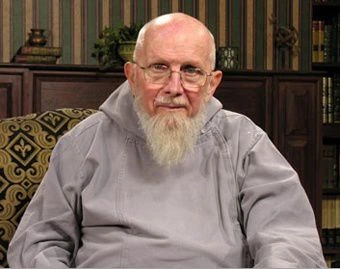
Although this discussion is sometimes attributed to the late Catholic priest Fr. Benedict Groeschel, the specific commentary cannot be verified as his own teaching.
Nevertheless, the underlying question reveals something important about the Catholic understanding of prayer.
The tradition of kneeling reaches deep into biblical history.
In the Book of Daniel, the prophet continues kneeling in prayer three times daily despite a royal decree threatening punishment.
His posture becomes an outward expression of unwavering fidelity.
In the Garden of Gethsemane, Jesus prays in profound anguish as he prepares for his Passion.
The Gospels describe him kneeling or falling upon the ground, depending on the account.
These passages demonstrate that bodily gestures can communicate spiritual realities.
Kneeling expresses humility.
Standing can symbolize reverence and readiness.
Bowing reflects submission before divine authority.
Yet Scripture does not present one physical position as universally necessary for every private prayer.
This distinction becomes particularly clear in the Psalms.
Psalm 63 describes remembering God while resting in bed and meditating during the night watches.
The passage portrays nighttime reflection as a meaningful expression of devotion.
Rather than treating the bedroom as spiritually inappropriate, the psalmist presents it as a place where remembrance of God can continue after ordinary activities have ended.
Psalm 4 similarly encourages reflection upon one’s bed and quietness before God.
These passages do not abolish traditional prayer postures.
They demonstrate that prayer can extend beyond formal worship settings.
The biblical example of King Hezekiah offers another revealing perspective.
According to the Second Book of Kings, Hezekiah became seriously ill and received a message from the prophet Isaiah warning that his death was approaching.
Overwhelmed by the announcement, the king turned his face toward the wall and prayed.
He wept as he appealed to God.
The account then describes Isaiah receiving another divine message announcing that Hezekiah’s prayer had been heard.
The king was promised recovery and additional years of life.
The passage does not explicitly establish every detail of Hezekiah’s physical position.
Nevertheless, it places his prayer within the circumstances of serious illness rather than a formal ceremony.
The narrative emphasizes his tears, sincerity, and dependence upon God.
His prayer was not presented as ineffective because he lacked the strength to participate in an elaborate ritual.
Instead, the story highlights the personal nature of his appeal.
Another powerful example appears in the life of Elijah.
In the nineteenth chapter of the First Book of Kings, the prophet experiences fear and exhaustion after confronting severe danger.
He withdraws into the wilderness, sits beneath a tree, and expresses profound despair.
After praying, he lies down and sleeps.
An angel awakens him and provides food and water.
Elijah then rests again before continuing his journey.
The account offers an important insight into the relationship between physical weakness and spiritual life.
Elijah’s exhaustion is not treated as evidence that he has become unworthy of divine attention.
His immediate needs include nourishment and rest.
The story therefore challenges the assumption that religious devotion requires a person to ignore the limitations of the body.
Catholic spirituality has long recognized that human beings pray as embodied persons.
Physical gestures matter because the body participates in worship.
But bodily limitations do not eliminate the possibility of genuine prayer.
This understanding becomes especially important for the sick, elderly, disabled, and physically exhausted.
A patient confined to a hospital bed may be unable to kneel.
Someone recovering from surgery may find even sitting upright difficult.
An older person living with chronic pain may need to pray while reclining.
None of these circumstances automatically makes prayer less sincere.
The Catechism of the Catholic Church describes prayer as a living relationship with God.
Its emphasis includes the movement of the heart, the role of faith, and the different forms through which believers express devotion.
Prayer is therefore more than the physical arrangement of the body.
It involves the person’s attention, intention, and openness to God.
The teaching of Jesus in Matthew 6 reinforces this principle.
Christ warns against religious practices performed primarily to attract admiration.
He criticizes those who make a public display of prayer in order to be noticed.
The problem is not that they stand while praying.
The problem is the desire to turn devotion into a performance.
Jesus instead directs attention toward sincerity and a relationship with the Father.
This teaching has important implications for private prayer.
Someone kneeling in a church can pray with deep devotion.
Someone lying quietly in bed can also pray sincerely.
Conversely, either person may become distracted or merely repeat words without reflection.
The outward position alone cannot determine the spiritual quality of the prayer.
Early Christian history provides further context.
The First Council of Nicaea, held in 325, addressed prayer posture in its twentieth canon.
The council directed Christians to stand during prayers on Sundays and throughout the Pentecost season, reflecting the joyful character associated with the Resurrection.
This historical rule is significant because it demonstrates that standing, not kneeling, was sometimes the prescribed posture for communal prayer.
The early Church did not simply assume that kneeling was always the most appropriate expression of devotion.
Different gestures carried different meanings depending on the liturgical occasion.
The early Christian theologian Origen also discussed the relationship between prayer and bodily posture.
In his work on prayer, he recognized the value of traditional gestures while acknowledging circumstances in which ordinary positions might not be possible.
Such discussions show that Christians were already considering questions of posture many centuries before modern debates about bedtime prayer.
The Jewish religious world also offers a revealing historical parallel.
The Mishnah records a disagreement between the schools of Shammai and Hillel concerning the recitation of the Shema.
The school of Shammai interpreted the biblical instruction about lying down and rising up as requiring particular bodily positions.
The school of Hillel understood the passage more broadly, permitting recitation in different postures.
The disagreement concerned a specific Jewish prayer obligation rather than Christian prayer generally.
Nevertheless, it illustrates how religious communities have long distinguished between the timing of prayer and the position of the body.
For Catholics today, the central question is not whether lying down has always been preferred.
It is whether private prayer requires a physical posture that Scripture and Church teaching do not universally demand.
The answer is no.
However, this freedom should not be confused with the elimination of liturgical discipline.
During Mass and other formal celebrations, the Church establishes postures appropriate to communal worship.
Standing, sitting, and kneeling help the congregation express shared beliefs through common actions.
These practices serve a different purpose from the personal prayer offered privately before sleep.
A Catholic who prays lying down at home is not thereby rejecting the importance of kneeling during liturgical worship.
The two situations belong to different contexts.
This distinction also helps explain the biblical instruction to pray continually.
In his First Letter to the Thessalonians, Saint Paul encourages believers to pray without ceasing.
The instruction cannot reasonably mean remaining physically kneeling throughout every moment of life.
Instead, Christian tradition understands continuous prayer as an enduring orientation toward God.
A person may pray while walking, working, resting, or completing ordinary responsibilities.
Brief prayers of thanksgiving, requests for wisdom, and moments of silent remembrance can become part of daily life.
Bedtime offers a particularly natural opportunity for this kind of devotion.
As external distractions diminish, believers can review the experiences of the day.
They may express gratitude for moments of kindness.
They may acknowledge mistakes and ask forgiveness.
They may pray for loved ones facing difficulties.
And they may entrust unresolved worries to God before sleeping.
These practices do not require elaborate language.
A simple prayer can be meaningful when it expresses genuine faith.
The biblical account of Hannah provides another example.
In the First Book of Samuel, Hannah prays silently while experiencing profound emotional distress.
Her lips move, but her voice cannot be heard.
The priest Eli initially misunderstands her behavior.
Yet the narrative ultimately presents her prayer as sincere and deeply significant.
Her experience demonstrates that audible words and outward appearances do not always reveal what is happening within a person’s spiritual life.
The account of the repentant criminal crucified beside Jesus offers an even more striking example.
Physically restrained and approaching death, the man asks Christ to remember him.
He cannot kneel, participate in a ceremony, or perform an extended act of devotion.
Nevertheless, Jesus responds with a promise of paradise.
The passage is primarily about repentance, mercy, and faith.
It is not a technical instruction concerning prayer posture.
But it powerfully illustrates that physical helplessness does not prevent a person from turning toward God.
For believers troubled by guilt about bedtime prayer, these examples provide meaningful reassurance.
Physical exhaustion is not automatically spiritual negligence.
There is, however, an important distinction between unavoidable tiredness and persistent indifference.
Catholic spirituality encourages believers to cultivate regular, intentional prayer rather than treating communication with God as an occasional afterthought.
Someone who routinely falls asleep before finishing a prayer may benefit from praying earlier in the evening.
Others may find that a brief, attentive prayer in bed is more realistic than attempting an extended devotion when completely exhausted.
Neither approach needs to become a source of unnecessary anxiety.
The purpose is to foster a consistent relationship with God.
Fr. Benedict Groeschel’s broader pastoral work frequently addressed the challenges of authentic spiritual development.
His ministry emphasized the importance of prayer, psychological maturity, and a realistic understanding of human weakness.
Those themes are relevant to the question of praying while lying down, even though the specific statements attributed to him in popular online presentations should not be accepted without reliable documentation.
The deeper Catholic principle is that reverence and accessibility need not compete.
Kneeling remains a beautiful and meaningful expression of worship.
Standing can express respect and spiritual attentiveness.
Sitting may support reflection and Scripture reading.
Lying down can accompany prayer when rest, illness, or exhaustion makes other positions difficult.
What matters is that these gestures serve authentic devotion rather than become substitutes for it.
The final lesson is therefore both simple and profound.
Prayer is not a physical examination in which every movement must satisfy a rigid standard.
It is a relationship that can continue through the ordinary circumstances of human life.
The person who kneels before a crucifix and the exhausted parent who whispers a prayer after putting the children to bed may both be expressing genuine faith.
The hospital patient who cannot rise and the elderly believer who prays silently before sleeping remain capable of meaningful spiritual communion.
For Catholics, the invitation is not to abandon traditional gestures.
It is to understand why those gestures exist and how they support the deeper purpose of prayer.
When the day ends and physical strength has disappeared, the opportunity to pray has not necessarily disappeared with it.
A quiet expression of gratitude, repentance, or trust can still become a meaningful act of devotion.
And perhaps the most revealing question is not whether someone is kneeling, standing, or lying down when speaking to God.
It is whether the prayer being offered reflects a heart genuinely seeking him.


