3 Sins of Old Age That Can Endanger Your Soul: A Catholic Warning About Bitterness, Despair, and Presumption

Growing older is often described as a season of wisdom, reflection, and spiritual peace.
Yet Catholic teaching offers a more complicated perspective on the final decades of human life.
A person may have spent years attending Mass, raising a family, serving the Church, and overcoming extraordinary hardships, only to discover that certain spiritual struggles remain unresolved.
Some become increasingly resentful of past injuries.
Others lose hope as illness, loneliness, or bereavement change their circumstances.
Still others begin assuming that decades of religious practice have made further repentance unnecessary.
These struggles raise an unsettling question.
Can habits that appear ordinary in later life gradually weaken a person’s relationship with God?
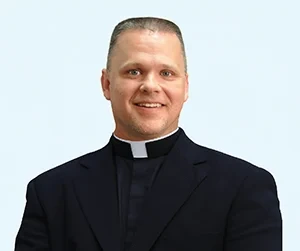
A religious message circulated under the name of Fr. Chris Alar, MIC, identifies three particular dangers: bitterness, despair, and presumption.
Although the specific message has not been authenticated as his personal teaching, these themes have substantial foundations in Catholic moral theology.
Understanding them requires distinguishing genuine moral responsibility from the emotional and physical difficulties that can accompany aging.
The first danger is bitterness, a condition that can develop when unresolved anger becomes a lasting attitude toward other people.
Every human life contains disappointments.
Relationships break down, promises are forgotten, friendships disappear, and loved ones sometimes cause profound pain.
As people grow older, these experiences may accumulate into a complicated personal history.
Memories that once seemed manageable can return with unexpected intensity.
An elderly parent may continue grieving a painful separation from an adult child.
A widow may struggle with resentment over the circumstances surrounding her husband’s death.
Someone who devoted decades to supporting relatives may feel forgotten when assistance is finally needed.
Such emotions are not automatically sinful.
Catholic moral teaching recognizes that anger, sadness, and grief can arise without deliberate consent.
The spiritual concern emerges when resentment is consciously cultivated, when a person repeatedly chooses hostility, or when the desire for revenge begins directing behavior.
The Letter to the Hebrews warns against allowing a root of bitterness to grow and cause trouble.
The imagery is particularly revealing.
A root develops beneath the surface before its effects become visible.
Similarly, resentment may begin as a private response to injustice before influencing conversations, relationships, and decisions.
A person who constantly revisits an old betrayal may eventually interpret unrelated events through the same painful experience.
Ordinary disagreements become evidence of disrespect.
Attempts at reconciliation are viewed with suspicion.
Even sincere gestures of affection may be rejected.
Catholic spirituality proposes forgiveness as an essential response, but forgiveness is frequently misunderstood.
It does not require pretending that wrongdoing never occurred.
It does not demand immediate emotional relief.
Nor does it oblige someone to restore contact with an abusive or dangerous person.
Forgiveness concerns relinquishing the desire for vengeance while recognizing that justice, accountability, and appropriate boundaries may still be necessary.
For older Catholics, this distinction can be liberating.
Someone who has carried an injury for decades may begin by acknowledging the pain honestly rather than denying it.
Prayer, spiritual direction, counseling, and the Sacrament of Reconciliation can support that process.
The goal is not to erase memory.
It is to prevent past suffering from controlling the person’s remaining relationships.
The second spiritual danger is despair.
Among the three concerns, despair requires particularly careful explanation because religious language can easily confuse a theological condition with depression or ordinary emotional suffering.
In Catholic theology, despair is a sin against hope when a person deliberately rejects trust in God’s mercy or the possibility of salvation.
The Catechism of the Catholic Church discusses this danger in paragraph 2091.
But experiencing sadness, hopeless feelings, grief, or clinical depression does not automatically mean someone has committed that sin.
Psychological distress can involve circumstances beyond voluntary control.
This distinction is especially important for older adults.
Aging may bring physical limitations, reduced independence, financial uncertainty, or the death of close companions.
A person who once enjoyed an active social life may suddenly spend long periods alone.
Someone facing a serious diagnosis may become frightened about the future.
These reactions are human responses to difficult circumstances, not proof of spiritual failure.
The theological danger arises when a person knowingly and freely embraces the belief that divine mercy is unavailable to them.
Catholic Christianity consistently teaches the opposite.
The Gospel accounts repeatedly emphasize Christ’s willingness to receive those who turn toward him.
One of the most striking examples appears during the Crucifixion.
A criminal dying beside Jesus acknowledges his wrongdoing and asks to be remembered.
Christ responds with a promise of paradise.
The passage has long been understood as a powerful illustration of repentance and mercy even near the end of life.
Its significance is not that a person should postpone conversion until death.
Rather, it demonstrates that age and past wrongdoing do not automatically place someone beyond God’s forgiveness.
This teaching has profound implications for elderly believers who regret earlier decisions.
A person may look back on failed relationships, neglected responsibilities, or years spent away from religious practice.
The temptation may be to conclude that meaningful change is no longer possible.
Yet Catholic theology does not treat spiritual growth as something reserved for the young.
Repentance remains possible.
Acts of charity remain meaningful.
Prayer can continue even when physical strength declines.
And reconciliation may still be pursued, although its outcome cannot always be controlled.
The Christian response to despair therefore involves more than repeating optimistic statements.
It includes maintaining realistic sources of support.
Participation in parish life, contact with trusted relatives, pastoral visits, and appropriate medical or psychological care can all help someone facing emotional distress.
For individuals experiencing depression, professional treatment is compatible with religious faith.
Seeking such help should never be portrayed as evidence of insufficient trust in God.
Catholic teaching recognizes the dignity of the whole person, including psychological and physical needs.
Hope, in this context, is not a guarantee that illness will disappear or that every broken relationship will be restored.
It is the conviction that suffering and human limitations do not eliminate a person’s dignity or their relationship with divine mercy.
The third danger is presumption, which occupies an important place in Catholic moral theology.
If despair involves rejecting hope in God’s mercy, presumption distorts that hope by treating forgiveness as automatic regardless of repentance.
The Catechism addresses both dangers together.
Presumption can involve expecting salvation through one’s own abilities without divine grace, or assuming that God’s forgiveness requires no conversion.
For someone who has practiced Catholicism for many decades, this temptation may take a subtle form.
Religious routines can become so familiar that their deeper meaning receives little attention.
A person may attend Mass regularly but stop examining habitual unkindness.
Another may assume that charitable donations compensate for persistent dishonesty.
Someone else may believe that years of service have earned an unquestionable right to heaven.
The problem is not religious commitment itself.
The problem is confusing a history of religious activity with complete moral transformation.
Catholic teaching emphasizes that salvation is a gift of divine grace.
Good works matter as expressions of faith and cooperation with grace, but they are not grounds for spiritual arrogance.
Saint Augustine’s writings repeatedly explore the relationship between grace, humility, and human dependence upon God.
His theological legacy challenges the assumption that individuals can secure holiness through personal achievement alone.
This perspective remains relevant throughout life.
A person who has been Catholic for seventy years still benefits from examining their conscience.
Longstanding religious knowledge does not eliminate the possibility of pride, selfishness, or uncharitable behavior.
Likewise, receiving the sacraments should not become an exercise performed without reflection.
The Sacrament of Reconciliation offers Catholics an opportunity to acknowledge wrongdoing, receive absolution, and renew their commitment to conversion.
The Eucharist occupies a central place in Catholic spiritual life, strengthening communion with Christ and the Church.
These practices are not intended to generate constant anxiety about salvation.
Their purpose includes fostering humility, gratitude, and confidence in God’s grace.
Presumption can also appear in the belief that moral improvement is no longer necessary because life is approaching its conclusion.
But the Christian understanding of holiness does not establish a retirement age.
Older believers remain capable of generosity, reconciliation, patience, and service.
Some discover new opportunities to mentor younger generations.
Others become important sources of encouragement for families facing difficulties.
Those with limited mobility may contribute through prayer, correspondence, or compassionate attention to caregivers and fellow patients.
The value of these contributions does not depend on public recognition.
Catholic spirituality has traditionally regarded ordinary acts of love as meaningful expressions of faith.
Taken together, bitterness, despair, and presumption reveal three different ways in which spiritual life can become distorted.
Bitterness can keep a person imprisoned by past injuries.
Despair can obscure the possibility of mercy and renewal.
Presumption can replace humility with a false sense of spiritual security.
Yet none of these tendencies belongs exclusively to old age.
Younger people can struggle with resentment, hopelessness, and arrogance as well.
The distinctive challenge of aging is that accumulated experiences may intensify certain habits while changing the resources available to address them.
This is why pastoral care for older Catholics requires compassion rather than fear.
Aging itself is not a spiritual defect.
Illness is not evidence of divine rejection.
Loneliness does not automatically indicate a lack of faith.
And difficult emotions should not be treated as proof that someone is losing their soul.
Catholic moral theology considers freedom, knowledge, and consent when evaluating personal responsibility.
The Church’s teaching on mortal sin requires grave matter, full knowledge, and deliberate consent.
Consequently, no observer can determine an elderly person’s eternal destiny simply by noticing sadness, anger, or declining religious participation.
The Church also teaches that final judgment belongs to God.
These principles provide an important corrective to sensational claims that countless older Christians are being condemned because of three commonly experienced struggles.
The genuine Catholic warning is more nuanced.
Every stage of life offers opportunities for moral growth, and every stage presents temptations that require attention.
For someone entering the later years, a practical examination of conscience may begin with three questions.
Are there past injuries that still influence how I treat others?
Have fear or disappointment caused me to withdraw from sources of hope and support?
Have I become so comfortable with religious routines that I no longer recognize the need for personal conversion?
The answers need not produce shame.
They can become starting points for honest reflection, pastoral conversation, and meaningful change.
The Christian understanding of old age also includes a positive vision that is sometimes overlooked.
The Book of Psalms describes the righteous continuing to bear fruit in later years.
That image challenges the assumption that spiritual usefulness disappears with physical strength.
An older person may no longer possess the energy of youth, but experience can deepen compassion, patience, and wisdom.
The ability to forgive after decades of conflict can become a powerful witness.
The courage to seek help during emotional suffering can demonstrate humility.
And the willingness to acknowledge personal faults after a lifetime of religious practice can reveal genuine spiritual maturity.
These are not small achievements.
They represent the continuing possibility of transformation.
Ultimately, the Catholic message about the final years of life is not that elderly believers should live in constant terror of hidden sins.
It is that faith remains a living relationship requiring trust, repentance, and love.
Bitterness need not determine the meaning of past suffering.
Despair need not define the future.
Presumption need not prevent renewed humility.
The final chapter of life can still contain reconciliation, service, and unexpected spiritual growth.
And perhaps the most important question for any believer approaching old age is not how many mistakes remain in the past, but how much love, hope, and humility can still shape the years ahead.