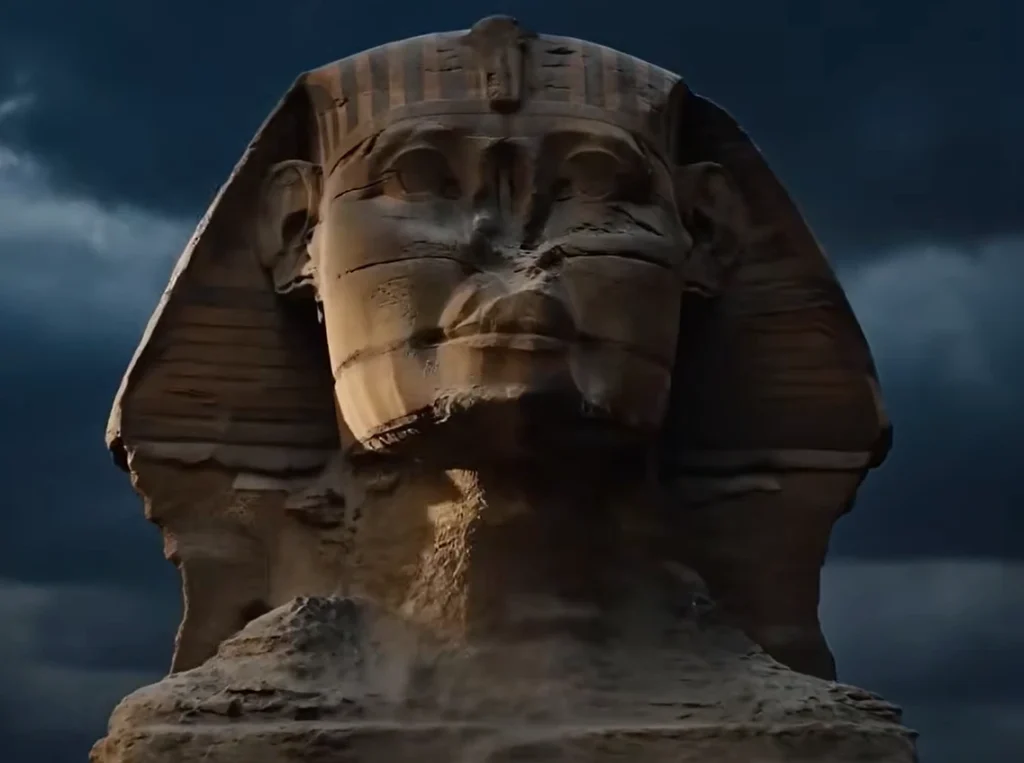
Three Mysterious Doors on the Great Sphinx of Giza — What Archaeologists Found Behind Them Reveals a Forgotten History of Secrets, Explosives, and Ancient Tunnels
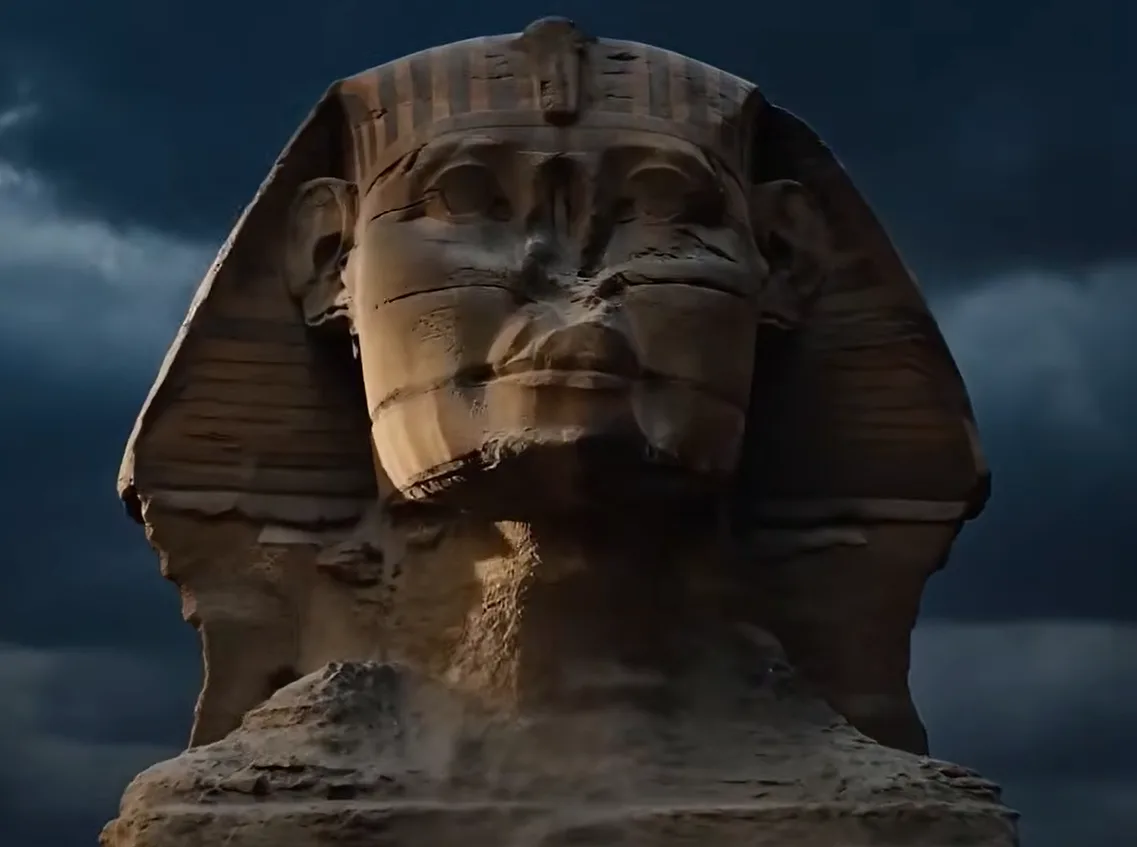
For thousands of years, the Great Sphinx of Giza has stood silently beside Egypt’s pyramids, guarding mysteries that continue to fascinate archaeologists, historians, and millions of curious visitors.
But a remarkable claim has recently attracted attention: three sealed openings supposedly conceal secret chambers within the ancient monument.
Some sensational accounts suggest archaeologists are terrified of what might lie behind them.
The reality is considerably more complicated.
Several documented openings, shafts, and access points exist around the Sphinx, but they do not establish the existence of a hidden underground civilization, forbidden library, or extraordinary treasure chamber.
Instead, their history reveals something equally fascinating: centuries of speculation, risky excavations, restoration work, and the relentless human desire to uncover secrets beneath ancient stone.
The story begins with a belief that has circulated for nearly two thousand years.
The Sphinx, according to longstanding legends, was hollow.
Ancient and later writers helped sustain stories about mysterious passages beneath Egyptian monuments.
As generations of travelers repeated these accounts, speculation gradually became entangled with descriptions of the actual archaeological site.
Some imagined hidden entrances beneath the monument’s body.
Others proposed underground corridors connecting the Sphinx to nearby pyramids.
But stories are not archaeological evidence.
The existence of a legend does not demonstrate that its imagined structures were ever constructed.
Nevertheless, those rumors helped inspire generations of explorers to investigate the monument.
One particularly dramatic chapter unfolded in 1837.
British military officer and excavator Richard William Howard Vyse undertook investigations at Giza during an era when archaeological methods were very different from modern conservation standards.
Vyse was fascinated by the possibility that unexplored spaces might exist inside Egypt’s most famous monuments.
During his work on the Sphinx, he attempted to investigate the limestone structure through drilling.
Accounts describe a borehole near the upper portion of the monument, behind its head.
The drilling encountered difficulties, including equipment becoming lodged in the rock.
In an extraordinary demonstration of nineteenth-century excavation practices, explosives were reportedly used during attempts to deal with the obstruction.
Today, deliberately blasting part of such a fragile ancient monument would raise enormous conservation concerns.
At the time, however, destructive techniques were sometimes employed by excavators pursuing discoveries without the scientific safeguards expected today.
The investigation failed to reveal the legendary hollow interior.
Instead, it became part of the monument’s complicated history of human intervention.
Later archaeological and conservation work examined earlier excavations and damage to the Sphinx.
The supposed mysterious doorway associated with this episode is better understood as an exploration feature rather than proof of an ancient concealed entrance.
The distinction matters.
A hole made by nineteenth-century investigators cannot reasonably be treated as evidence that ancient Egyptian builders designed a secret chamber beneath it.
The second frequently discussed opening concerns a fissure running through the Sphinx’s limestone body.
At first glance, a substantial crack in an ancient monument can look like the entrance to something extraordinary.
But the Sphinx was carved directly from natural limestone bedrock.
That rock contains geological layers, fractures, and areas with different degrees of resistance to weathering.
Over thousands of years, environmental conditions and structural stresses have contributed to the monument’s deterioration.
The fissure is therefore significant as a conservation problem, not necessarily as an archaeological doorway.
During major restoration campaigns in the twentieth century, French engineer Émile Baraize supervised extensive work intended to protect and stabilize the Sphinx.
His efforts included addressing damaged sections and vulnerable areas of the monument.
Access covers and restoration features associated with such work have sometimes been presented online as mysterious sealed doors.
But a maintenance opening serves a very different purpose from a hidden ancient passage.
It allows specialists to inspect or protect vulnerable parts of the structure.
Its existence does not imply that archaeologists discovered something frightening and decided to conceal it.
The third opening is particularly intriguing because it is connected to an actual shaft extending into the bedrock.
During investigations associated with archaeologists Mark Lehner and Zahi Hawass, attention turned toward a passage near the rear of the Sphinx.
Earlier restoration workers had reportedly encountered the feature, and subsequent examination helped document its existence.
Unlike an ordinary surface crack, this opening involved a descending passage.
That discovery naturally encouraged speculation.
Could it connect to a larger underground system?
Was it associated with ancient construction, later exploration, or some forgotten activity around the monument?
Investigators examined the feature to determine what could actually be established.
The passage did not reveal the vast underground chambers imagined in popular legends.
Nor did the documented investigations demonstrate that it led to a hidden archive or an elaborate network beneath Giza.
Its existence nevertheless remains archaeologically interesting.
An opening in ancient bedrock can raise questions about when it was cut, why it was created, and whether it underwent modifications during different historical periods.
Those questions deserve careful investigation without turning uncertainty into evidence of extraordinary claims.
There is also an important complication often overlooked in sensational presentations.
Not every opening visible on or around the Sphinx necessarily belongs to the same historical period.
Some features may be associated with ancient activity.
Others reflect nineteenth-century investigations or twentieth-century conservation.
Combining them into a single narrative about three deliberately sealed ancient doors creates an impression that the available evidence does not justify.
The Sphinx has experienced thousands of years of environmental damage, human intervention, excavation, and restoration.
Its present appearance reflects that complicated history.
Even the monument’s original construction continues to generate scholarly discussion.
Most Egyptologists associate the Great Sphinx with the reign of Pharaoh Khafre, during Egypt’s Fourth Dynasty, approximately 4,500 years ago.
Its location near Khafre’s pyramid complex and the archaeological relationship between surrounding structures support that interpretation.
However, aspects of its original symbolism, construction sequence, and later use remain subjects of research.
The Sphinx’s lion body and human head are generally understood within the religious and royal symbolism of ancient Egypt.
The monument likely represented royal power and divine protection, although scholars continue examining the precise meaning of its placement and associated architecture.
Those historical questions are substantial enough without inventing underground libraries or supernatural discoveries.
One of the most persistent modern legends involves the so-called Hall of Records.
According to this idea, a secret chamber beneath the Sphinx preserves lost knowledge from an advanced ancient civilization.
The concept became popular through modern mystical speculation rather than established Egyptian archaeological evidence.
No verified excavation has demonstrated the existence of such an archive beneath the monument.
That does not mean every square meter of the Giza Plateau has been exhaustively investigated.
Archaeology is an ongoing process, and new methods can reveal previously unknown features.
Ground-penetrating radar, seismic surveys, and other noninvasive techniques help researchers examine subsurface structures while reducing the risk of damage.
But interpreting these measurements requires caution.
An underground anomaly might indicate a fracture, cavity, geological variation, or human-made feature.
It does not automatically identify a chamber, much less reveal what might be inside it.
The same principle applies to the alleged sealed doors.
Their appearance in photographs is not sufficient to establish their origin, function, or connection to an undiscovered structure.
Each opening must be evaluated through historical documentation, physical examination, and reliable archaeological reporting.
The deeper mystery surrounding the Sphinx is therefore not whether three visible covers hide a terrifying secret.
It is how an ancient monument accumulated so many layers of history that ordinary restoration features can become the foundation for extraordinary modern legends.
A Victorian drilling operation, a natural limestone fissure, and a documented passage near the monument’s rear all tell different stories.
Together, they reveal how explorers and conservators have interacted with the Sphinx across generations.
They also demonstrate why ancient monuments must be protected from speculation-driven excavation.
Once original stone is destroyed, the historical information it contains may be lost permanently.
For archaeologists, preserving evidence is often more valuable than forcing open another suspected entrance.
The Great Sphinx of Giza remains one of humanity’s most extraordinary surviving monuments.
Its true significance lies not in unverified claims about forbidden chambers but in its age, engineering, symbolism, and the unanswered historical questions surrounding its creation.
And perhaps that is the most surprising conclusion of all.
The real openings are fascinating precisely because they reveal how much people have searched for hidden secrets.
Yet after centuries of investigation, the greatest mystery may still be the monument standing openly beneath the Egyptian sun, silently preserving the story of the civilization that carved it.