PART 2
Two days later, a charcoal-gray SUV crunched up the drive. A tall man in his late fifties stepped out — navy wool coat, polished shoes, the easy smile of someone used to being welcomed. Isabella met him on the porch before he could knock. “Richard Vale,” he said, handing her a card. Vale Land & Development. “I’ve been trying to buy this property from Samuel Whitmore for years.” “You knew him?” “Knew of him.” The distinction bothered her.
He said the hillside had “potential” combined with neighboring land. Then he made his offer: $68,000. Isabella almost laughed — until she realized he was serious. Three days ago, she’d been counting cans of soup. Sixty-eight thousand dollars meant a warm apartment for years. New glasses for Ethan. A safe Christmas for Grace. For one dangerous moment, she imagined saying yes. No footprints. No notes. No hidden rooms.
“Samuel should’ve sold long ago,” Richard said casually. “Especially once the west side started giving him trouble.” Isabella went still. “What did you say?” “The structure. It’s obviously deteriorated.” “No. You said the west side.” The hidden space was on the west side. The ledger’s first column was full of W’s. No one outside her family knew what Ethan had found there.
Richard’s smile flickered — then returned. “Old buildings fail where they carry the most weight.” “And how would you know what this building is carrying?” For the first time, he stopped smiling. Then he pulled out another card. “I’ll go to seventy-five.” He hadn’t inspected the roof. Hadn’t checked the well. Hadn’t set foot inside. Yet he’d raised his offer seven thousand dollars in ten minutes. This wasn’t a negotiation. He was afraid she wouldn’t sell.
“I need you to leave,” Isabella said. The friendliness drained from his eyes, though the smile stayed. “Samuel was a complicated man. Secretive.” He opened his car door. “Some inheritances cost more than they’re worth.” When he was gone, Ethan opened the front door. “Did you sell it?” “No.” “Why does he want it so bad?” That was the question.
Isabella spread the ledger across the kitchen table and, for the first time, stopped seeing it as an old man’s meaningless records. She studied it like instructions. “W could mean west,” Ethan said. “And N could mean north.” She opened her hand. The brass key lay in her palm. For the first time since arriving, fear wasn’t the strongest thing she felt. Curiosity was.
They tried the key in everything — cabinets, toolboxes, lockboxes. Nothing fit. Then Isabella stopped in front of Samuel’s huge oak roll-top desk. It was the heaviest thing he owned — and almost completely empty. Why keep a desk that size with nothing in it? She pulled out every drawer. Behind the bottom one, under decades of dust, was a tiny brass plate with a keyhole. Click. A hidden panel dropped forward, revealing a rolled sheet tied with faded red string.
It was the barn’s original hand-drawn blueprint. Samuel had circled twelve spots in red pencil — seven on the west side, three on the north, two in the center — each labeled with a code like W3 or N1. The codes matched the ledger exactly. “They’re not records,” Ethan breathed. “They’re locations.”
W3 led them to one of the oldest support posts in the barn. Its base was coated in thick, cracked black material Isabella had assumed was tar. She knelt and pried at a loose flake with a screwdriver. Underneath wasn’t wood. Wasn’t concrete. It was metal — a dull yellow-gray. “Is that gold?” Ethan whispered. “Don’t say that,” Isabella snapped. Hope had nearly destroyed her once. It had told her one more loan would save the bakery. One more skipped meal would make everything fine. She needed facts now, not miracles.
They checked more. W7, the same. But at N1, plain steel. “So they’re not all the same,” Ethan said. Isabella looked up at the carved beam. A house survives because of what no one notices. “This isn’t a treasure map,” she whispered. “It’s a test.”
The next morning she drove forty miles to a small-town jeweler with a sliver of metal no bigger than her fingernail wrapped in an envelope. The old man tested it once. Then again. His face changed. “Where did you get this? This isn’t construction metal.” The sample was a mix of precious metals — impure, needing professional analysis. But even that tiny fragment suggested at least one support in Samuel’s barn could be worth more than everything Isabella had owned in her entire adult life.
She didn’t celebrate. She sat in the minivan, hands on the wheel, and cried quietly. Not because she was rich — she didn’t know that yet. She cried because, for the first time in months, the future had cracked open by one inch.
That evening she bought real groceries — fresh chicken, apples, the cereal Grace loved that she’d stopped buying. And a pair of winter gloves for Ethan. “Mom, these are expensive,” he protested. “They’re twelve dollars. I can use my old ones.” His old ones had holes in three fingers. Ten years old, already learning to make himself small so his mother wouldn’t worry. “Ethan,” she said softly. “You’re allowed to need things.” He didn’t answer. But he wore those gloves the entire drive home.
When they pulled up the hill, Ethan pointed at the western wall. The black coating at W3 had been scraped away — more than Isabella had taken. On the floor lay a fresh metal shaving. And right beneath it: Richard Vale’s business card. Whether he’d left it himself or someone wanted her to think so, she couldn’t tell. But one thing was certain now. Someone knew she had started looking.
A week earlier, she would have panicked. Now she photographed everything — the card, the scrape, every window, every door. Then she called Daniel Mercer. “Did Samuel have other relatives?” “Yes.” “Then why me?” A long pause. “I honestly don’t know.” That bothered her more than anything Richard had said.
Back at the blueprint, Ethan arranged the ledger weights from lightest to heaviest. A pattern appeared. The valuable supports weren’t scattered randomly — they formed the barn’s main load-bearing path. “He didn’t hide treasure inside the house,” Isabella whispered. “He built the house out of it.”
Her phone rang. Richard. No greeting. “One hundred ten thousand.” “You offered sixty-eight.” “Circumstances change. You have two children, Mrs. Reed. A failing structure in winter is no place to raise them.” A month ago, those words would have terrified her. Now they made her angry. “My children finally have a home. Why are you so desperate to own it?” Silence. “You haven’t inspected the roof. You haven’t tested the well. You’re offering me money because you think I don’t know what I have.” His voice dropped. “Be careful what you think Samuel left you.” The line went dead.
That night she dug through Samuel’s old papers — tax receipts, Christmas cards, clippings. Then she found one that made her sit down. It was a small newspaper story about her bakery’s grand opening nine years ago. Her photo was circled in blue ink. In the margin, in Samuel’s hand: She built something of her own. Then another: the fundraiser she’d organized years later when her mother, Margaret, fell gravely ill. Then the notice of her bakery closing. Beneath it, four words: She stayed with Margaret.
Samuel hadn’t vanished from her life. He’d been watching from a distance all along. At the bottom of a file box was an envelope with her name on it. Her hands shook. One line: Isabella, you probably believe I chose you because you needed money. Nothing else. The bottom edge had been torn away. The rest of his letter — the explanation — was gone.
Days later, an official envelope arrived from Vale Land & Development: a formal offer for $175,000. Ethan stared. “That’s a lot of money. Are we going to take it?” Isabella looked around — the patched windows, Grace’s drawings by the stove, Ethan’s new gloves drying by the heater. Then at Samuel’s unfinished sentence. “No.”
For years, desperation had made every decision for her. Which bill gets paid. Which meal gets skipped. Which dream gets put off. Richard was counting on that version of her — a frightened woman who’d stop asking questions if enough money landed in front of her. “He wants me to decide before I understand what I’m deciding,” she said. The treasure could explain why Richard wanted the barn. But it couldn’t explain why Samuel wanted her to have it.
The answer turned up three mornings later — under the rocking chair. Isabella moved it aside to fix a porch board, and one runner caught on a brass ring set flush in the wood. She pulled. A hidden compartment opened beneath the porch. Inside was a waterproof metal case. No gold. No cash. Just documents, photographs, and a sealed envelope in Samuel’s handwriting.
The first line completed the one she already had: You probably believe I chose you because you needed money. And then, finally: I chose you because I saw what you did when you had none.
Samuel wrote about the winter her mother became too sick to live alone. Isabella had just opened her bakery. Relatives told her to put Margaret somewhere cheap and protect her business. Instead, she cut her hours, turned down a chance to expand, and spent her savings caring for her mother. She’d never thought of it as heroic. It was just what a daughter did. Everyone watches what people do when they have everything, Samuel wrote. I watched what you did when you had almost nothing.
Isabella covered her mouth. Ethan quietly took her hand. The letter explained the rest. Decades ago, Samuel and three partners had built a successful industrial salvage business. Money destroyed their friendship. Lawsuits followed. Families took sides. The man whose face was scratched out of the photograph was Richard Vale’s father.
And the case held proof: receipts, tax records, ownership transfers. Every ounce of metal built into the barn had been legally Samuel’s. Richard wasn’t hunting stolen treasure. He was trying to get Samuel’s lawful fortune for a fraction of its worth. At the bottom, one last note: If Richard comes, he will offer you enough money to solve today’s problems. That is how desperate people lose tomorrow. Sixty-eight. One-ten. One seventy-five. Richard had followed Samuel’s prediction almost to the letter.
This time, Isabella didn’t try to carry it alone. She called Daniel Mercer and told him everything. He brought in an estate specialist, and the materials and records were professionally evaluated. For years, she’d believed asking for help meant admitting weakness. Now she understood: protecting her children didn’t mean carrying every burden by herself.
Weeks later, Richard came back. He took in the repaired roof, the new locks, the camera over the door. “Last chance.” “No.” “You don’t even know what you’re sitting on.” Isabella almost smiled. “I know exactly what I’m sitting on.” She handed him a letter from her attorney. Samuel’s ownership verified. The inheritance valid. Any further trespassing documented and handled through the courts. The color drained from his face.
“You think Samuel chose you because you’re special?” he sneered. Isabella glanced through the window, where Ethan was helping Grace hang a paper snowflake above the table. “He chose me because he believed I wouldn’t sell my children’s future just to make today easier.” Richard stared at her. Then he folded the letter, got in his SUV, and drove away without another offer. There was no cheering. Just silence. Warm, peaceful silence.
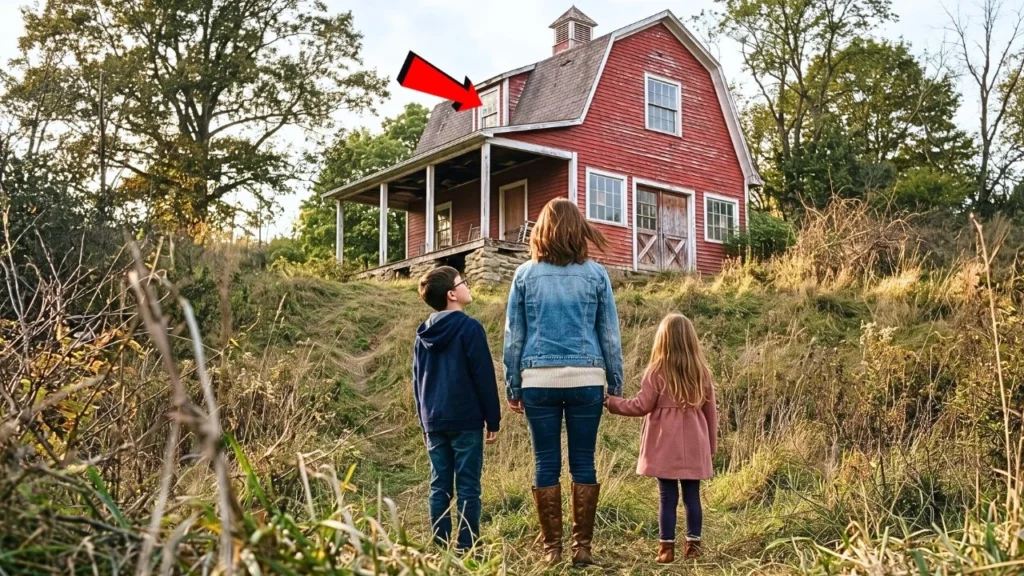
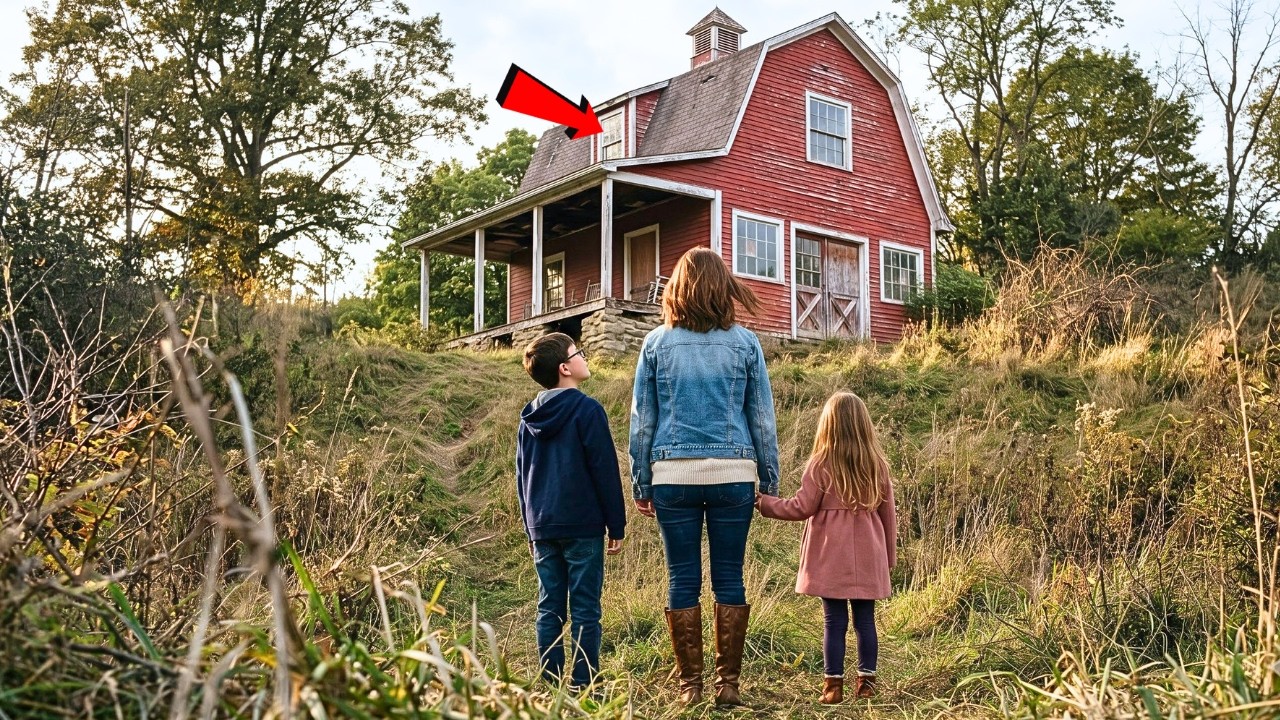
Months later, the barn still looked old from the road. Isabella wanted it that way. Everything was handled carefully, with proper legal and financial guidance. But the first things she changed were small: a reliable furnace. A full refrigerator. New glasses for Ethan. A real bed for Grace. One evening, Ethan was drawing at the kitchen table — the red barn, the crooked hill, three figures out front, and a tiny rocking chair on the porch. Beneath it, he’d written two words. Not Samuel’s barn. Not the treasure house. Just: Our Home.
All those months, Isabella thought the miracle would be finding something valuable enough to save them. She was wrong. The miracle was that after losing so much, her children finally had something they no longer had to be afraid of losing. A place where Grace knew Santa could find her. A place Ethan wasn’t afraid to call home.
The next winter, snow blanketed the hillside. Late one night, Isabella checked on her sleeping children, then sat by the fire and looked up at Samuel’s carved words. A house survives because of what no one notices. At last she understood. He hadn’t only meant the barn. Families survive the same way — held up by sacrifices nobody applauds. The meal a parent quietly skips. The extra shift worked after everyone’s asleep. The fear hidden behind a reassuring smile. The person who stays when leaving would be easier.
For years, Isabella believed losing her bakery meant she had failed. Samuel saw something different: a woman who kept holding everyone up even as her own life collapsed. The inheritance didn’t make her worthy. It just gave her the chance to see she always had been.
Outside, the wind swept the hill. Inside, the fire burned steady. And for the first time in years, Isabella wasn’t worried about where her children would sleep tomorrow.
She was home.
💬 What’s the one thing in your life no amount of money could ever replace? Tell us below. ❤️ Share this with a parent who quietly holds everything together — they deserve to know someone notices.