Scientists Gave an Elephant LSD — and Discovered a Mystery That Connects Animals, Human Lifespans, and Entire Cities
In 1962, an extraordinary scientific experiment ended with the death of an elephant named Tusko.
Researchers administered an enormous quantity of LSD to the animal at a zoo in Oklahoma, hoping to investigate an unusual aspect of elephant behavior.
Instead, Tusko collapsed within minutes and died despite attempts to revive him.
The experiment became a notorious example of the dangers of applying simple assumptions to complicated biological systems.
But behind this tragedy lies a much larger scientific mystery.
Why do enormous animals use proportionally less energy than smaller ones?
Why do tiny mammals have extraordinarily rapid heartbeats while elephants have much slower pulses?
And why do some of the same mathematical patterns appear when scientists study the growth of cities?
The answers begin with a concept called scaling.
Scaling describes how one characteristic changes when another becomes larger or smaller.
The researchers working with Tusko made a fundamental mistake by assuming that an animal’s response to a drug could be predicted simply from its body weight.
They reasoned that because an elephant was vastly heavier than a cat, a correspondingly larger dose would be appropriate.
Tusko received approximately 297 milligrams of LSD.
He rapidly developed severe symptoms and died.
The experiment demonstrated a dangerous failure of judgment, although the precise mechanisms behind his death remain subjects of historical scientific discussion.
Importantly, metabolic scaling equations cannot establish a safe LSD dose for an elephant.
Drug effects depend upon species-specific pharmacology, distribution, metabolism, and toxicity, not merely body mass.
The broader lesson remains important.
Biological systems rarely become simple enlarged copies of smaller ones.
Consider the difference between a mouse and an elephant.
Both are composed of cells that require energy to function.
Yet an elephant weighing thousands of times more than a mouse does not consume thousands of times more energy.
Its total energy requirements increase more slowly than its mass.
This relationship puzzled scientists for generations.
One early explanation involved body surface area.
Animals generate heat internally and exchange it with their surroundings through their surfaces.
As an object grows larger, its volume increases faster than its surface area.
Imagine two geometrically similar animals, one ten times taller than the other.
The larger animal would have approximately one thousand times the volume but only one hundred times the surface area.
This difference has major implications for temperature regulation.
During the nineteenth century, researchers proposed that metabolic rate should scale with body mass raised to the power of two-thirds.
The prediction followed from the geometry of surface area.
But measurements eventually suggested a different relationship.
In the 1930s, Swiss biologist Max Kleiber examined metabolic data from animals of different sizes.
He found that metabolic rate increased approximately with body mass raised to the three-quarter power.
This became known as Kleiber’s Law.
The difference between the two exponents may appear small, but its implications become substantial across enormous differences in body size.
Under three-quarter scaling, an animal one hundred times heavier would require approximately thirty-two times as much metabolic energy.
That represents a considerable economy of scale.
Larger mammals generally use less energy per kilogram than smaller mammals.
Scientists subsequently identified related patterns in other biological characteristics.
Heart rate tends to decline as body mass increases.
Lifespan often increases with body size, particularly among mammals.
Breathing rates and circulation times also show systematic relationships with mass.
These patterns suggested that biological diversity might be governed partly by shared mathematical principles.
One particularly fascinating consequence concerns heartbeats.
Tiny mammals such as the Etruscan shrew can have heart rates exceeding one thousand beats per minute.
Elephants may have resting heart rates of only a few dozen beats per minute.
Yet the shrew typically lives for only a short period, while elephants can survive for several decades.
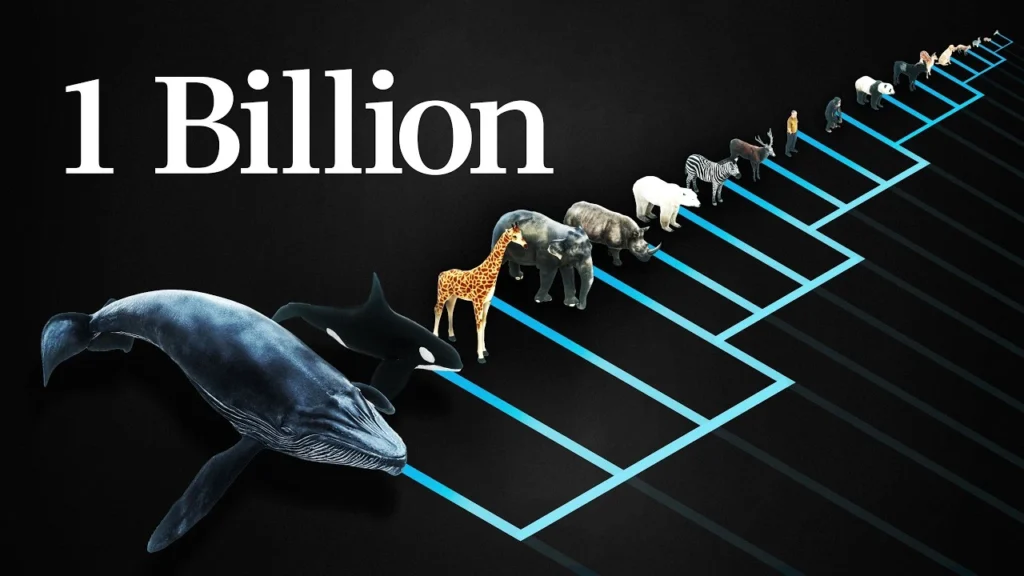
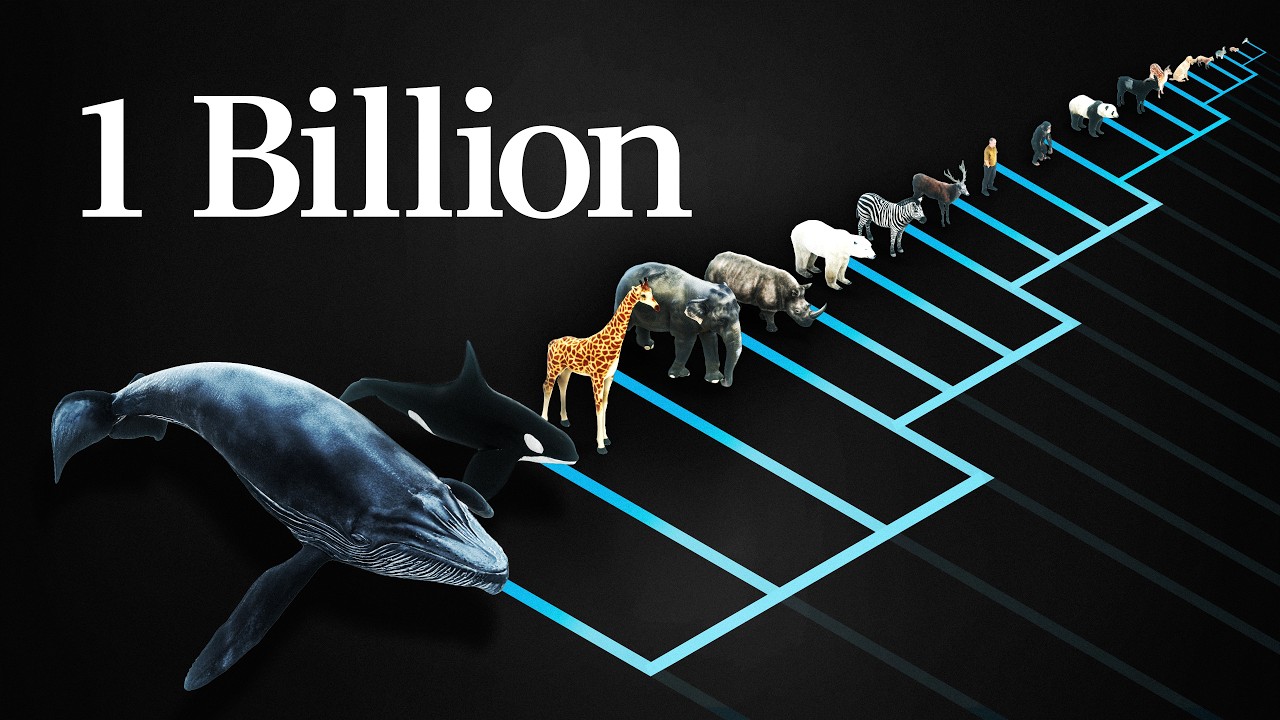
When researchers combine typical heart rates with lifespans, many mammalian species fall within a surprisingly similar order of magnitude for total lifetime heartbeats.
A frequently cited approximation is one billion beats.
However, this is not a universal biological limit.
Actual totals vary substantially between species and individuals.
Humans are a particularly interesting exception.
With an average resting heart rate and a lifespan extending into the seventies or eighties, many people experience billions of heartbeats.
Modern medicine, improved sanitation, vaccination, and public health have contributed enormously to increased human life expectancy.
These developments have allowed many people to live far longer than historical populations.
But the idea that every mammal receives exactly one billion heartbeats should be understood as an approximation, not a fixed biological rule.
The deeper scientific question concerns why these scaling patterns exist.
During the 1990s, physicist Geoffrey West collaborated with biologists James Brown and Brian Enquist to develop an explanation.
Their work focused on the networks that transport resources through living organisms.
Blood vessels deliver oxygen and nutrients throughout the body.
These networks must reach an enormous number of cells while minimizing the energy required for transport.
The researchers proposed that evolution favors efficient branching structures.
Their model assumed that distribution networks fill biological space, maintain certain properties at their smallest branches, and evolve toward efficient configurations.
Using these assumptions, they derived relationships involving quarter-power exponents.
Their framework became known as West, Brown, and Enquist theory.
Published in 1997, it offered a mathematical explanation for Kleiber’s Law and several related biological patterns.
The theory generated predictions concerning blood vessels, circulation, metabolism, and anatomical dimensions.
Some predictions agreed remarkably well with observations.
Yet the framework remains debated.
Researchers have questioned its assumptions, mathematical derivations, and applicability across different groups of organisms.
Some studies suggest metabolic scaling exponents closer to two-thirds.
Others find values near three-quarters or different relationships depending on body size, temperature, and evolutionary history.
The scientific consensus is not that one exponent perfectly describes every living organism.
Rather, scaling relationships are widespread, while their precise forms and underlying causes remain active research questions.
Geoffrey West later explored whether similar principles might apply beyond biology.
Cities offered a remarkable opportunity.
Like organisms, cities require infrastructure to transport resources and connect their components.
Roads, electrical systems, water networks, and transportation services link millions of people.
But cities also produce economic activity, innovation, and social interactions.
Researchers examined how these characteristics change as urban populations increase.
They found that some infrastructure measures grow more slowly than population.
For example, a city with twice as many residents may not require twice as many gas stations or twice the length of certain infrastructure networks.
This is called sublinear scaling.
It suggests that larger populations can share resources more efficiently.
Other characteristics show the opposite pattern.
Economic output, wages, patents, and some measures of social activity have been observed to increase faster than population.
This is called superlinear scaling.
Under a simplified exponent of 1.15, doubling a city’s population corresponds to approximately 2.2 times the measured output.
Larger cities may therefore generate disproportionate economic and innovative activity.
However, these benefits can accompany significant disadvantages.
Certain measures of crime, infectious disease, congestion, and other social pressures may also increase disproportionately.
The exact patterns vary across countries, time periods, definitions, and urban systems.
Scaling relationships describe statistical tendencies rather than guaranteeing the experience of every city.
The findings nevertheless suggest that population concentration can create both efficiencies and intensified challenges.
They also help explain why life often feels faster in large urban environments.
Researchers have observed relationships between city size and pedestrian walking speeds.
Greater population density, economic activity, and social interaction can influence the pace of daily life.
Yet scientists continue debating how much these patterns reflect universal mechanisms rather than local historical and economic circumstances.
The connection between organisms and cities is therefore suggestive, not exact.
An elephant has evolved biological networks over millions of years.
A city develops through human decisions, institutions, technologies, geography, and political choices.
Both contain complex systems of distribution and interaction.
But cities can change their infrastructure and organization far more rapidly than biological organisms can evolve.
That difference matters when applying scaling theories.
The story that began with Tusko ultimately illustrates two sides of scientific inquiry.
The first is the danger of assuming that larger systems behave exactly like smaller ones.
The second is the possibility that seemingly unrelated phenomena share underlying mathematical structures.
From heartbeats to blood vessels, and from energy consumption to urban innovation, size can influence behavior in unexpected ways.
Scientists have made extraordinary progress in identifying these relationships.
But identifying a pattern is not the same as fully explaining it.
Kleiber’s Law remains influential precisely because researchers continue testing where it succeeds, where it fails, and what those exceptions reveal.
The same applies to urban scaling.
Cities may become more efficient as they grow, but they also create new demands that require thoughtful planning.
And the tragedy of Tusko remains a reminder that mathematical elegance must never replace careful experimentation, ethical responsibility, or species-specific evidence.
Perhaps the most remarkable discovery is not that animals and cities obey identical rules.
It is that growth changes systems in ways simple arithmetic cannot predict.
Sometimes becoming larger creates efficiency.
Sometimes it creates vulnerability.
And sometimes the most important scientific breakthrough begins by recognizing that the obvious calculation was never the right one.