Going and documenting all this stuff.
This is a very strange world that we live in.
It looks like this.
Of course, it’s open to breathe oxygen.
It has no eyes.
This is the first discovery.
What lies beneath the land surrounding the Euphrates?
Scientists have traced two ancient river systems in sediment, revealing a landscape that looked nothing like the river we know today.
Near Haditha, Isis fish have been filmed in a dark groundwater pool, while archaeologists in Raqqa are examining a buried foundation, pottery, and human bones.
Farther south, the ruins of Uruk raise another question.
Could archaeology identify the burial place of Gilgamesh?
Or does that claim belong to legend?
Genesis 2:14 names the Euphrates among the rivers of the ancient world.
What might these discoveries reveal about a place remembered in scripture for thousands of years?
And how much of its story still lies beneath the earth?
Stay with us as we follow the evidence from one discovery to the next.
Like, subscribe, and tell us which mystery speaks to you most.
What could have changed the course of a river remembered in Genesis?
Long before the first cities rose beside the Euphrates, water was already shaping the land beneath them.
Deep below the surface, buried sediment preserves traces of two ancient river systems.
For generations, their paths remained hidden, while the river above became familiar in human history.
Researchers studied seismic images and the shape of the terrain to follow those buried channels.
The evidence points toward a destination.
The ancient waters once flowed toward the eastern Mediterranean, not along the course we recognize today.
Imagine looking across this region in that distant age.
The valleys, coastlines, and direction of the rivers would have told a different story.
Then the land changed.
As geological forces reshaped the region, the river systems shifted toward the Persian Gulf and eventually converged.
From those changes emerged the Euphrates we know today.
The river did not simply appear on a map.
Its course carries the record of an earlier landscape concealed beneath layers of earth.
Genesis 2:14 names the Euphrates.
For readers of scripture, that name evokes a river woven into the earliest biblical account of the world.
Now, the buried sediments offer a way to contemplate its history.
They take us back beyond the cities, beyond written records, to a time when even the direction of the water was different.
And that leaves a question beneath our feet.
If the river’s ancient course remained hidden for so long, what else might its sediments reveal about the land that later became home to civilizations remembered in the Bible?
The seismic images revealed rivers buried beneath the land for millions of years.
But near Hadith, another hidden body of water came into view.
And what was swimming inside it was far more startling than anyone expected.
Near hadith, a city along the Euphrates.
That hidden water collects in the Kisa depression.
To reach it, one must pass through a narrow opening.
Below is a pool sheltered from daylight, and in its dark water, cameras captured fish with no visible eyes.
The images prompted an obvious question.
Had water from the Euphrates found its way underground, carrying the fish into this isolated place.
Early reports described a cave with an underground river, but Anbar’s environmental director said the pool is fed by groundwater.
Kisva lies higher than the Euphrates and river water does not leak into it.
The fish had not suddenly appeared with a change in the river’s level either.
Similar fish had been documented around Haditha since 2010.
That answer takes us deeper into the mystery.
If the Euphrates is not feeding this pool, where does its water come from?
How long has it remained here?
Sustaining fish in a place most people never knew existed.
Psalm 139 to 12 says that darkness is not dark to God.
At Kisva, life continues in a place hidden from human sight.
We can see the fish, but the route taken by the water beneath them still invites investigation.
And water is only part of what the Euphrates region has preserved.
In Raqqa, archaeologists have found traces of people who lived above the ground, a buried floor, pottery, and human bones.
The next question is who they were and what happened at that site.
The discovery began beside the city’s old mosque where digging on a residential plot exposed the floor.
Archaeologists halted the work and began an emergency excavation.
What had stood on this ground?
A home, a place where people gathered, or something else?
The surviving foundation does not yet give them an answer.
Its architectural features suggest a connection to the Abbasid period when Raqqa was an important city.
Broken pottery adds detail to the picture, but the bones raise a harder question.
Were they connected to the structure, or did they arrive later in soil deposited over it?
Investigators are still studying the layers to find out.
The deeper the team examines the site, the clearer its unanswered questions become.
A floor can reveal where people once stood.
Pottery can offer clues about daily life, but the bones cannot tell their story until researchers understand how they came to rest beside those remains.
Psalm 90:12 speaks of generations passing while God endures.
Here, those words bring the people behind the discovery into focus.
Their city changed around them.
Their names may be lost, but traces of their lives remain.
And if one foundation in Raqqa can hold so many unanswered questions, what might lie beneath the ruins of an entire ancient city?
Farther south, Uruk leads us to a name still surrounded by mystery.
Gilgamesh.
Along an ancient course of the Euphrates lie the ruins of Uruk.
Its surviving structures and traces of waterways show how a city grew around access to water.
But one question has drawn attention far beyond its walls.
Could a structure near the old river course be the tomb of Gilgamesh?
Gilgamesh is the central figure of an ancient epic in the story.
He is a powerful king who faces the death of a friend and sets out in search of eternal life.
A burial place associated with him would be an extraordinary find.
Researchers studying Uruk once identified a structure that they thought might fit descriptions of his tomb.
That possibility caught the public’s imagination, but the structure has not been confirmed as his grave.
The epic gives archaeologists a question to investigate.
It cannot by itself identify what lies beneath the ground.
For readers of the Bible, Uruk has another point of interest.
Genesis 10, 10 names.
Eric, commonly associated with Uruk among the cities of Nimrod’s kingdom.
The verse places the city within a familiar biblical landscape.
It does not mention Gilgamesh or locate his tomb.
That distinction makes the ruins no less compelling.
The waterways, buildings, and buried layers can tell us how people lived in Uruk, even if the identity of one possible grave remains unknown.
How much of the city behind the epic can archaeology still bring to light?
But Uruk’s ruins hold more than clues about a possible tomb.
Its ancient clay tablets preserve words that may tell us how people there lived and what they believed.
A clay tablet can fit in the palm of a hand.
Yet, the marks pressed into its surface may preserve someone’s words for thousands of years.
Along the ancient Euphrates, writing became part of everyday life.
People used tablets to record goods, names, instructions, and stories that they wanted others to remember.
Look closely at the marks.
Each was pressed into soft clay before the tablet dried.
To us, the lines may look like a pattern.
To the person who made them, they carried a message.
Was it a count of grain delivered to a storehouse, an order sent to a worker, or part of a story passed from one generation to another?
That uncertainty is what draws us closer.
A tablet tells us that someone had something worth writing down, but its meaning depends on where it was found and what specialists can read upon it.
Without those details, we cannot claim that an unidentified tablet contains a particular biblical account.
The prophet Habachok was told, “Write the vision, make it plain on tablets.”
Habachok 2:2.
His words concern a specific message from God.
Here the verse offers a point of reflection.
People have long sought ways to preserve words so others could receive them.
Stone walls can show us where people built.
Canals can show us how they worked.
A tablet may let us hear what mattered to them.
If its writing is read, whose voice will we hear first?
Beyond the places where those words were kept, another record survives across the land.
The courses of ancient canals and the fields they once watered.
The Euphrates carries water through the region today, but its course has not always been the same.
Across parts of southern Mesopotamia, researchers have traced old river channels and the smaller canals that branched from them.
From above, the lines reveal a landscape shaped by human hands.
A channel drew water from the river.
Smaller branches carried it farther across the plane.
Fields and gardens grew where that water could reach.
It is easy to admire the scale of such a network.
It is harder to imagine the work behind it.
Someone had to plan each route, dig through the earth, and keep sediment from blocking the flow.
Farmers needed water at the right time while their neighbors needed it, too.
How many people did it take to keep the canals working through a growing season?
And what happened to a field when the river shifted away from it?
These questions bring the ancient city to life more clearly than a picture of ruins alone.
Its people depended on more than one great river flowing nearby.
They depended on their ability to guide its water, share it, and care for the channels year after year.
The traces left in the ground help us see the daily labor behind the food that sustained them.
Genesis 2:14 names the Euphrates among the rivers in the account of Eden.
That reference gives the river a familiar place in the Bible, while the canals tell a separate story about the communities that later lived across this region.
Together, they invite us to consider how deeply water is woven into human life.
As the camera returns to the Euphrates of today, the ancient channels may seem quiet, yet their outlines still show where water once traveled, where people worked, and how generations made a home beside the river.
The ancient canals show how people brought river water to their fields.
Farther along the landscape, another question rises above the water.
Why would a community cut passageways and chambers into a cliff?
Images taken when a reservoir stood lower show portions of a stone structure along its edge.
The openings draw the eye first.
Some appear to lead into the rock.
Others suggest rooms sheltered by the cliff itself.
Today with more water in the reservoir, the view has changed.
To understand what earlier visitors saw, we have to look back at the site as it appeared when the water was lower.
The location may have offered several advantages.
A high position could give people a view of anyone approaching.
The rock could provide shelter, while a nearby water source would help sustain daily life.
Those possibilities make the site intriguing, but its purpose cannot be settled by appearance alone.
Were the chambers, homes, storage spaces, or part of a place built for defense?
Each answer would tell a different story about the people who made them.
There is another question that may be harder to answer.
Why did they leave?
Perhaps the needs of the community changed.
Perhaps the routes people traveled shifted over time.
The later arrival of reservoir water transformed the setting once again without a dated study of the structure.
These remain questions to explore rather than conclusions to announce.
In Matthew 7:24:27, Jesus speaks of a house built on rock to teach the importance of hearing his words and putting them into practice.
He was speaking about faith, not this particular sight.
Still the sight of rooms cut into stone offers a moment to pause over his image.
What gives a life a firm foundation when circumstances change?
The water may alter how much of the cliffside we can see, but it has not answered who worked there or what their days were like.
The passageways remain a trace of their effort.
Their full story is still waiting to be told.
The Euphrates River in the Bible.
The Euphrates River enters the Bible in Genesis and again in Revelation.
In Genesis, it is named among the rivers associated with Eden.
Later, it marks a boundary in God’s promises, appears in the histories of kings and prophets and becomes part of John’s visions in Revelation.
These passages have different purposes.
Reading them together can deepen our understanding of scripture.
But we must allow each passage to speak in its own setting.
The river is real.
Its biblical meanings cannot be reduced to a single news headline about water levels today.
That distinction matters whenever a familiar place name appears in both an ancient passage and a report from the present day.
Genesis 2:104 describes a river flowing from Eden and dividing into four branches.
The fourth is called the Euphrates.
The passage places water within a picture of God’s provision.
The garden has what living things need to flourish.
Genesis does not give us a map precise enough to locate Eden by following the modern Euphrates.
River courses change and Genesis is not a modern survey.
The point is clear nonetheless.
Life begins as a gift and the world people receive is meant to be tended with care.
The river appears again when God makes a covenant with Abram.
Genesis 15:18 describes land stretching from the river of Egypt to the great river, the Euphrates.
The passage concerns a promise to Abrams descendants within the story of God’s covenant.
Not every later event along the Euphrates fulfills that promise.
God speaks to a man who does not yet possess the land.
Abram must live by trust before he can see the outcome.
The distant river becomes a visible measure of a future he cannot secure by his own strength.
His trust did not make the waiting effortless.
It gave him a reason to keep walking toward an uncertain future.
In Deuteronomy 1:7, Moses tells the people to continue their journey toward the land, extending as far as the Euphrates.
Joshua 1:4 names the same river when God addresses Joshua after Moses’s death.
These verses place the river on Israel’s horizon while calling for courage and obedience.
Joshua faces decisions, conflict, and uncertainty.
Immediately after describing the land, the book calls him to be strong and to keep the law in mind.
The geographical boundary matters, but the central concern is the people’s relationship with the God who leads them.
In each setting, the river was part of a larger human story involving choices, responsibilities, and the consequences of power.
The Euphrates also belonged to the world of empires.
Kingdoms sought control of land, roots, and access to water.
In 2 Samuel 8:3, David defeats Hadadzar, a ruler associated with an effort to restore power near the Euphrates.
The verse is part of a record of political struggle, not a prediction about the river’s modern condition.
It helps us picture how a waterway could become a frontier that rulers contested.
For nearby families, a campaign meant more than lines on a map.
It could alter trade, security, and the ordinary hopes of families who wanted to live in peace.
Against such images of power, the prophets ask what human strength can really achieve.
Isaiah 11 speaks of a future gathering of God’s people.
In verse 15, the Lord makes a way across waters that once seemed to block their return.
Some translations name the Euphrates explicitly.
Others speak of the river.
The picture recalls the deliverance at the sea and calls readers to imagine restoration where no path appears possible.
Isaiah is proclaiming hope through God’s action.
A photograph of low water today cannot prove this vision fulfilled.
The promise addresses much more than a measurement at a river gauge.
Hope in this passage belongs to people who needed a way home, not to spectators searching for dramatic footage.
Jeremiah uses a different image.
In Jeremiah 13 to 111, the prophet is told to hide a linen garment at Perth and later retrieve it.
By then, it is spoiled and cannot serve its purpose.
The act illustrates the damaged relationship between the Lord and a people who refuse to listen.
Readers differ over whether Perth means the Euphrates or another location.
That uncertainty matters.
If we are trying to plot Jeremiah’s journey on a map, it does not erase the force of the passage.
A people meant to remain close to God had clung to other loyalties, and the ruined garment made their loss visible.
Later, Jeremiah announces judgment on Babylon.
Jeremiah 50-38 speaks of drought upon its waters within a larger oracle against the kingdom.
Read the verse beside the chapter’s account of Babylon’s downfall.
It is not a freestanding weather forecast for every dry season in Iraq.
The prophet’s message challenges a power that seemed secure and condemns devotion to idols.
Water which can sustain a city becomes an image of how fragile that security is.
Nations can build walls and command armies, yet none can place themselves beyond God’s judgment.
The passage asks where people put their trust when strength appears permanent.
Before turning to Revelation, we should pause at another river often confused with the Euphrates.
Daniel 10:4 places, the prophet beside the Tigris.
Both shaped Mesopotamia, but scripture names them separately.
Confusing one with the other changes the setting of the story.
Daniel’s vision takes place during a period of prayer and mourning and its message unfolds through an encounter with a heavenly messenger.
It should not be moved to the Euphrates simply because that river is better known in end times discussions.
Paying attention to small details protects the larger meaning of a biblical passage.
The book of revelation returns our attention to the Euphrates in a very different kind of writing.
Revelation opens by identifying itself as the revelation of Jesus Christ given to John for the churches.
Its visions contain symbols, heavenly scenes, warnings, and promises.
They call believers to endurance under pressure.
We should read its images carefully rather than treating them as isolated clues that can be matched to whatever event is trending today.
The book’s center is not the river.
It is the risen Christ who addresses his people, judges evil, and promises that God’s purposes will not fail.
In Revelation 9:14, a voice commands the sixth angel with the trumpet to release four angels bound at the great river Euphrates.
This is a solemn scene within a vision of judgment.
The text says nothing about archaeologists locating a cave, chains, or physical remains beneath the riverbed.
To claim such a discovery on the strength of the verse would add information John did not give us.
The passage concerns divine judgment and the human response.
In the surrounding chapter, even severe warnings do not automatically turn hearts away from destructive practices.
Revelation 16:12 presents another vision.
The sixth angel pours out his bowl on the Euphrates and its water dries up to prepare a way for kings from the east.
The verses that follow describe deceiving spirits gathering rulers for battle.
The scene is larger than a local change in rainfall, a temporary drought, or a reservoir releasing less water.
Revelation uses the language of nations, conflict, and judgment to expose the danger of powers opposed to God.
Readers disagree about how the details relate to future events.
River levels alone cannot establish that this vision is happening now.
Between these disturbing images comes a word from Christ about remaining awake.
Revelation 16:15 turns attention from speculation about armies to the readiness of the person hearing the message.
Watchfulness in scripture is not panic.
It is a life shaped by faith, integrity, and attention to what God has already made known.
The reader is not instructed to calculate the date of Christ’s return from the latest water report.
The call is to remain faithful while the world feels uncertain.
Uncertainty can tempt us to ignore danger or make claims beyond the text.
The Bible’s references to the Euphrates, therefore, do not all speak in the same voice.
Genesis names it in the setting of Eden.
The covenant passages use it as a boundary.
Historical writing places rulers and their campaigns near it.
The prophets employ water and crossings in messages of judgment and hope.
Revelation gives it a place in visions addressed to churches living with pressure and fear.
These connections do not make every discovery or water level shift proof of catastrophe.
Careful reading is a form of respect for scripture.
It is also a form of respect for people living along the river.
Now the Euphrates is a source of drinking water, farming and daily work.
Changing flows can bring hardship.
Rising levels can bring other dangers.
Their lives should not become scenery.
For an alarming prophecy video.
We may report what is happening, listen to those affected, and reflect on scripture at the same time.
But we should identify what was observed, what the biblical passage says, and what is our own interpretation.
Those distinctions let an audience consider the evidence without being pushed toward fear.
The promise to Abram offers one lesson for such moments.
Trust can endure before the outcome is visible.
Isaiah offers another.
God can make a way where people see only an obstacle.
Jeremiah warns against false security whether it rests in political might or in the things we put before God.
Revelation reminds us that evil does not have the final word while also refusing to treat human rebellion lightly.
Together they turn us from spectacle toward God’s faithfulness, justice, and mercy.
Jesus gives that story its deepest invitation.
Revelation begins with his testimony and speaks of his love for his people.
The same Lord who calls the churches to perseverance also calls them to listen.
If the Euphrates prompts us to open the Bible, we can do more than search for a prediction.
We can ask whether we are listening to Christ, caring for our neighbors, and speaking truthfully about the world.
We see a changing river can be observed and studied.
A passage of scripture can be read in context and taken seriously.
Neither requires us to pretend questions are settled.
So when we hear a new claim about the Euphrates, let us begin with simple questions.
Where did this happen?
When was it recorded?
What can reliable witnesses actually show?
Then we can ask a separate question.
Which biblical passage, if any, helps us reflect on it?
We need not make a discovery sound supernatural to see why it matters.
Ancient texts and present lives both deserve patient attention.
The biblical river still crosses a landscape where people live and work.
Our response can be curiosity guided by honesty and faith.
In the end, the Bible does not ask us to place our hope in a particular river level.
It asks us to consider the promises of God, the warnings of the prophets and the words of Jesus Christ.
The Euphrates can lead us into that conversation because it runs through so many chapters of the biblical story.
Yet reading is no contest over today’s headlines.
It is to hear what they say, respond with humility, and remain awake to the needs of others.
The water may rise or fall.
Our calling to truthfulness, compassion, and faith remains.
Those ancient words deserve to be heard before we attach them to any modern image of a changing river.
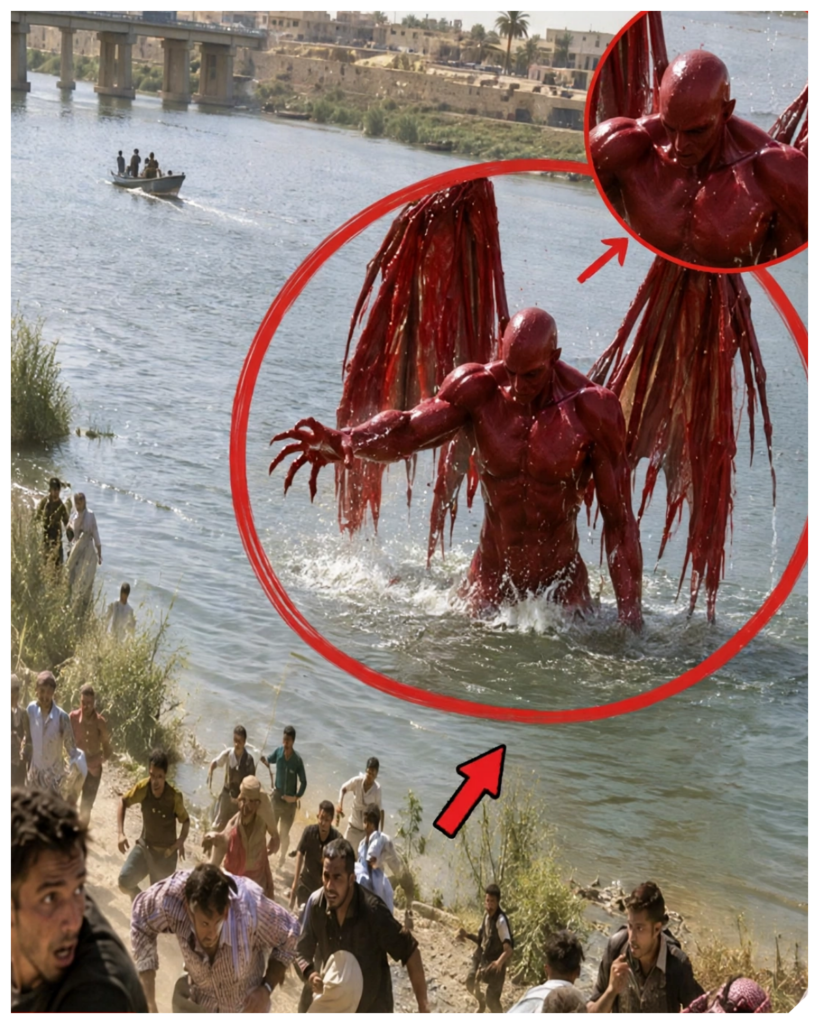
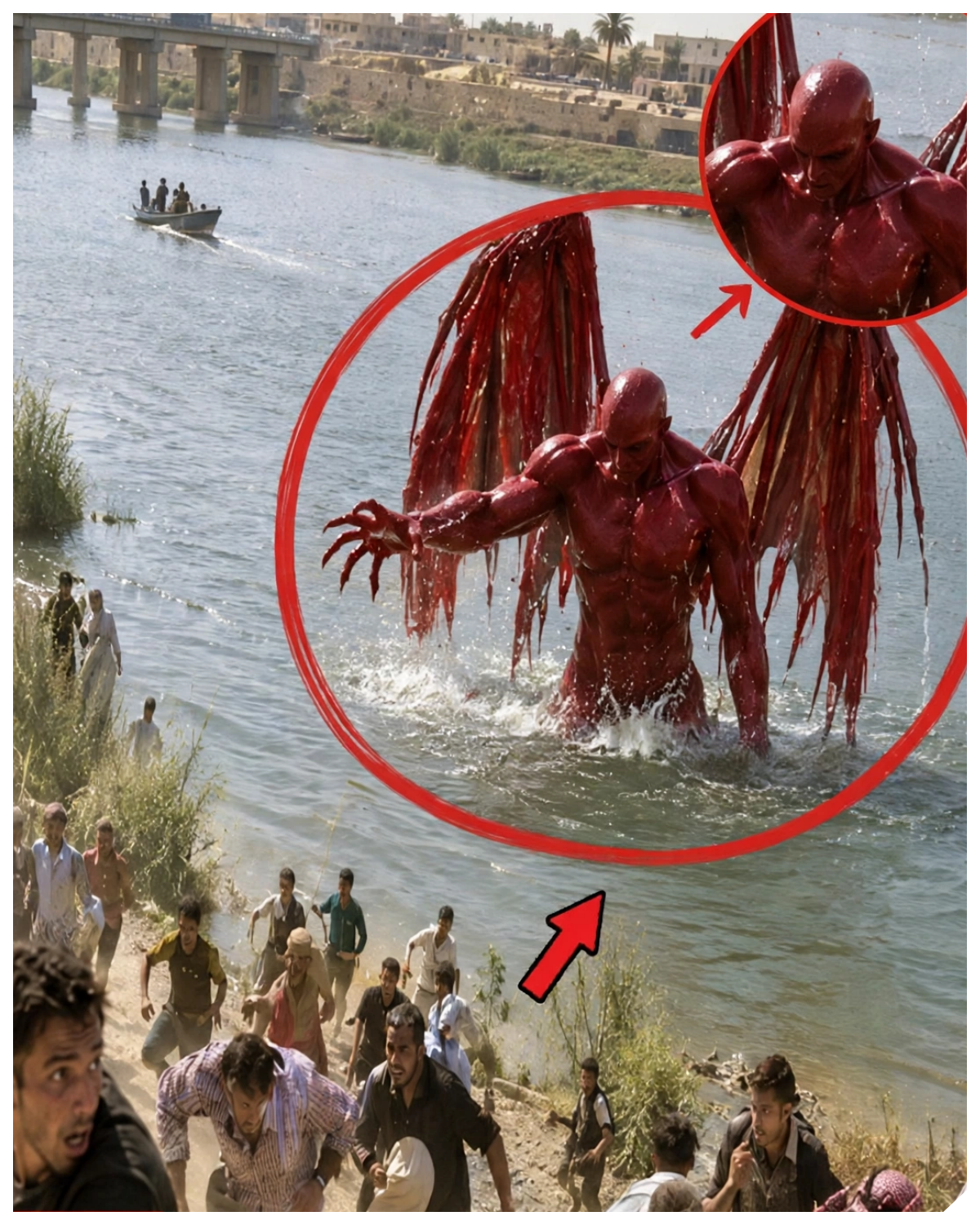
Figure appeared above the surface with two long forms resembling folded wings.
It moved without sound and seemed to leave the water completely undisturbed.
Then the figure lowered its head toward the river, remaining still as if mourning over it.
Some witnesses insisted it was only fog, reflected light, or an illusion created by distance.
Others believed the bowed posture made the sight feel more like a warning than a natural event.
Moments later, the figure silently drifted toward the opposite bank and vanished.
But as daylight spread across the valley, the water continued to recede, exposing a narrow cave entrance beneath the rocky shore.
A deeper mystery was waiting below the river.
As the Jordan receded, a narrow opening appeared beneath the rocky bank, hidden behind mud, roots, and fallen stones.
At first, the team believed it was only a shallow cavity formed by erosion.
But when cold air drifted from within, they realized the passage extended underground.
Equipped with lights and cameras, the researchers entered.
The deeper they moved, the quieter the cave became.
Then one beam swept across a crack in the wall, revealing what looked like a black face.
Its features appeared almost human, yet distorted.
Before anyone could approach, the figure withdrew into the darkness.
The team searched the area, but found no footprints, bones, hair, or physical evidence.
Some suggested it was a cave animal, a shadow, or an illusion caused by fear and weak lighting.
Yet local accounts claimed that several caves along the Jordan had once been deliberately sealed.
Job 12:22 says, “He reveals the deep things of darkness and brings utter darkness into the light.”
Those words gave the discovery deeper meaning if the cave had truly been hidden for generations.
What else remained beyond the narrow passage?
The team continued, unaware that the next chamber would contain something far more disturbing.
Beyond the narrow passage, the team discovered several straight stone edges buried beneath layers of mud and collapsed rock.
At first, they assumed the objects were fragments from an old wall.
But after carefully removing the sediment, the shapes became unmistakable.
They were stone crosses.
Some lay flat on the cave floor, while others appeared to have been placed upright in a deliberate line leading deeper underground.
The arrangement suggested they had not simply fallen there by accident.
Researchers proposed several possibilities.
The crosses may have belonged to an ancient place of worship hidden near the Jordan.
They could have marked a baptismal site used by early Christians or they may have been carried into the cave by powerful floods.
Still, their location gave them a deeper spiritual meaning.
Romans 6:4 says, “We were therefore buried with him through baptism into death in order that we too may live a new life.”
The cross and the Jordan together point toward repentance, cleansing, and transformation.
Perhaps these stones once reminded worshippers that entering the water symbolized leaving an old life behind.
But behind the final cross, the team’s detectors revealed something far larger beneath the mud curved structures resembling enormous ribs, a long spine, and fragments of an unusually large skull.
Beneath the mud behind the final stone cross, the team uncovered several pale structures arranged across the cave floor.
One curved formation resembled an enormous rib cage.
Another extended through the sediment like a long spine, while a rounded object nearby appeared to contain openings similar to eye sockets and a jaw.
Some sections looked strangely human.
Others were too large and irregular to identify with confidence.
Researchers considered natural explanations.
The shapes could have been fossilized remains of large animals, mineral formations, or ordinary rocks distorted by centuries of water pressure and sediment.
Without careful excavation, even natural stone can resemble bone under weak light.
Yet the discovery immediately reminded some observers of Genesis 6.
For there were giants in the earth in those days.
Others connected the larger, less humanlike remains with Leviathan, the powerful creature described in Job 41 as beyond human control.
But no conclusion could be verified.
The account provided no official measurements, anatomical study, dating results, or DNA analysis.
Therefore, these objects cannot responsibly be presented as proof of the neo.
Every step raised the same question.
What had the Euphrates been hiding for so long?
Scientists might point to erosion, drought, or collapsing sediment.
But for many watching, the cave felt like more than geology.
It became a symbol of buried secrets rising now at a moment meant to awaken humanity.
As the camera moved farther into the cave, the light began to show strange carvings on the walls.
At first, they looked like old scratches in the stone.
But when the camera came closer, the shapes became clear.
There were snakes carved along the wall, gates cut into the rock, thick chains, and strange winged figures.
The serpents curved along the walls as if they were guarding the passage, their heads faced the entrance, their bodies twisting toward the deeper chambers.
In scripture, the serpent often carries the memory of deception, temptation, and darkness.
Beginning in Genesis 3, where the enemy first appeared through the voice of the serpent, that connection made the carvings feel less like decoration and more like a warning.
Then the camera showed the gates.
Some looked closed, others looked partly open.
Around them were carved chains repeated again and again across the stone.
These details made the cave feel less like a normal shelter and more like a place once used to hold something back.
The winged figures made the scene even stranger.
They stood near the gates and chains as if they were guarding the place or warning people not to go deeper.
Experts might say these carvings came from an ancient people, a forgotten ritual site, or a hidden burial chamber.
But the way the symbols were placed made many people wonder if they were meant as a warning.
This cave did not look like an ordinary ruin anymore.
It looked like a place built to remind future generations that something dangerous had once been sealed inside.
Deeper inside the cave, the passage became narrower and darker.
The air felt colder and the walls were covered with dry roots hanging down from cracks in the stone.
At first, the camera showed only rocks, dust, and broken pieces of earth.
Then, a strange white light appeared ahead, glowing between the roots and the stones.
It did not look like fire.
It did not flicker like a torch.
It did not shine like a normal lamp.
The light stayed still, bright and silent, as if it had been waiting there for a long time.
When the camera moved closer, the shape inside the light became clearer.
It looked like a human figure sitting or kneeling on the ground with its arms pulled back as though it was being held in place.
No one could explain what they were seeing.
The figure did not move, but the light around it seemed alive.
The scene immediately reminded many people of Jude 1:6 and 2 Peter 2:4 where the Bible speaks of fallen angels kept in darkness until judgment.
But that only made the discovery more frightening.
If this was an angel, why did it appear trapped inside a cave?
And if it was not holy, why did it shine with such powerful light?
Scripture also warns that darkness can disguise itself as light.
So the question became impossible to ignore.
Was this only a strange natural glow in the cave?
Or was something once sealed in darkness beginning to reveal itself as a warning before judgment?
After the strange light was recorded, the team moved toward the sidewalls of the chamber.
There, hidden inside deep cracks in the rock, they found several ancient chests covered in thick mud.
Some were already broken open with their corners crushed by time.
Others were still locked, wrapped in rusted metal bands that looked as if no one had touched them for centuries.
When the mud was carefully removed, the contents began to appear.
Small coins spilled from one cracked chest, pieces of gold reflected the camera light.
Nearby were ancient bowls, broken tablets, carved stones, and strange objects marked with symbols no one could immediately explain.
These were not scattered randomly across the floor.
Many of them had been placed near carvings of snakes, chains, gates, and winged creatures.
That detail changed the feeling of the discovery.
This no longer looked like ordinary treasure hidden by frightened people.
It looked more like an offering.
Someone may have placed these objects here on purpose, not only to hide wealth, but to honor or fear whatever they believed was connected to this cave.
In the Bible, gold often reveals the condition of the human heart.
It can be used for worship before God.
But it can also become an idol when people trust it more than the Lord.
The opening continued far below the surface.
Light disappeared into a dark void beneath the riverbed.
From a geological perspective, this is entirely possible.
Earthquakes can shift layers of rock, collapse weakened ground, and expose underground cavities that may have remained sealed for centuries.
In a region shaped by ancient waterways and repeated geological change, hidden spaces beneath the earth would not be impossible.
Yet, the timing immediately captured attention.
Jesus warned in Luke 21:11 that there would be great earthquakes among the events that would cause people to look more carefully at the times around them.
That verse does not mean every earthquake fulfills prophecy.
But when a major tremor opens the ground beneath a river already connected with revelation, many naturally begin asking deeper questions.
Was this simply the earth shifting as it has countless times before?
Or had the earthquake opened a doorway into something that had remained hidden beneath the Euphrates for generations?
Because when investigators looked deeper into the fissure, they realized it was leading somewhere.
As investigators moved deeper beneath the exposed riverbed, they reportedly discovered something even more unusual.
Four distinct caves hidden beneath the Euphrates.
Each chamber appeared different, but the number itself immediately caught the attention of many Bible readers.
Revelation 9:14:15 speaks of four angels bound at the great river Euphrates reserved for an appointed time.
Of course, the discovery of four caves does not prove any connection to that prophecy.
Still, the coincidence was enough to fuel intense speculation.
The first cave quickly became one of the most discussed.
Inside was a pool of unusually dark red water surrounded by ancient rock and layers of sediment.
Under the explorer’s lights, the color appeared even deeper, creating an image that seemed almost unnatural.
There are several possible scientific explanations.
Clay, ironrich deposits, minerals, organic material, or microorganisms can all change the color of water, especially inside an enclosed underground environment that may have remained undisturbed for a very long time.
Yet for many believers, the site immediately brought Exodus 7 2021 to mind when the waters of the Nile were dramatically changed during the plagues of Egypt.
That does not mean the two events are the same.
But beneath a river already connected to prophecy, the image raises an unavoidable question.
Is this simply ancient geology being exposed or another strange reminder of biblical events long remembered.
But as the researchers moved deeper into the underground system, they saw a second chamber.
And what they found inside was even more mysterious.
Unlike the dark red water found in the first chamber, this cave contained a pool of water that appeared almost completely black.
Even when the team pointed their lights across the surface, very little light reflected back, making it difficult to see what lay beneath.
Then, as one of the lights moved across the edge of the pool, something unusual appeared below the surface.
The researchers could make out what looked like a large ancient spear lying beneath the black water.
Part of its long shaft was buried while the pointed end remained visible among the stones, suggesting it may have rested there for a very long time.
The unusual color of the water could have a natural explanation.
Minerals, organic material, ancient sediment or chemical reactions inside the enclosed cave may have gradually turned the water dark.
But the spear raised a different question.
Who left it there?
For many Bible readers, the discovery brings to mind Genesis 10 to89, where Nimrod is described as a mighty hunter, a powerful figure connected with ancient Mesopotamia.
There is no evidence that the spear belonged to Nimrod.
But its location beneath the Euphrates raises an intriguing question.
Was it simply a forgotten ancient weapon or a clue to the people who once entered this hidden cave?
But the mystery beneath the Euphrates did not end with the black water and the ancient spear.
As the researchers continued through the underground passages, they reached the entrance of the third cave.
There, near the shallow edge of an isolated pool, they reportedly encountered something none of them expected.
A massive amphibian-like creature resembling an axelottle.
Its pale body stretched more than 20 ft in length, far larger than any ordinary axelottle.
Its unusual appearance immediately raised questions, especially because axelottals are naturally associated with Mexicle, Leviathan, or any unknown species.
They remain only an unproven mystery.
Still, the question lingered.
Why were these enormous shapes buried directly beyond a line of ancient stone crosses?
Along the Jordan’s exposed banks, researchers noticed several ancient trees marked by deep cracks running through their trunks.
From some of those openings, a thick red fluid slowly emerged.
Under the morning light, it looked disturbingly like blood, making the trees appear wounded and alive.
Natural explanations were possible.
Certain trees release reddish sap when damaged.
Disease, mineral deposits, prolonged drought, or internal stress can also change the color of resin and cause it to leak through the bark.
Nothing about the fluid alone proved a supernatural event.
Yet, the image carried powerful symbolism.
Romans 8:22 says, “The whole creation has been groaning as in the pains of childbirth right up to the present time.”
For many believers, the bleeding appearance of the trees reflected that verse.
The Jordan Valley itself seemed to be suffering its waters receding, its soil cracking, and its oldest trees showing visible signs of stress.
What could be explained biologically still felt spiritually significant.
Far south of the Jordan Valley, the investigation shifted toward the ancient city of Petra, where researchers reportedly uncovered a hidden chamber beneath Alcaz, the monument known as the treasury.
Inside 12 human skeletons lay in carefully arranged burial positions.
Unlike the scattered remains found near the river, these bodies appeared to have been placed deliberately, suggesting ceremony, status, or a shared purpose.
Fragments of ancient pottery surrounded them, while markings resembling Aramaic and Greek writing appeared along the chamber walls.
The number of bodies immediately attracted attention.
In scripture, 12 often represents divine order.
Israel was formed from 12 tribes, and Jesus later chose 12 apostles to carry his message into the world.
Matthew 10:2 introduces them as the names of the 12 apostles.
However, the presence of 12 skeletons does not prove a direct biblical connection.
Ancient societies also used organized group burials, and the number may have resulted from family ties, religious customs, or coincidence.
Near the remains, archaeologists found a simple ceramic cup covered with a yellow gold glaze.
It was not decorated like a royal treasure.
In fact, its ordinary appearance made it even more mysterious.
Some observers immediately compared it with the cup associated with the Last Supper.
Yet no inscription, dating result, or physical test could prove that it had ever belonged to Jesus or his disciples.
The discovery, therefore, remains an open question.
Was this merely an ancient burial vessel, or could such a simple cup carry a history far greater than its appearance suggests?
After the ancient discoveries drew attention to the Jordan, another disturbing scene began unfolding in the remaining stretches of water.
The surface turned dark and stagnant.
Thick foam gathered near the banks while plastic waste and foul smelling debris became trapped among the reeds.
Soon dead fish began floating to the surface.
Turtles, frogs, and smaller creatures struggled in shallow pools where the water had become too warm and too low to sustain them.
Unlike the mysterious objects beneath the river, this disaster had several possible human causes.
Sewage, agricultural chemicals, reduced water flow, extreme heat, and falling oxygen levels can quickly destroy an aquatic ecosystem.
The most troubling part was not that no explanation existed, but that there were too many.
Genesis 2:15 says that God placed humanity in the garden to work it and take care of it.
The verse turns the dying river into a moral warning.
A sacred place cannot be protected by prayer alone if human neglect continues to poison it.
As residents gathered near the banks, many searched for answers while others recorded the dead fish.
Then the ground beneath them began to vibrate.
A low metallic sound rose from under the riverbed, slow and deep, resembling a distant trumpet echoing through stone.
What is that?
As people gathered along the polluted banks of the Jordan, the metallic sound beneath the river continued to rise.
It came in long, steady waves, vibrating through the exposed stones as though a vast hollow chamber were hidden below the riverbed.
Some witnesses believed the sound came from rocks shifting under pressure.
Others suggested underground currents, distant machinery, or echoes traveling through newly opened cavities.
No confirmed source was found, and the sound gradually faded into silence.
Then, attention turned toward the sky.
A dark shadow began moving slowly across the moon.
At first, only one edge appeared dim, but within minutes, the pale surface deepened into orange, then crimson.
The transformation was gradual yet unsettling.
Red light spread across the valley, reflecting on the remaining pools of water and making the Jordan appeared darker than before.
People along the bank stopped speaking.
Some raised their phones.
Others simply watched as the moon seemed to hang above the river like a warning.
Science explains a blood moon as a lunar eclipse.
When Earth moves between the Sun and the Moon, sunlight passes through the atmosphere, filtering out much of the blue light and allowing red wavelengths to reach the lunar surface.
The event is natural, predictable, and not evidence of a supernatural disturbance.
Yet, biblical imagery gave the moment greater meaning.
Joel 2:31 says, “The sun shall be turned into darkness and the moon into blood before the great and terrible day of the Lord comes.”
The eclipse alone did not prove that prophecy was unfolding.
But to those who had just heard the trumpet-like sound beneath the Jordan, the timing felt impossible to ignore.
The earth had groaned below.
Now the heavens appeared to answer above.
Taken together, the unusual signs surrounding the Jordan River form more than a collection of mysteries.
They create a mirror in which humanity is forced to examine its faith, choices, and responsibility.
The white figure above the water represents uncertainty.
Some may see an angelic warning while others see fog and reflected light.
Its deeper lesson is discernment.
Not every unexplained image is supernatural, but neither should every meaningful moment be dismissed without reflection.
1 Thessalonians 5:21 teaches, “Test all things, hold fast what is good.”
Faith should not depend on fear, rumors, or dramatic images.
It should remain thoughtful, patient, and grounded in truth.
The hidden cave and the shadow inside it reflect the unknown parts of human life.
People often fear what they cannot identify.
Whether it concerns the future, illness, conflict, or personal failure.
Psalm 56:3 says, “When I am afraid, I put my trust in you.”
The biblical response to uncertainty is not panic, but trust combined with wisdom.
The stone crosses and the objects resembling ancient bones bring attention to memory and mortality.
Civilizations disappear.
Bodies return to dust and even sacred places can be buried beneath time.
Ecclesiastes 12:7 reminds us that the dust returns to the ground it came from and the spirit returns to God who gave it.
Whether the remains belong to humans, animals or natural formations, they remind viewers that strength, fame and earthly power do not last forever.
The red marked trees and the polluted river point more directly toward human behavior.
Trees weakened by drought and animals struggling in contaminated water do not need a supernatural explanation to carry a moral warning.
They reveal what happens when people take from creation without protecting it.
Proverbs 12:10 says, “The righteous care for the needs of their animals, caring for rivers, wildlife, and the land is therefore not separate from faith.
It is one expression of compassion and responsibility.
The tomb beneath Petra and its simple cup also challenge the human desire for spectacular proof.
People may search for sacred relics, hidden chambers, and objects connected to biblical history.
Yet Christianity does not stand or fall on the discovery of a cup.
Jesus said in John 20:29, “Blessed are those who have not seen and yet have believed.”
Archaeology may illuminate history, but an artifact cannot replace repentance, mercy, or a transformed life.
Finally, the trumpet-like sound and the red moon symbolize awakening.
Natural explanations remain possible and these events should not be presented as certain proof that a prophecy is being fulfilled.
Their value lies in the questions they raise.
Are people living with humility?
Are they protecting what God has entrusted to them?
Are they prepared to forgive, serve others, and correct harmful choices?
Micah 6:8 gives the clearest response.
Act justly and love mercy and walk humbly with your God.
The greatest sign is not found beneath a river or above the sky.
It is seen when fear becomes wisdom, neglect becomes responsibility, and curiosity leads a person toward truth rather than speculation.
The lesson from these events is not that these chests seem to tell the same story.
Beneath the mud were not only buried riches, but signs of greed, fear, and false worship.
And the question remained, “What were these people trying to please?
And why did they bury their offerings in darkness?”
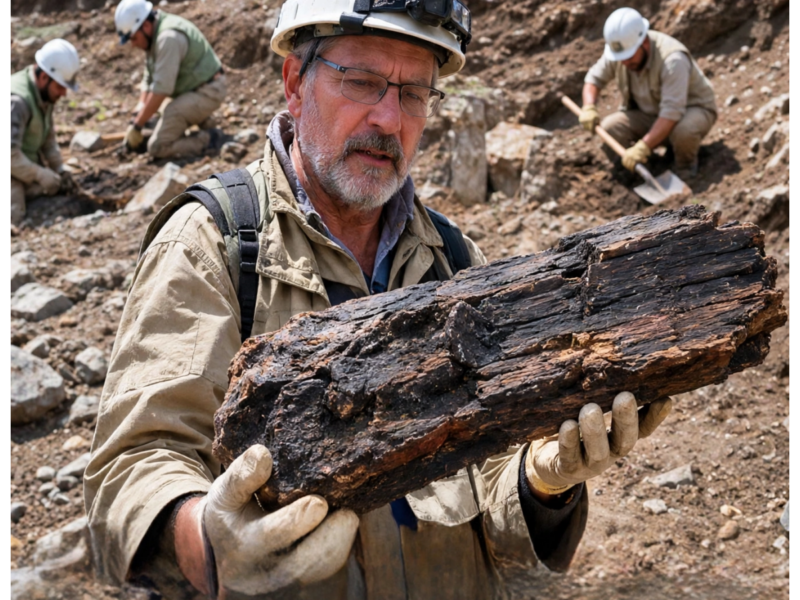
As the Euphrates River continued to expose more of its muddy bed, workers noticed something unusual beneath the clay.
At first, they thought the shapes were only stones or broken roots buried in the ground.
But as the mud was cleared away, large bone fragments began to appear.
They were heavy, thick, and unusually shaped.
Some pieces looked like long ribs.
Others looked like oversized joints, far larger than what people expected to find from familiar animals in the region.
The discovery immediately raised questions.
What kind of creature had been buried there?
And why had the river hidden its remains for so long?
Scientists might say these bones could belong to rare prehistoric animals washed into the area by time, flood, or shifting sediment.
That explanation is possible.
But for many believers, the image of giant bones beneath the Euphrates carries a deeper meaning.
Genesis 6 describes the world before the flood as violent, corrupted, and filled with beings that did not belong to ordinary human history.
These bones became a symbol of that forgotten world.
A world buried under judgment.
And perhaps that is the warning.
What is hidden does not disappear forever.
At God’s appointed time, even what lies beneath the clay can be brought back into the light.
Not far from the place where the bones were found, another object began to appear beneath the clay.
At first, it looked like a broken block of stone.
But when the mud was cleared away, its surface showed dark burn marks, worn edges, and traces of ash scattered around it.
The shape was too deliberate to ignore.
It looked less like a natural rock, and more like an altar, a place where fire had once been used for ritual or worship.
Some wondered if it had belonged to pagan worship.
Others believed it may have been a sacred place destroyed during ancient religious reforms.
Whatever its origin, the image was disturbing.
A burned altar beneath the Euphrates became a picture of worship that had been corrupted, abandoned, or defiled.
And perhaps that is the warning.
Before people search for signs in the earth, they must restore the altar in their own hearts through prayer, holiness, and a return to God.
After the burned altar was discovered, the strange reports moved from beneath the ground to the sky above the Euphrates.
It began shortly after sunset when several witnesses noticed bright lights hovering over the river.
At first, people thought they were ordinary aircraft or distant drones.
But the longer they watched, the harder that explanation became.
The lights did not move like planes.
They made no sound.
They stayed still above the river for several moments, then suddenly shifted to another position, as if something unseen was guiding them.
Some witnesses said the lights glowed white and pale gold.
Others said they appeared, vanished, and returned again without leaving a trail in the sky.
Experts could suggest simple explanations.
They might be drones, military aircraft, reflections, or unusual atmospheric effects caused by heat and dust above the river.
Those explanations should be considered.
But for many believers, the timing felt impossible to ignore.
Luke 21:25 speaks of signs in the sun, moon, and stars.
These lights may not be the final message, but they raise a serious question.
Are they only strange movements in the sky or a reminder for humanity to wake up, look up, and prepare the heart before God?
After the strange lights appeared in the sky, another discovery brought the mystery back beneath the river.
As the dry riverbed was examined more closely, workers noticed a long shape buried under layers of hardened sediment.
At first, it looked like a piece of dark stone, but when more clay was removed, the outline became clearer.
It was a sword.
This was not an ordinary weapon.
The blade was unusually long, thick, and heavily worn by time.
Its size immediately raised difficult questions.
Who could have carried something so large?
Was it made for battle, ceremony, or something history has forgotten?
And why was it buried beneath the Euphrates River?
Some may connect it to ancient wars that once passed through the Holy Land.
Armies rose and fell in this region, and weapons could have been lost, hidden, or abandoned.
But the sword’s enormous size made others think of Genesis 6, where scripture speaks of a strange and violent world before the flood.
The sword became more than metal beneath the mud.
It was a symbol of war, pride, and human power.
Yet, lying beneath a river known for cleansing, it also asked a deeper question.
Must every weapon finally be laid down before God?
When all these unusual signs are placed together, the message becomes larger than one cave, one river, or one mysterious discovery.
A hidden entrance beneath the mud, carvings of snakes and chains, a radiant figure that appears bound in darkness, ancient chests filled with gold and ritual objects, giant bones beneath clay, a burned altar, strange lights in the sky, and a massive sword beneath the river all seem to point toward the same question.
What happens when the hidden things of the earth begin to surface?
On a human level, these signs speak directly to the condition of life today.
The cave beneath the mud reminds us that people often bury what they do not want to face.
Families can hide pain.
Nations can hide corruption.
Individuals can hide pride, fear, guilt, and unbelief beneath a normal appearance.
But buried things do not always stay buried.
When pressure comes, when the ground shakes, when the water pulls back, what was hidden begins to appear.
The carvings of snakes, gates, chains, and winged figures create the image of warning.
They suggest deception, imprisonment, and spiritual danger.
In everyday life, people are also surrounded by things that look harmless at first, but slowly hold the heart captive.
Greed, addiction to attention, anger, false security, and the desire to control everything.
The ancient symbols become a mirror.
They ask whether humanity is truly free or simply chained to things it refuses to surrender.
The glowing figure in the cave adds another layer.
It is not enough to see light and immediately call it good.
Some things appear bright but lead the heart into confusion.
That is why discernment matters.
The question is not only what is this light but also where is it leading people.
A sign that produces fear, pride, obsession or deception should make people pause.
The chests of gold and offerings reveal another human struggle.
Treasure can show what a person loves most.
If those objects were offerings, then they suggest that ancient people may have tried to please, bargain with, or fear something they did not understand.
That speaks to the modern world as well.
People still sacrifice peace, family, truth, and faith for wealth, status, and approval.
The giant bones and the buried sword point to violence, pride, and the old hunger for power.
They remind us that human strength does not last forever.
Weapons rust, empires fall, bodies return to dust.
Even what seems powerful can end up buried beneath clay.
The burned altar may be the clearest warning.
It shows worship that has been damaged, abandoned, or misdirected.
Before people search for signs in rivers, caves, and skies, they should ask whether the altar of their own heart is still alive.
Ecclesiastes 12:14 says, “For God will bring every work into judgment, including every secret thing, whether good or evil.”
That verse gives the deeper meaning behind every sign.
The message is not panic.
It is awakening.
If hidden things are being revealed in the earth, perhaps humanity is also being invited to let God reveal what is hidden in the heart before it is too late to return.
The lesson behind these events is not that people should live in fear, chase every rumor, or treat every unusual discovery as a final sign.
The deeper lesson is that moments of mystery should lead the human heart toward wisdom.
When people see things they cannot fully explain.
The first response should not be panic.
It should be humility.
The Bible often teaches that the visible world can remind people of invisible truths.
A river, a cave, a stone, a light or an ancient object may capture attention.
But the real question is what happens inside the soul after attention is captured.
Does a person become more fearful or more faithful, more curious or more honest before God?
Psalm 46-10 says, “Be still and know that I am God.”
That verse gives balance.
When strange reports spread quickly, stillness is important.
People do not need to rush into wild conclusions.
They need to slow down, pray, think clearly, and ask whether their lives are standing on something stronger than emotion.
Another lesson is discernment.
Not everything that looks impressive is automatically holy.
Not every bright thing brings truth.
Not every mystery leads people closer to God.
That is why 1 John 4:1 says, “Beloved, believe not every spirit, but try the spirits whether they are of God.”
This is a serious warning for the modern world.
People are surrounded by images, voices, claims, and signs.
Without discernment, the heart can be pulled in many directions.
These events also remind us to guard the inner life.
Proverbs 4:23 says, “Keep thy heart with all diligo.
Thousands of miles away from the Euphrates.
How could something resembling one survive here?
There are several possible explanations.
The creature may have been misidentified.
It could belong to an unknown species or perhaps generations of isolation inside an underground water system allowed a local species to develop unusual characteristics.
Without proper biological examination, no definite conclusion can be made.
Yet for many Bible readers, the discovery of such a massive creature hidden beneath ancient waters brings to mind Job 41:1, where God speaks of Leviathan, a mysterious creature beyond ordinary human control.
That does not mean this creature was Leviathan.
But the comparison adds another layer to an already unusual discovery.
If an animal this extraordinary could remain hidden beneath the Euphrates, what other forms of life might still exist in the unexplored chambers below?
And the fourth cave would raise an entirely different question.
As the researchers moved deeper inside, their lights fell across a collection of enormous objects scattered among the rocks.
What first looked like broken wooden beams, soon appeared to be ancient weapons, massive bows, unusually long arrows and huge spears, far larger than anything designed for ordinary use.
The size of the weapons immediately raised questions.
Could a normal human being have carried them into battle?
Some of the bows appeared too large to draw comfortably, while several of the spears were so long and heavy that they seemed impractical for an ordinary warrior.
There may be a simpler explanation.
These objects could have been ceremonial weapons, symbols of authority, or artifacts created to represent strength rather than to be used in actual combat.
Ancient civilizations often produced oversized objects for ritual or political purposes.
Still, the discovery quickly reminded many Bible readers of Genesis 10 to8:9, where Nimrod is described as a mighty hunter before the Lord, a powerful figure connected with the early world of Mesopotamia.
There is no evidence that these weapons belong to Nimrod himself.
But beneath the Euphrates, their extraordinary size leaves one question difficult to ignore.
Were these simply symbolic relics from a forgotten civilization?
Or were they once made for warriors whose strength and stature were remembered only in ancient stories?
If this message encourages you to remain alert and faithful, write Jesus is my hope in the comments.
But the discoveries around the Euphrates did not end inside the caves.
As researchers examined another section of the exposed riverbed, they reportedly noticed a circular object partially buried beneath thick layers of hardened mud and ancient sediment.
At first, it looked like little more than a broken piece of wood or stone.
But as the surrounding material was carefully cleared away, its shape became much easier to recognize.
A series of spokes extended evenly from the center toward an outer rim, revealing what appeared to be an ancient wheel.
The discovery immediately raised questions about its origin.
Spoked wheels were used by many civilizations across the ancient near east, especially for chariots and lightweight transportation.
Because of that, the object cannot be linked to any specific people without proper dating, material analysis, and archaeological context.
It could simply be an artifact left behind by trade, travel, warfare, or an ancient settlement once located near the river.
Yet, for many Bible readers, the shape of the wheel brings one famous account to mind.
In Exodus 14, Pharaoh’s army pursued the Israelites with horses and chariots before the dramatic events at the sea.
There is no evidence that this wheel belonged to Pharaoh’s army.
Still, finding an ancient spoked wheel beneath layers of sediment naturally brings that story back into discussion.
Perhaps it is only a forgotten artifact.
But what if its age and origin eventually point to a chapter of ancient history no one expected to find here?
But another discovery beneath the Euphrates raised an entirely different kind of mystery.
As researchers cleared away layers of hardened soil and ancient sediment, the outline of a massive stone chest slowly emerged from the ground.
Unlike the scattered objects found nearby, this chest appeared almost completely intact with its heavy lid still resting firmly in place.
What made the discovery even more unusual was its location.
The chest stood alone, separated from other debris, as though someone had intentionally placed it there rather than allowing the river to carry it into position.
Its careful placement suggested that whatever had once been stored inside may have been considered important.
From an archaeological point of view, there are many possible explanations.
Stone containers were sometimes used to preserve ritual objects,erary items, valuable possessions, or documents belonging to ancient cultures.
Without opening and studying the chest, however, no one could know its true purpose.
For many Bible readers, the discovery brings to mind Daniel 2:22, which speaks of God revealing deep and hidden things and bringing what is concealed into the light.
That verse does not identify this chest or explain why it was buried.
But the image is difficult to ignore, something sealed beneath the earth for generations, now uncovered as the Euphrates recedes.
If the people who placed it there truly intended it to remain hidden, one question becomes unavoidable.
What was important enough to be sealed inside a stone chest beneath the Euphrates.
But the most unsettling moment came when the expedition team approached a section of the cave that had not yet been fully opened.
The passage ahead was narrow and partly blocked by fallen rock.
As the researchers stopped near the entrance, a faint sound suddenly echoed from somewhere deeper inside.
At first, it was so distant that several members of the team believed it might simply be wind moving through the underground tunnels.
Then, the sound came again.
This time, it was louder and much clearer, almost like a scream carrying through the darkness.
A few moments later, a second sound followed, longer and deeper than the first.
The team raised their lights toward the sealed passage, but nothing could be seen beyond the rocks.
The source remained completely hidden.
There are natural explanations for strange sounds inside caves.
Wind passing through narrow openings, underground water, shifting stones, or distant noises can become distorted by echoes and produce sounds that seem far more unusual than they really are.
Still, the location made the experience difficult for many Bible readers to ignore.
Revelation 9:14 speaks of four angels bound at the great river Euphrates, waiting for an appointed time.
The verse does not prove that these sounds have any connection to that prophecy.
But hearing unexplained screams from behind a sealed passage beneath the Euphrates naturally raises an unsettling question.
What was producing the sound?
And what lies beyond the part of the cave no one has yet been able to enter.
Few rivers hold as much biblical significance as the Euphrates.
Remarkably, it appears near the beginning of scripture in Genesis and returns again near the end in Revelation.
Across the Bible, the river functions not only as a geographical landmark, but also as a boundary, a symbol of powerful kingdoms, and eventually a location connected with future prophecy.
The first major reference appears in Genesis 2:10:14.
Scripture describes a river flowing from Eden and dividing into four branches, the Pishon, Kihan, Tigris, and Euphrates.
This places the Euphrates within the Bible’s earliest description of the world surrounding the Garden of Eden.
From the very beginning, therefore, the river is connected with humanity’s ancient past.
Later, the Euphrates becomes important in God’s covenant with Abraham.
In Genesis 15:18, God promises Abraham’s descendants a land extending from the river of Egypt to the great river, the Euphrates.
The river, therefore, becomes associated with territory, inheritance, and the boundaries connected with God’s promises.
A similar theme appears in Deuteronomy 1, where Israel is told about the land stretching toward the Euphrates.
At this point, the river serves as a recognizable geographical boundary of the ancient near east.
But the Bible also uses the Euphrates symbolically.
In Isaiah 8, the power of Assyria is compared to the mighty waters of the Euphrates overflowing their banks.
The river becomes an image of an empire advancing with overwhelming force.
This shows how something physical and familiar could also carry a deeper prophetic meaning.
The most mysterious references, however, appear in Revelation.
Revelation 9:14 describes a command to release the four angels who are bound at the great river Euphrates.
The passage has generated debate for centuries because it connects the river with four restrained spiritual beings and an appointed future moment.
Then, Revelation 16:12 presents another striking image.
The sixth angel pours out his bowl upon the Euphrates and the rivers water dries up to prepare the way for the kings from the east.
This event appears within a larger sequence of final judgments described in Revelation and is often discussed in connection with events leading toward the final conflict portrayed in the book.
This creates an extraordinary biblical pattern.
The Euphrates appears near Eden in Genesis, marks lands and kingdoms throughout the Old Testament, symbolizes political power in the prophets, and then appears again in Revelation in connection with future events.
That is why the Euphrates continues to attract so much attention among Bible readers.
It is more than an ancient river flowing through the Middle East.
Within scripture, it connects creation, covenant, empire, judgment, and prophecy.
And perhaps that is what makes the Euphrates so fascinating.
A river introduced near the beginning of the biblical story may still have a role in the final chapters of that