Last November marked 50 years since the Edmund Fitzgerald went down in Lake Superior.
All 29 men aboard were lost and not one body was brought home.
The captain behind her, who watched her vanish off his radar, later wrote, “My own opinion is that she bottomed out on a shaw.
She’s still down there 530 ft under, snapped in two, and what was filmed on that wreck frightened investigators enough to change the rules on the lakes.
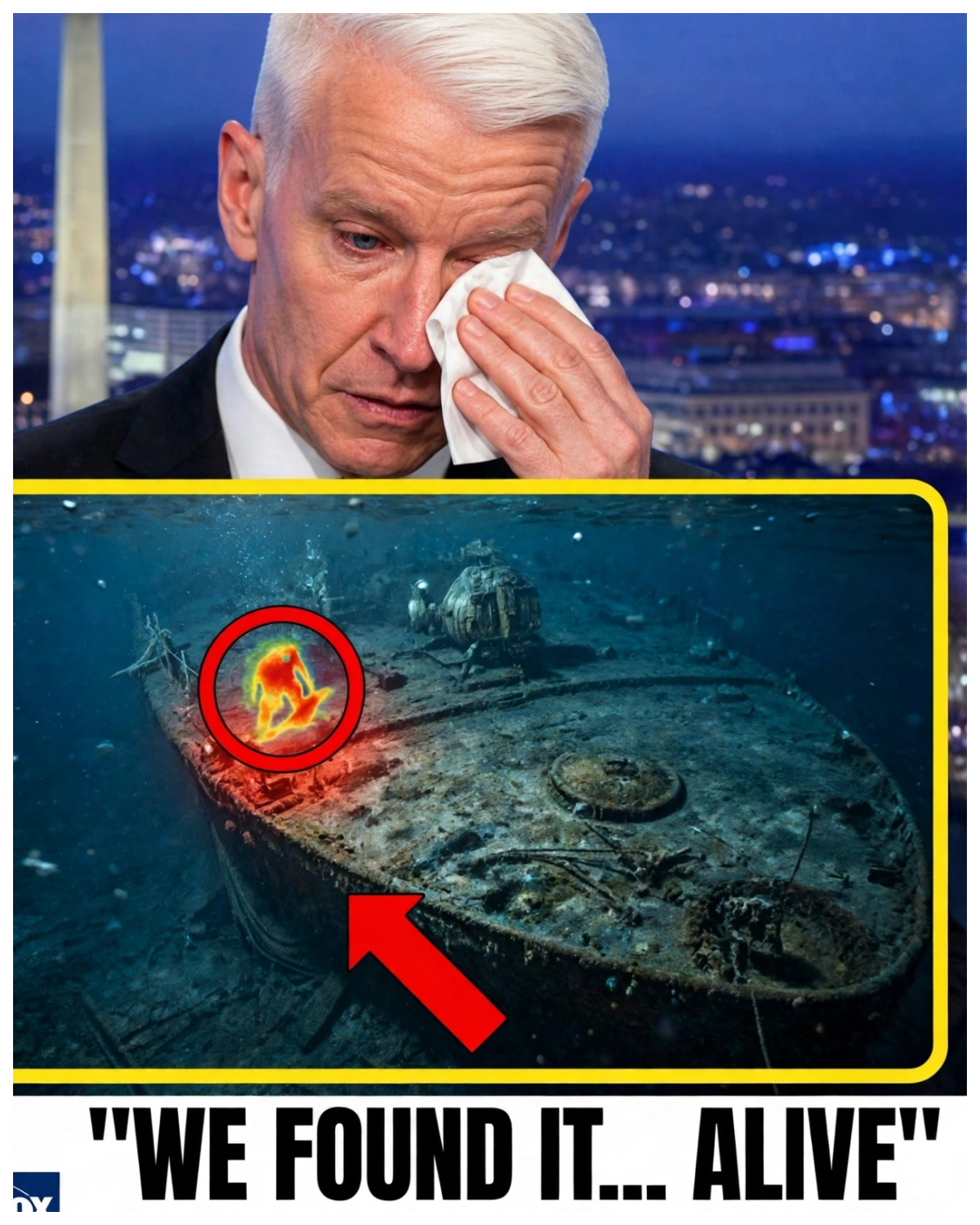
Six months after she sank, the US Navy flew an underwater drone down to her.
So, how does the largest ship ever lost on the Great Lakes sink without one mayday?
Was it the storm or something preventable?
The drone’s camera caught details on her deck that most retellings skip.
What’s lying down there might be more than a wreck?
It might be a warning.
I’m Hannah Ree.
When that drone’s lights finally reached the front of her deck, the first hatchet found was wrong.
The steel cover for hatch number one wasn’t sitting on top of its opening the way it should have been.
It had been driven down inside the hatch and buckled.
A little further back, the cover for hatch number two was gone completely.
Those pictures would end up at the center of an argument that still hasn’t been settled.
And it all comes down to a part of the ship that almost nobody thought twice about.
Those hatch covers were one of the reasons the Fitzgerald was so good at her job.
Each one was a single slab of steel, and there were 21 of them running down her long flat deck, everyone held shut by 68 clamps spaced about 2 feet apart around its edge.
That’s 1,428 clamps in all, and each of them was worked by hand.
In 1958, that looked like nothing more than smart, efficient design.
She was launched on the 7th of June 1958 at River Rouge, Michigan, just down river from Detroit.
At 729 ft, the Edmund Fitzgerald was the longest ship on the Great Lakes, and she weighed 13,632 tons before a single pellet of cargo went aboard.
Her maiden voyage came that September 24.
She didn’t hold that title for long, though.
In September 1959, a ship called the Murray Bay was launched at 730 ft, beating her by a single foot.
The money behind her came from a surprising place.
The Northwestern Mutual Life Insurance Company paid for the ship, and the ship carried the name of its chairman, Edmund Fitzgerald.
So, one of the most famous freighters in American history belonged to a life insurance company.
Not exactly the owner you’d picture for an orboat.
The insurer didn’t run her, though.
That job went to Ogle Bay Norton, a shipping company out of Cleveland, whose Colombia transportation division operated her under a 25-year contract.
Her work was hauling tachinite, small pellets of processed iron ore from the western end of Lake Superior down to the steel mills around Detroit and Toledo, and she was very good at it.
Over her career, she set six seasonal hall records.
And in 1969, she carried 27,42 long tons in a single trip.
The biggest load of her life.
Sailors gave her nicknames the way you’d name a favorite truck.
The Fits.
Big Fits.
Mighty Fitz.
The Toledo Express.
Along the shore, people knew her on site, and plenty of families would come down to the water just to watch her pass.
A round trip between Superior and Detroit usually took her about 5 days, and she averaged around 47 of them a season.
By November 1975, she had made an estimated 748 round trips and covered more than a million miles.
Her captain that season was Ernest Msurley, and the men who sailed with him considered him one of the most seasoned skippers on the lakes, and some of his crew had been with her nearly from the beginning.
Her first mate was John McCarthy.
Her wheelsman, John Simmons, had been aboard since 1959, which meant he’d steered her through almost her entire working life.
But the record wasn’t as spotless as the legend makes it sound.
In September 1969, the Fitzgerald ran ground near the Soolocks.
In April 1970, she collided with another freighter, the Hakalaga.
That September, she struck a lock wall and she hit lock walls again in 1973 and 1974.
In January 1974, she lost her bow anchor in the Detroit River.
That anchor was later recovered and it sits today at the Dawson Great Lakes Museum in Detroit.
None of it was treated as serious.
Nobody died and the fits kept working.
Something else changed in those same years and it got far less attention than any collision.
In 1969, 1971, and 1,973, the rules on how deeply Great Lakes freighers could be loaded were relaxed.
Each change let ships like the Fitzgerald carry more cargo and ride lower in the water.
Sailors call the height of the deck above the waterline freeboard, and on paper, the Fitz was losing a little of hers with every amendment, fewer feet of steel between her deck and the waves.
At the time, it looked like a small, sensible change, and it would take a disaster to show what it had cost.
On the 9th of November, 1975, at 2:15 in the afternoon, the Fitzgerald pulled away from the dock at Superior, Wisconsin.
Her holds carried 26,116 long tons of tachinite bound for the steel mill on Zoo Island near Detroit.
Another freighter, the Arthur M.
Anderson was crossing the lake on much the same course, and the two ships stayed close enough to keep each other on radar.
A November gale was coming.
Lake sailors knew what a November gale could do, but this one would turn out far worse than the forecast said.
By the afternoon of November 10, both ships were deep inside it.
The weather forecast for that afternoon had called for waves of 8 to 16 feet.
The Anderson’s crew watched waves of 18 to 25 ft roll past them instead.
Wind gusts were recorded as high as 65 knots, which is about 75 mph.
It was a blinding snowstorm, and much of the time the Anderson was following the Fitzgerald as a blip on her radar screen.
At about 3:30, Msory called the Anderson.
His exact words were, “I have a fence rail down, have lost a couple of vents, and have a list.”
I mean, think about that for a second.
A list means the ship is leaning to one side and on a loaded freighter that usually means water is collecting somewhere it shouldn’t be.
He’d also just told the other captain that fittings on his deck were being torn away and he said all of it calmly like a man reporting the weather.
Then things got harder.
Shortly after 4:10, the Fitzgerald reported that her radar had failed.
At 4:39, she was on the radio asking about the light and radio beacon at Whitefish Point, the very landmark she was trying to reach.
At 452, the Anderson logged a wind of 52 knots.
Between 5 and 5:30, Msori told a passing ship, the Avaors, that he now had a bad list.
The lean was getting worse, and the Fitz was still hours from shelter.
At about 10 7 that evening, Msorurly spoke to the Anderson for what turned out to be the last time.
His words were, “We are holding our own.”
Soon after that, the Fitzgerald disappeared from the Anderson’s radar.
There was no mayday and no distress flare, and nobody on the Anderson saw her go down.
At 7:39, the Anderson’s captain, Jesse Bernie Cooper, called the Coast Guard.
By 9:03, the Fitzgerald was officially reported missing.
The Anderson joined the search along with another freighter, the William Clay Ford, and they found debris and an oil slick and nothing else.
All 29 men were gone.
Their families would never get a body to bury.
The day after the sinking, the Mariners’s church in Detroit rang its bell 29 times, once for each man.
Gordon Lightoot read a Newsweek article about the wreck called The Crulest Month.
And in 1976, he released the ballad that carried the Fitzgerald’s name around the world.
The church kept holding a memorial for the crew every year until 2006.
When Lightfoot died in 2023, the church rang its bell 29 times again and then one more time for him.
On November 14, 4 days after the sinking, a Navy P3 Orion patrol plane flying over the area picked up a magnetic signal coming off the bottom.
That signal turned out to be the Fitzgerald.
She was lying in about 530 ft of water inside Canadian Territory, about 15 mi west of Dead Man’s Cove, Ontario, and roughly 17 mi short of the entrance to Whitefish Bay, the shelter she’d been running for all afternoon.
So now the question was out in the open.
How does a 729 ft ship with a veteran captain at the helm vanish in minutes without a word?
Cooper had his answer right away.
He was convinced the Fitzgerald had run too close to Six Fathom Shaw, a stretch of shallow water off Caribou Island and scraped her bottom.
In his statement to investigators, he didn’t hedge.
I am positive he went over that six fathom bank and it fit.
A ship that touches bottom can tear open her hull.
And that would explain the list Mixurly reported at 3:30 along with the lost vents and the fence rail.
But the version you’ve heard about the shaw isn’t the full picture either.
In 1976, Canada remapped that shaw and found it sat about a mile farther east than the old chart showed.
Some late captains still haven’t let the theory go.
Robert Theodo, a former captain of the 13t Paul R.
Triggera suspects six fathoms shaw to this day and points out that it’s only about 36 ft deep in places.
Others blame the lake itself.
Cooper remembered seas of 25 to 35 ft that night, the kind of water that can bury a deck and keep burying it wave after wave.
And some people believed the ship had simply been worn out, that a hull that long had flexed one too many times in heavy weather and finally broke apart on the surface.
The problem was that every one of these was a guess.
The families wanted answers.
The Coast Guard had convened a marine board of investigation, and the only witness that could settle it was lying on the bottom of Lake Superior in black near freezing water.
So, in May 1976, the investigators sent something that didn’t need to breathe.
It was an unmanned Navy vehicle called Curvy 3, run remotely from a ship on the surface and carrying its own lights and cameras.
From May 20 to May 28, it surveyed the wreck, photographing and filming her one section at a time.
For the first time since that night, somebody could actually look at the Edund Fitzgerald.
The first thing the cameras made clear was how violent the end had been.
The bow section, about 276 ft long, was standing upright in the mud, leaning about 15° to port and buried up to roughly the 28t mark on her hull.
The stern, about 253 feet long, was lying upside down about 170 ft away.
And roughly 200 feet of the middle of the ship wasn’t there as a recognizable section at all.
Add those numbers up and you get the whole ship.
276 + 253 + 200 comes to 729 ft.
The middle of the Fitzgerald had been torn to pieces.
Then the vehicle moved along the deck and the hatches started telling their own story.
Hatch number one, the cover driven inside and buckled.
Number two, missing.
Number three, mostly buried in mud.
Number five, missing.
Number six, open with its cover standing on end.
Number seven and eight, both missing.
The vents on the port side were covered in mud.
On the starboard side near hatch number five, one of the vents had been torn clean off the deck.
This next part rarely makes it into the retellings.
Along the edge of the number five hatch, the drone’s camera followed a row of 16 clamps.
The same hand worked clamps that were supposed to hold that cover down in any weather.
Two of them were bent or broken.
The other 14 weren’t damaged at all.
They were just open.
Even that count would become a point of disagreement.
A later statement from the safety board’s own chairman described a run of 18 clamps with two of them damaged.
Either way, most of the clamps on that hatch had come through the sinking without a scratch.
Now, if a wave rips a hatch cover off a ship, you’d expect the clamps holding it down to be bent, snapped, or wrenched loose.
Clamps that are undamaged and open point to something much more uncomfortable.
To the Coast Guard’s investigators, they suggested those covers hadn’t been properly secured to begin with.
Hold on to that image of 14 open clamps because it’s the detail the entire fight over the ship turns on.
In July 1977, the Coast Guard’s Marine Board released its report.
It said the most probable cause was the loss of buoyancy and stability that resulted from massive flooding of the cargo hold.
The board blamed ineffective hatch closures, and it pictured water working its way in gradually over hours, while the men on the bridge didn’t realize how much they’d taken on.
Even so, the board admitted the exact cause could not be determined with certainty.
It also cited complacency across the industry.
For the families, it landed like an accusation.
The finding pointed toward the crew, men who were no longer around to explain what they had done or hadn’t done that day, and the anger was real.
Then came testimony that seemed to back the Coast Guard up.
George Bergner, who had served as a steward on the Fitz, said in a January 1978 deposition that the ship often left port without all of her hatch clamps fully secured.
According to that same deposition, her keel had been coming loose again and again.
Another man, Joseph Fiser, later recalled a 1,969 inspection that turned up recurring cracks in her welds.
But the National Transportation Safety Board didn’t land in the same place.
In its report of the 4th of May 1978, the board concluded the Fitzgerald went down because of sudden massive flooding of the cargo hold after one or more hatch covers collapsed under huge waves breaking over her deck.
In that version, the covers gave way all at once.
The safety board also found that there were no written procedures concerning maintenance or adjustment of the hatch clamps or gaskets.
On a ship that depended on handworked clamps to keep the lake out, nobody had written down how to look after them.
And the safety board added two contributing factors that change how you see the whole story.
The Fitzgerald’s cargo hold had no watertight bulkheads, dividing it into compartments, so water that got in anywhere could spread through the entire hold.
And the freeboard reductions from 1,969 1,971 and 1,973, the ones that let her load deeper, had left her riding lower in exactly the kind of seas that sank her.
Even the safety board couldn’t agree with itself.
One of its members, Philip Hogue, wrote a descent.
He believed the Fitzgerald had shed first that the grounding caused the list and the lost vents and that the flooding came after.
The Lake Carriers Association also concluded she’d bottomed out.
Then in 2012, two researchers, Shaun Kerry and Ben Fischer, pointed out that there was no sign of grounding damage on the exposed part of the stern.
That’s a problem the Shaw theory has never fully answered because the stern is the half of the wreck investigators can actually see the bottom of.
And Rick Mixster, a researcher who went down to the wreck in a submersible in 1994, argues the keel problems were the key and that she most likely broke her back on the surface.
So, here’s what frightened people.
Most of those theories end up in the same place.
Water got into a hold with no walls to stop it on a ship allowed to ride lower than when she was new during a storm far worse than the forecast.
From the wheelhouse, it may never have looked hopeless until there was no time left to do anything about it.
And the rules did change.
In 1977, depth finders became required on vessels of 1,600 gross tons and up.
In 1980, survival suits and strobe lights were required aboard.
Emergency locator beacons became standard equipment.
The 1,973 freeboard reduction was rescended and the Coast Guard began inspecting lake freighters every year before November.
The safety board had already sent priority recommendations to the Coast Guard, the American Bureau of Shipping, and Noah, covering weathertight hatch covers, BGE pumping, instruments to measure a ship’s trim and heel, emergency beacons, and depth finders.
But the drone didn’t end the argument, and neither did anything that came after it.
In 1980, Jean Michelle Kustoau’s team took a twoman submarine down, and his divers came away convinced she had broken in two on the surface.
In 1989, a Michigan Sea Grant expedition sent down a remotely operated vehicle and recorded 3D video of the wreck.
In 1994, Joseph McKinnis led six publicly funded dives that didn’t explain the sinking.
That same year, a private expedition led by Fred Shannon made seven dives, one of them lasting a record 211 minutes and measured the two halves about 255 ft apart instead of the 170 recorded in 1976.
Shannon concluded that massive and advancing structural failure had torn her apart.
Then on the 4th of July 1995, McInness’s team brought up her 200lb bell and left a replica in its place.
It now hangs at the Great Lakes Shipwreck Museum at Whitefish Point.
So, the bell finally reached Whitefish Point, the place the ship had been fighting toward that night.
That same year, two divers, Terrence Tyel and Mike Z, became the first to reach the wreck on Scuba, breathing a special mix of gases called Tryix.
After that, the door started closing.
Michigan tried to protect the wreck as a grave site.
But according to Mixster, that effort was struck down as a First Amendment violation after news organizations challenged it.
Canada went further.
Since 2006, Ontario has protected a circle 500 me wide around the wreck with fines of up to a million Canadian dollars for anyone working there without a license.
In 2009, the licensing rule was extended to any surveying device, which covers drones, too.
Mixster, who wrote about the case in his 2022 book Tattletail Sounds, says the wreck is certainly within robot range, but nobody has been allowed back down since 1994, and the newest sonar images of her are around 30 years old.
The weather side of the case got sharper, though.
In 2006, a team of National Weather Service researchers rebuilt the storm in a computer model.
At 700 p.m.
On November 10, right where the Fitzgerald was, they found sustained winds near 48 knots and waves of more than 25 ft.
In their words, the worst conditions were coincident with the time and location at which the Fitzgerald was lost.
Scientists at Noah’s Great Lakes Environmental Research Laboratory worked the same storm backward and estimated sustained winds of 50 to 60 knots with waves around 24.6 ft.
They found a single 46 ft wave was possible that night, but called it rare and unlikely.
So, what did that drone actually find?
It didn’t find one smoking gun.
It found a ship whose only protection against Lake Superior was 21 steel lids and 1,428 clamps turned by hand sitting on top of a hold with no internal walls on a hull allowed to ride lower than the day she was launched.
Whether those covers were left unsecured, battered loose by the storm, or sprung open after a grounding, the result is the same.
Water got into the Fitzgerald where nobody on the bridge could see it, and there was nothing inside her to stop it.
That’s the warning sitting on the bottom of Lake Superior, and it gives Msurley’s last words a different weight.
When he said, “We are holding our own,” he was very likely telling the truth as he saw it from the wheelhouse.
I’m Hannah Ree.
If you want more stories like this one pulled up from the bottom of the Great Lakes and checked against the record, stay with me because there are plenty more on the