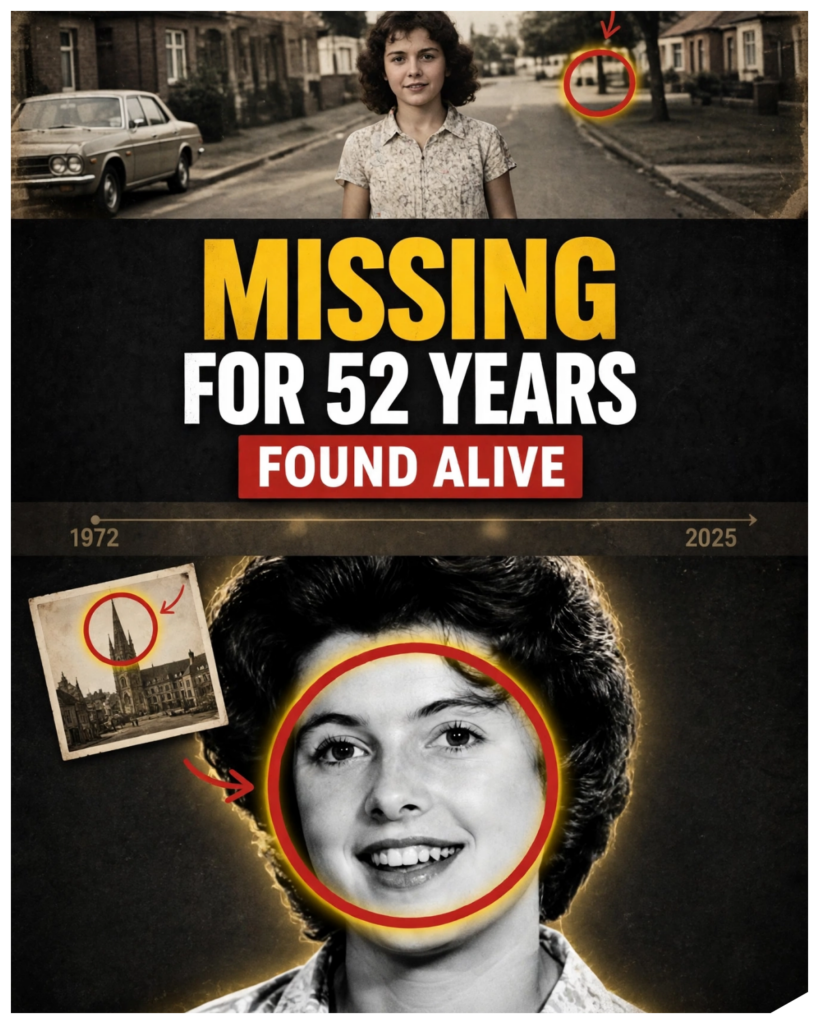
Imagine a 16-year-old girl leaving her family home in the spring of 1972.
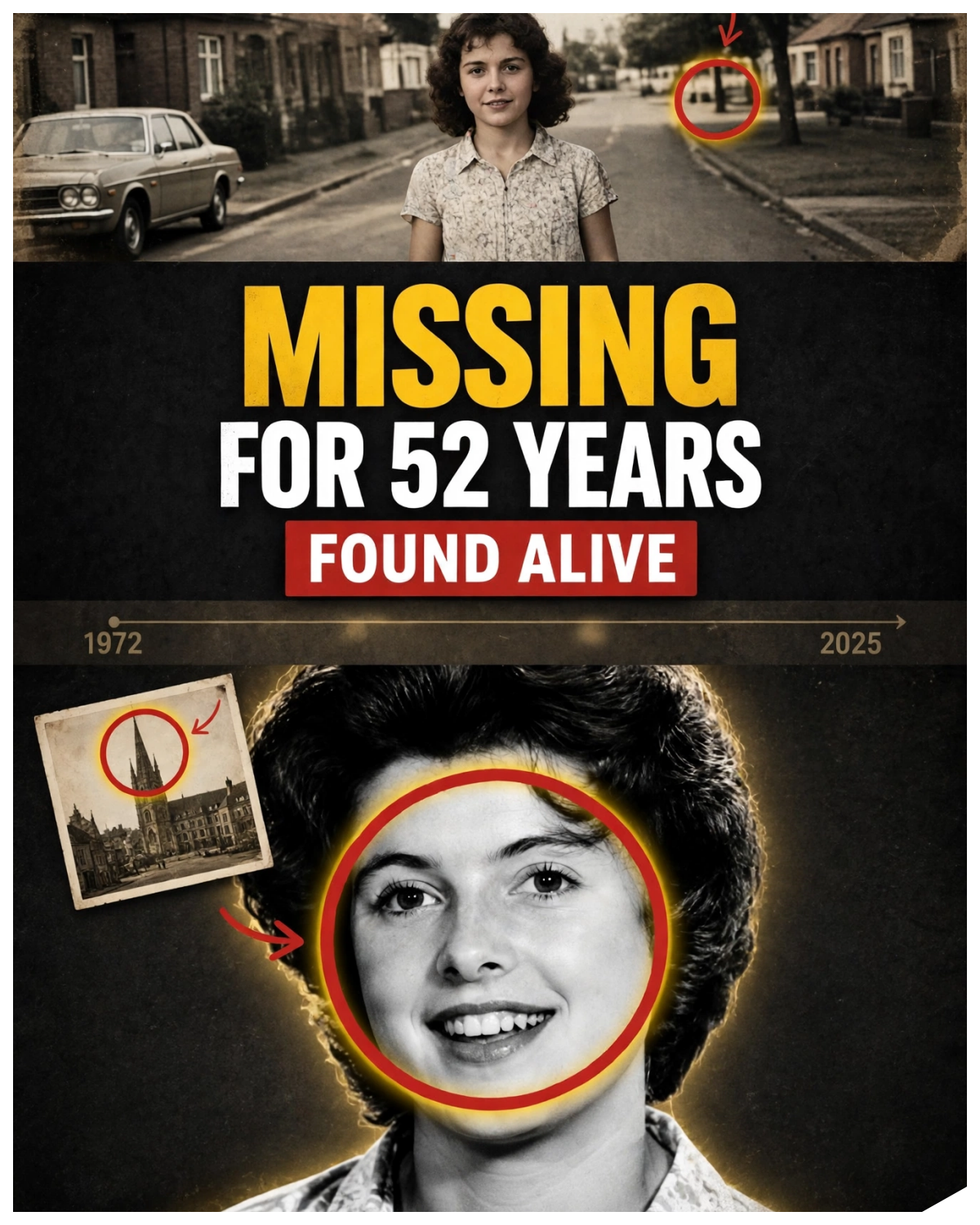
Her family reports her missing.
Police begin looking for her.
A photograph is circulated and her name becomes part of a missing person investigation.
Then the years pass.
A year becomes five, five becomes 20.
Eventually, more than half a century goes by and the question of what happened to the missing teenager remains unresolved.
Then, in December 2024, police revisit the case.
They release an old photograph.
Members of the public come forward with information and investigators finally locate the girl who disappeared decades earlier.
Except she is no longer a girl.
She is a woman in her late 60s and she is alive.
Her name is Sheila Fox.
She disappeared from Coventry, England in March 1972 when she was just 16 years old.
On January 1st, 2025, West Midland’s police announced that she had been found safe and well.
But while the discovery brought the official investigation to an end, it also raised questions about the extraordinary journey between her disappearance and her eventual discovery.
Who was Sheila before she went missing?
What do we know about the life she built after leaving Coventry?
And how did a case that remained open for more than 50 years finally reach its conclusion?
The answers take us from a workingclass family in postwar England to a decadesl long disappearance, reported family contact, and a police appeal that changed everything.
This is the story of Sheila Fox.
Before her name became associated with one of Britain’s most unusual missing person cases, Sheila Fox was a young girl growing up in Coventry.
She was born on February 26th, 1956.
Later reporting stated that her birth name was Sheila Fox, reflecting her family’s Irish heritage.
Her parents, Anne and Chris Fox, had come from County Wexford in southeastern Ireland before settling in England.
They built their lives in Coventry, a city still recovering from the devastation of the Second World War.
Chris worked as a brick layer, a trade that offered opportunities in a city where homes, factories, and public buildings were still being restored.
Together, he and Anne raised their children in a modest red brick terrace house in central Coventry.
Sheila was not the eldest child.
Her older siblings, John, Christopher Jr., and Bridgette, had been born in Ireland.
Sheila was the first of the children born after the family settled in England.
Her childhood was therefore rooted in Coventry, surrounded by the streets and neighborhoods her parents had made their home.
Unfortunately, the available reporting tells us relatively little about Sheila’s personality or everyday experiences.
There is no detailed public account of her closest friends, favorite activities, or private ambitions.
But we can place her life within its historical setting.
She grew up during the 1960s, a period of cultural change in Britain.
Music, fashion, and attitudes towards independence were evolving, and young people were approaching adulthood in a society that was changing around them.
By 1972, Sheila was 16 and nearing the end of her school years.
According to later reporting, she would ordinarily have completed her education around July.
The next stage of her life was approaching.
She might have entered employment, continued living near her family, or eventually built an independent life of her own.
But in March 1972, just days after her 16th birthday, [music] Sheila left the family home, and the future her family might have expected for her suddenly became impossible to follow.
Police later identified Coventry City Center as the place where Sheila was last seen.
After she disappeared, her family reported her missing.
Investigators were unable to establish her whereabouts and the case remained unresolved.
Her parents reportedly supplied police with a with a grainy black and white photograph taken during a recent family seaside holiday.
At the time, it was simply a family photograph.
But once Sheila went missing, it became an important image in the effort to find her.
It captured her appearance as a teenager, providing investigators and the public with a visual reference that would eventually become significant again decades later.
As the search continued, a possible explanation emerged.
Her cousin Kevin Fox later recalled a family story that Sheila had left with an older man who worked as a traveling insurance salesman associated with the credential.
Other media reports suggested that the man may have been a bartender from London.
These accounts became part of the public narrative surrounding Sheila’s disappearance.
For her relatives, the years that followed would bring a long period of uncertainty.
But while the missing person investigation remained unresolved, Sheila’s life appears to have continued far beyond the streets where she was last seen.
Some of the most revealing details about Sheila’s life after her disappearance come from later reporting by the Daily Mail.
According to the newspaper, Sheila gave birth to a son in July 1973, approximately 16 months after she disappeared.
They identified the child as Robert and reported that his birth record named John Foster, a bartender from Enfield, as the father.
Sheila was reportedly using the Foster surname at that time.
Then in 1976, another major change took place in the family’s story.
Sheila’s parents and siblings moved to Delta, British Columbia in Canada.
The family had left the city where Sheila was last seen, taking their lives across the Atlantic, while the missing person case in Britain remained unresolved.
The move created a considerable distance between Sheila’s family and Coventry.
But the most unusual development was still to come.
According to later reporting, Sheila reestablished contact with relatives during the 1980s when her family was already living in Canada.
This is one of the most significant details in the entire case.
For years, Sheila’s disappearance had remained an unresolved matter in the official record.
Yet, the later accounts suggest that some relatives had learned she was alive long before police formally resolved the investigation.
Those relatives apparently believed the matter had been dealt with within the family.
One cousin reportedly said they assumed Sheila’s parents had informed the authorities, but the exact sequence of events remains unclear.
The public record does not establish precisely which relatives knew about Sheila’s circumstances when they learned of them or whether anyone formally notified police.
That distinction is important.
Information shared within a family does not necessarily reach the investigators responsible for a missing person case.
Meanwhile, the newspaper reported that Sheila married Jack Thorp in 1983 and took his surname.
Her son reportedly took the same surname.
Later reporting placed the couple in North London and described connections to Watford.
Her life continued through the years when the missing person case remained open.
Relationships developed, a child grew up, and family members moved through the different stages of their lives.
Yet, the wider public had no confirmed resolution to the disappearance.
While Sheila’s life continued elsewhere, her family experienced the passage of time in ways that could never be reversed.
Her mother, Anne, reportedly died in 1996.
Her brother Christopher died in 2018 and her father Chris died in 2019 at the age of 98.
Report finding public tributes Sheila had posted following her brother’s death, suggesting she had maintained some connection with at least part of her family.
The public image was of a teenager whose whereabouts had remained unknown for decades.
Yet media accounts suggest that the reality was more complicated with some family members reportedly having information about her life after she left Coventry.
Still, there is no detailed public explanation of how those private family connections related to the official investigation.
What the accounts do reveal is a striking difference between the information some relatives reportedly possessed and the unresolved status of the missing person case.
Because despite the years that had passed, Sheila Fox was still officially missing.
Then in December 2024, police returned to the case.
In December 2024, West Midland’s police revisited Sheila’s disappearance.
The force’s cold case investigation team reviewed the available material and located the old photograph that had been supplied around the time she went missing.
On Sunday, December 29th, police released a renewed public appeal featuring the image of 16-year-old Sheila.
Think about what that photograph represented.
It showed a teenager from another era captured more than 50 years earlier.
The streets around her had changed.
The people who remembered her might have moved away or grown old.
Some of those closest to her had died, but the photograph remained.
Police were seeking information that could help them establish Sheila’s whereabouts and determine whether she was still missing.
The appeal quickly attracted attention and members of the public contacted the investigation team with information that helped officers locate her.
Later media reporting described relatives and neighbors among those who came forward.
However, the police announcement did not provide a full account of every tip or the precise role each person played.
What matters is that the renewed appeal generated information that enabled investigators to find Sheila.
After more than five decades, the case was finally moving towards a resolution.
Then came the announcement that transformed the story.
On January 1st to 25, West Midland’s police confirmed that Sheila Fox had been found alive and well.
She was living in another part of the country and officers had spoken to her.
The missing person investigation was resolved.
Detective Sergeant Jenna Shaw credited Detective Constable Sha Reeve and the assistance of the public for helping bring the case to a conclusion.
A 16-year-old who had disappeared from Coventry in 1972 had been located more than 50 years later.
The discovery was extraordinary, not because police had uncovered a crime or a tragic fate, but because Sheila had survived and continued living her life beyond the reach of the official missing person record.
When approached about the renewed attention, the newspaper reported that Sheila described the events as a misunderstanding, said she had moved on, and declined to discuss the matter further.
Her reported response did not resolve the questions surrounding her departure, but it made clear that she was not offering a fuller public account of her life.
That decision deserves respect.
Following the news of her discovery, some people questioned why she had left her family.
Others argued that the public knew too little about her circumstances to judge her choices.
But speculation cannot substitute for evidence.
Sheila Fox’s case raises a wider question about missing person investigations.
What happens when information about a person’s life exists outside the official record?
A relative may know that someone is alive.
A family may believe a matter has been settled privately.
Yet, unless relevant information reaches the authorities and is properly recorded, an investigation may continue without reflecting those circumstances.
That appears to be an issue raised by the later accounts of Sheila’s case.
Although the precise communication history has not been publicly established, her story demonstrates the value of revisiting longrunning investigations, reviewing historical material, and making renewed appeals for information.
The old photograph was more than a reminder of the past.
In 2024, it helped police reach people who could provide information relevant to a case that had remained open for decades.
At the same time, Sheila’s story should not be used to suggest that every long-term missing person case is simply a paperwork problem.
Each investigation is different, and the evidence must determine what conclusions can reasonably be drawn.
Some questions about Sheila may remain unanswered.
Why exactly did she leave at 16?
What happened during the earliest period after her disappearance?
How did different family members learn about her circumstances?
And why did the official investigation remain unresolved for so long?
The public record does not provide complete answers, but an unresolved question does not erase what investigators ultimately established.
Sheila Fox was found alive and well, and the missing person investigation was closed.
For more than 50 years, Sheila Fox’s name was associated with a disappearance from Coventry.
She was 16 when she left in March 1972.
Decades later, a renewed police appeal brought forward information that helped officers locate her.
On January 1st, 2025, West Midland’s police confirmed that she had been found safe and well.
The case had finally reached its conclusion.
This has been case unknown.
Subscribe for more carefully researched stories about missing people, unanswered questions, and investigations that continue long after public attention fades.


