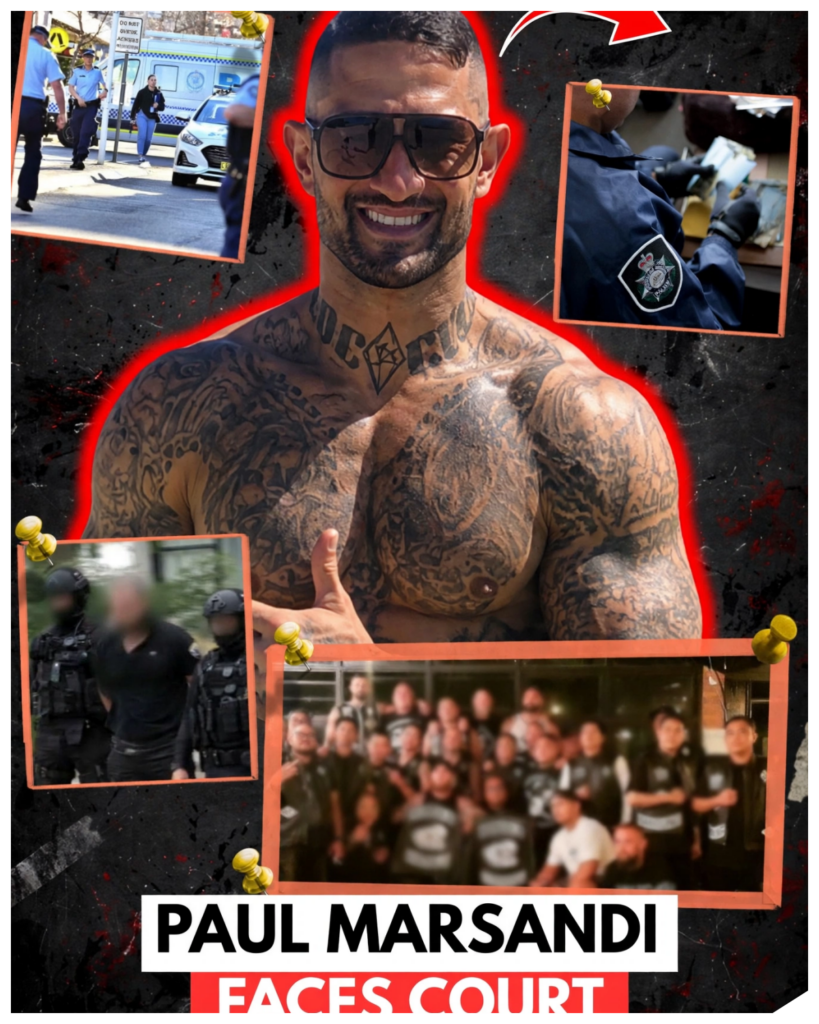
In 2014, in a car park in Port Kennedy, south of Perth, CCTV cameras captured a man swinging a baseball bat again and again into another man lying on the ground before stomping on him.
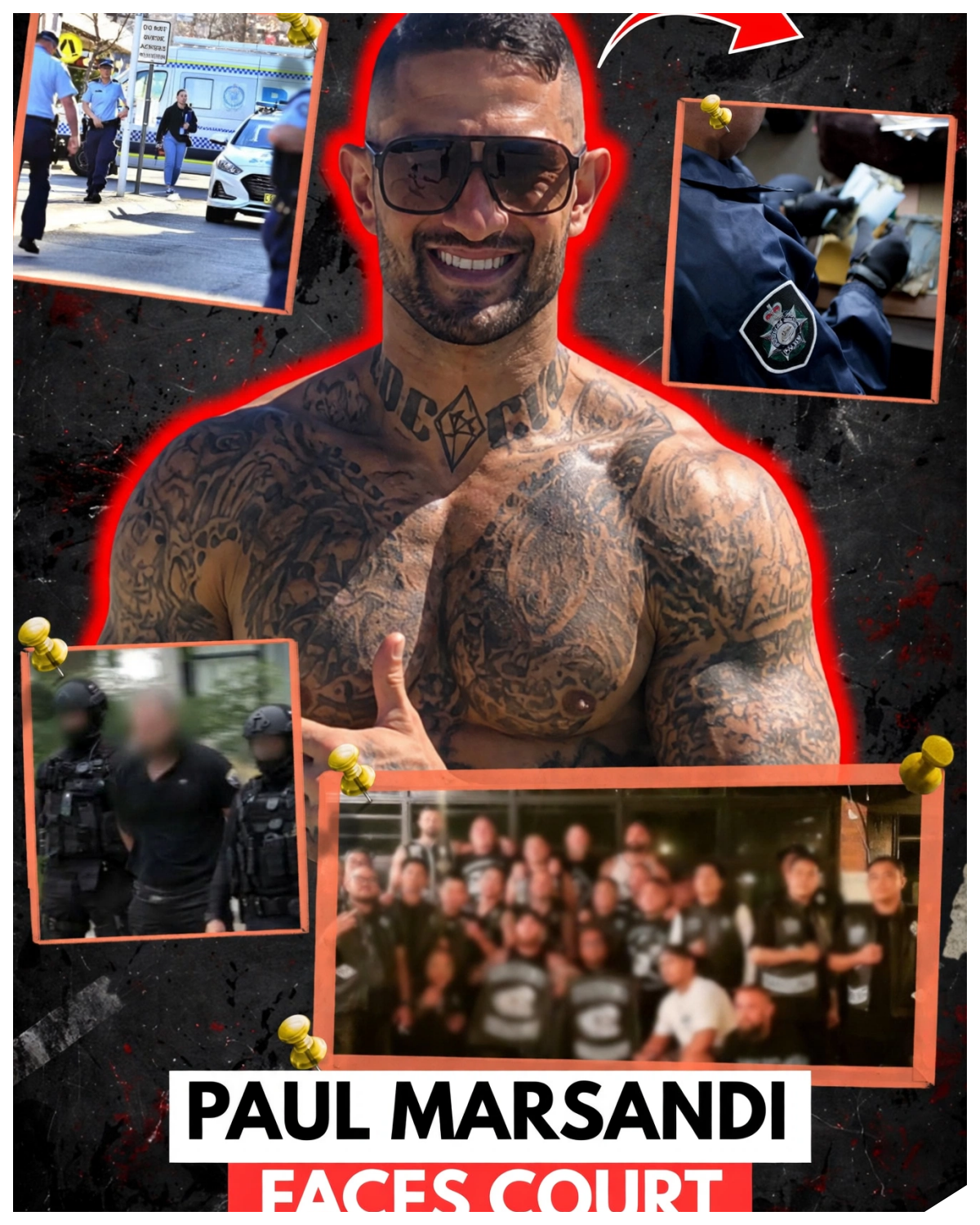
The footage was clear enough and brutal enough that when it was eventually shown in a Western Australian court, it needed no further explanation for what had happened.
The man holding the bat was Paul Marandi, at the time vice president of the Rebels Rockingham chapter, one of the largest outlaw motorcycle clubs in the country.
The dispute that led to that attack was on the surface almost absurdly small.
Not drugs, not territory, not a rival club, a jeep.
An argument over who actually owned it.
Before we go further, a note on how this video is put together.
What’s covered in this hook and the parts that follow is drawn from court reporting and independent news coverage cross-cheed across multiple sources.
Masandi has more recently spoken publicly about his own life in a podcast interview, including a claim that he survived an assassination attempt.
This account wasn’t able to independently verify that specific claim through court records or established news reporting.
And we’re not going to present it with more confidence than the evidence actually supports.
Where this video relies on Masandi’s own account rather than independently confirmed reporting, we’ll say so directly.
What is independently confirmed is the world Masandi was operating in.
Perth through the 2010s was the site of a genuine sustained turf war, the Rebels against the Rock Machine, a Canadian club that had opened its own Perth chapter and was treated by the Rebels as a direct territorial threat.
Firebombed cars, torched tattoo parlors, brawls at nightclubs and MMA events.
A former rebel state president shot dead at a public drag racing event in front of his own family.
Masandi held a senior position inside one of the clubs at the center of that conflict during the years it was at its most volatile.
In this video, we’ll go through what’s actually documented about Pulma Sandandy, the 2014 attack that put him in front of a court, the broader rebels rock machine conflict he was operating inside at the time, and what’s changed for him since, including the parts of his more recent story that this channel can’t verify with the same confidence as the rest.
If you’re new here, this channel covers organized crime history across Australia and New Zealand using court records and verified public reporting.
No dramatizing, no glorifying.
Subscribe and turn on the bell if you want to see where this one goes.
We’ll start with the footage that put Paul Marandi in front of a Western Australian judge.
There isn’t much independently documented about Paul Marandi’s life before he appears in Western Australian court records connected to the 2014 Port Kennedy attack.
This account wasn’t able to establish through verified reporting when he was born, where he grew up, or when he first became involved with the rebels.
That gap is worth stating plainly rather than filling with assumption.
Unlike several other figures this channel has profiled, Marzandi’s early history simply isn’t part of the public record in the way his later, better documented conduct is.
What is confirmed is that by 2014, Mandi held the position of vice president within the Rebels Rockingham chapter in Perth’s southern suburbs, a genuine leadership role within one of Australia’s largest outlaw motorcycle clubs, not a peripheral or honorary title.
That position placed him inside a specific well doumented period of tension in Perth’s outlaw motorcycle club scene.
One this account will return to in more detail later.
The incident that produced Marandi’s most significant public record began according to court reporting with a dispute over a Jeep, specifically a disagreement over who actually owned the vehicle.
It’s worth pausing on how small that underlying grievance sounds set against what actually followed.
On 3 December 2014, in a car park in Port Kennedy, CCTV cameras captured Marandi using a baseball bat to strike a man named Robin Yaron repeatedly before stomping on him as he lay on the ground.
The footage, later played in the Western Australian District Court, was described as grainy but unambiguous, clear enough to show blow after blow landing without any real room for dispute over what had physically happened.
The injuries Yarn suffered were severe.
According to court reporting, he was left with life-threatening injuries, including a broken jaw, a broken nose, skull fractures, a fractured cheekbone, a broken finger, and a fractured wrist.
It’s the kind of injury list that reflects a sustained deliberate beating rather than a single impulsive blow, consistent with what the CCTV footage itself apparently showed.
Masandi’s defense, when the matter reached court, didn’t dispute that he’d carried out the attack.
Instead, his lawyers focused on explaining why.
According to their submissions, Masandi didn’t actually know Yarn personally, but was aware of his reputation.
Described in court as someone considered a dangerous man within the circles both men moved in.
The defense argued Masandi had feared Yaron might be carrying a firearm, and that this fear was part of what explained the way he’d reacted.
It’s worth being careful about how to weigh that explanation.
In keeping with the standard, this channel applies consistently.
A defendant’s own account of their state of mind presented through their legal team as mitigation isn’t the same as an independently established fact.
It’s an argument made to a court aimed at shaping how a judge understands the offending for the purposes of sentencing, not a neutral description of what genuinely motivated the attack.
What can be said with confidence is that Masandi pleaded guilty to the offense.
He didn’t contest that he’d committed the assault.
The legal argument that followed was about how the court should understand and sentence it, not about whether it had happened.
There’s something worth reflecting on in the specific shape of this incident, particularly given Masandi’s formal position within the rebels at the time.
This wasn’t gang business in any organizational sense.
Not a dispute over territory, not a conflict with a rival club, not an act connected to the drug state this channel has documented in its coverage of other Western Australian bikey figures.
It was on the available evidence a personal dispute over a vehicle that escalated into an act of serious sustained violence carried out by a senior club office holder against a man he barely knew.
Whatever position Marsandi held within Rebel’s formal structure, this particular act of violence reflects something closer to personal volatility than organizational strategy.
A distinction worth carrying forward into the rest of this account because it shapes how the more serious structural conflict Marsandi was also operating inside during this same period should be understood.
To understand the environment Paul Marandi was operating inside when he attacked Robin Yarren in 2014, it helps to step back and look at what had already been happening in Perth’s outlaw motorcycle club scene for the previous 5 years.
The conflict traces back to 2008 when the Rock Machine, a Canadian outlaw motorcycle club with its own long violent history of rivalry with the Hell’s Angels internationally, established its first Australian presence through an existing Nomads chapter.
Early the following year, the club set up a New South Wales chapter around Sydney.
By mid 2009, it had reached Western Australia, establishing a Perth chapter in the suburb of Miree under the leadership of the club’s Canadian president at the time, known within the organization as Critical J.
What actually sparked the specific sustained hostility between the rock machine and the rebels wasn’t simply one club encroaching on unclaimed territory.
According to reporting on the conflict’s origins, the immediate trigger was defection.
Existing rebels members switching allegiance to the newly arrived Rock Machine chapter.
For an organization like the Rebels, which by this point had grown into the largest outlaw motorcycle club in the country with more than 70 chapters nationally and a clear sense of Australia as its own established territory.
Losing members to a foreign club setting up shop in what it considered home ground represented exactly the kind of challenge this channel has documented, triggering serious sustained violence in other cases covered elsewhere.
The conflict escalated steadily rather than exploding all at once.
In July 2010, a brawl broke out between members of both clubs at a Perth nightclub, leaving several people injured.
That October, a vehicle belonging to a Full Patch Rebels member was firebombed.
In November, 15 Full Patch Rebels members rode through Fremantle’s entertainment district.
A deliberate visible show of force apparently intended to provoke a confrontation with the Rock Machine.
Days later, a rebels owned tattoo parlor, Inc.
Was destroyed by a Molotov cocktail attack in the early hours of the morning.
A Rock Machine member was subsequently arrested in connection with the arson.
Within the same window, a further rebels member’s vehicle was firebombed and a rebels member’s home in southern Perth was ransacked and vandalized.
This pattern, arson, brawls, vandalism, each side apparently escalating in response to the last provocation, continued into 2011, and it eventually reached the very top of the rebels Western Australian leadership structure.
On 18 March 2011, Nick Martin, at the time the rebels Western Australian president, a figure this channel has already covered in its documentation of the rebels broader national history, was shot in the arm in his own driveway.
It’s worth noting that this wasn’t the same incident that would eventually take Martin’s life.
That came considerably later in December 2020 at a public drag racing event in an attack this channel has already traced in its coverage of Damian Vela’s own national presidency.
The 2011 shooting represents an earlier chapter entirely.
Evidence that the rebels most senior WA leadership had already survived one serious targeted attempt on their life during this conflict’s early most volatile years close to a decade before the attack that finally killed him.
It’s worth pausing on what this specific detail establishes about the environment Paul Marsandi was operating inside as a Rebels chapter vice president.
This wasn’t a low-level occasional rivalry playing out at the margins of the club’s activity.
It was a conflict serious enough that the state’s most senior rebels figure had already been shot in his own driveway years before Marsandi’s own name appeared in court records.
A conflict that by some accounts remained active and unresolved well beyond the specific incidents this account has traced in detail.
Tension between the two clubs was serious enough at various points that police maintained a heightened security presence even at unrelated court appearances out of concern that members of both organizations being in close proximity to each other, even in a courthouse setting could trigger further violence.
This is the broader context worth holding in mind when considering Massandi’s own 2014 offending without letting it function as an excuse for what he specifically did.
The Port Kennedy attack on Robin Yaron wasn’t, as this account established in its previous part, connected to the rock machine conflict directly.
It was a personal dispute over a vehicle escalating into serious violence between two men with no apparent organizational connection to each other.
But it took place against the backdrop of an environment where Masandi, as a senior office holder within a rebels chapter, had spent years operating inside a club actively engaged in one of Western Australia’s most serious and sustained outlaw motorcycle club conflicts.
An environment where violence, firebombings, and targeted attacks against senior figures were an established recurring feature of daily organizational life, not a rare or shocking departure from it.
It’s worth being precise about what this connection does and doesn’t establish in keeping with the standard this channel applies consistently.
There’s no evidence in anything covered by this account that Mosandi’s attack on Yarin was connected to the rock machine conflict specifically or that it was carried out on behalf of or with the knowledge of the broader club leadership.
What the broader conflict does illustrate is the kind of environment that shapes a person’s baseline expectations around violence, threat, and how disputes get resolved.
A man who’d spent years as a senior figure within a club actively engaged in firebombings, drive-by shootings, and attacks on rival gang leadership might reasonably be expected to have a different threshold for what counts as an appropriate proportionate response to a personal dispute than someone operating entirely outside that world.
Not as an excuse, but as context for understanding how someone arrives at the specific disproportionate violence this account has already documented in detail.
There’s a further point worth drawing out here, one connected to the broader pattern this channel has documented across its coverage of Western Australian organized crime specifically.
This channel’s earlier account of Damian Vela’s national presidency traced how WA’s rebels chapter experienced sustained serious instability across more than a decade.
The rock machine conflict this account has just detailed.
Mc Martin’s eventual killing in 2020 and the 2024 mass exodus of members led by Carla Brookke connected in part to unresolved grievances over how the club’s national leadership had handled the aftermath of Martin’s death.
Mandi’s own conduct in 2014 sits chronologically in the middle of this longer arc after the rock machine conflict’s most violent opening years, but well before the internal crisis that would eventually see dozens of WA members leave the club entirely.
It’s a reminder that the Rebels Western Australian chapter across the period this channel has now documented in some detail wasn’t simply dealing with one serious challenge at a time.
It was managing an external territorial war, internal leadership instability, and in Marandi’s specific case, senior office holders capable of serious personally motivated violence entirely separate from either of those broader conflicts.
Three distinct sources of volatility, all playing out within the same organization across roughly the same 15-year stretch, this channel has now traced across multiple separate accounts.
What happened to Marandi personally once his own case moved through the court system and what’s happened to him in the years since is where this account turns next, including the parts of his more recent story that, as this account noted at the outset, rest on considerably thinner sourcing than everything covered so far.
There’s a detail about the Port Kennedy attack worth returning to because it changes the shape of the story in a meaningful way.
Paul Marsandi wasn’t the only rebels figure charged over what happened to Robin Yarin.
According to the same court reporting that documented Marsandi’s guilty plea, two further men connected to the rebels Rockingham chapter were also charged in relation to the same attack.
One was Christopher Allen, described in reporting as a rebels nominee.
The term used within outlaw motorcycle club culture for someone in the early stages of prospective membership, not yet a fully patched member.
The other was Jason Gastroof, who held a considerably more senior position, president of the Rockingham chapter itself.
Both men pleaded guilty alongside Marandi.
It’s worth pausing on what this detail actually establishes because it meaningfully complicates the picture this account built in its earlier parts.
If the attack had involved Massandi alone, the most reasonable reading would be exactly what this account initially suggested.
A personal dispute escalating into disproportionate individual violence carried out by someone who happened to hold a formal position within the club, but wasn’t acting in any organizational capacity when he did it.
The involvement of the chapter’s own president alongside a prospective member still working toward full patch status suggests something closer to a coordinated group response.
Not necessarily ordered by the club in any formal sense, but involving enough of the chapter’s actual leadership structure that it’s harder to describe as purely incidental to Mandi’s own club role.
This account isn’t in a position to say definitively how the attack was actually organized or what role each of the three men played individually beyond what’s already been established about Marandi’s own direct physical involvement captured on the CCTV footage this account has already described in detail.
What can be said is that a dispute over a jeep, which one man believed was serious enough to warrant a violent response, ended up drawing in not just that man, but his chapter’s own president and a prospective new member as well.
Three people connected to the same local rebels leadership structure.
All eventually facing criminal charges over a single sustained beating that left its victim with life-threatening injuries.
It’s worth being honest at this point in the account about a genuine gap in what this channel has been able to establish through available reporting.
This account has confirmed through independent multiple source verification that myandi Allen and Gastroof were each charged and that each pleaded guilty.
What this account hasn’t been able to confirm through the reporting available to it is what sentence any of the three men actually received once their p were finalized.
That’s a genuine limitation in the public record as this account currently understands it.
Not a detail this channel has chosen to omit and it’s worth stating plainly in keeping with the standard this channel applies consistently across every case it covers.
Rather than filling the gap with an assumed outcome, this account can’t actually verify.
What this account can offer instead is some reflection on what the involvement of three rebels figures spanning from a prospective member through to the chapter’s own president suggests about how disputes like this one could actually unfold within an organization like the rebels during this period.
This channel’s broader coverage of the club through its accounts of Alex Vela’s decadesl long leadership and Damen Vela’s own more recent presidency has documented an organization where personal loyalty and direct immediate response to perceived threats against fellow members appears to function as a genuine operative value not simply rhetoric.
A dispute that began on the available evidence as a disagreement between Masandi and Yaron over vehicle ownership evidently escalated into something the chapter’s own president considered worth becoming personally involved in.
Whether out of genuine loyalty to a fellow senior member, a broader sense that Yarin’s reputation represented a threat worth addressing collectively, or some combination of both isn’t something this account can determine with confidence based on what’s currently documented.
There’s a useful point of comparison here, connecting back to this channel’s earlier coverage of the broader Rock Machine rebels conflict.
That conflict, as this account has already traced in detail, was characterized by exactly this kind of collective, coordinated response to perceived provocations.
Firebombings carried out in retaliation for earlier firebombings, a show of force ride through Fremantle intended to provoke a reaction, brawls involving significant numbers of members from both sides rather than isolated one-on-one confrontations.
The Port Kennedy attack, whatever its actual internal dynamics, fits a broadly similar pattern.
A personal dispute that drew in multiple senior figures from the same chapter rather than remaining contained to the two individuals directly involved in the original disagreement.
It’s a pattern this channel has now documented recurring across multiple different contexts within the rebels specifically an organizational culture where disputes once they escalate past a certain point tend to draw in collective rather than purely individual responses.
It’s worth being careful once again not to overstate what this pattern actually proves about Marandi’s own personal culpability.
He was the one who wielded the baseball bat.
According to the CCTV footage this account has already described, that specific direct physical role isn’t in dispute, and his guilty plea confirms it.
Whatever role Allen and Gastroof played, and whatever the full internal dynamics of how the attack came together doesn’t diminish Mandi’s own direct responsibility for the specific violence he personally carried out.
What the broader involvement does add is context.
A reminder that even an incident this account initially framed as reflecting personal volatility rather than organizational conduct sits once the fuller cast of people charged is accounted for.
Closer to the kind of collective chapter level response this channel has documented as a recurring feature of how the rebels have operated across multiple different conflicts and contexts.
What happened to Marandi in the years following this case, including the claims he’s made more recently about surviving an assassination attempt and his apparent move away from the rebels toward the Mongols, is where this account turns next.
With the appropriate caution, this channel has already flagged regarding how much of that more recent story can actually be independently verified.
Whatever happened to Paul Marandi in the years after his 2014 conviction?
It took place inside a rebels Western Australia chapter that was by the end of that decade approaching one of the most significant leadership crises in its history.
It’s worth laying out what this account can actually confirm about that broader crisis before turning to Marandi’s own more recent story because the gap between the two is instructive in itself.
Nick Martin, the rebels Western Australian president.
This account has already introduced in its coverage of the rock machine conflict led the chapter for roughly a decade.
By late 2020, according to reporting on his final months in the role, Martin had been stripped of the presidency following suspicion that he’d misappropriated club funds and was specifically blamed for a mass defection of patched members away from the rebels and into the Mongols.
It’s worth being precise about the timing here.
This wasn’t a slow, ordinary leadership transition.
It was a chapter in genuine crisis.
Its own long-erving president removed under a cloud of internal suspicion in the immediate aftermath of losing a significant portion of its membership to a rival club entirely.
Weeks later, on 27th December 2020, Martin was shot and killed at a public drag racing event at Perth Motorlex in front of his own family.
A targeted sniper style attack that also grazed a 5-year-old boy and wounded a bystander seated near Martin.
The gunman, later identified as Benjamin Luke Johnston, a former mercenary and army reservist, wasn’t apprehended for close to a year.
Martin’s own stepdaughter, present when it happened, later described trying desperately to keep him alive as paramedics worked on him.
It’s worth holding this specific sequence of events in mind.
A president removed amid suspicion and blamed for a mass exodus to a rival club followed within weeks by his assassination because it represents exactly the kind of chapterwide instability this account has already documented as a recurring feature of the Wah rebels across multiple periods.
This channel’s earlier coverage of Damen Vela’s national presidency traced a further later wave of W departures in 2024 led by Carl Lebrook connected to unresolved grievances over how the club’s national leadership had handled matters in the years since Martin’s death.
Taken together, these two documented waves of defection, one around Martin’s own downfall in late 2020, a second around Lebrook’s departure in 2024, suggest a Wrebbles chapter that spent much of the 2020s in a state of genuine recurring internal crisis, with members leaving for the Mongols, specifically at more than one distinct point across that period.
This is the specific context worth holding against what Myandi’s own Instagram presence currently suggests, an apparent affiliation with the Mongols in Perth rather than the rebels chapter he held a senior position within back in 2014.
This account cannot confirm through any independently verified reporting exactly when Massandi made that transition or whether it connects directly to either of the two documented defection waves already covered in this account.
It’s entirely possible his own move happened independently of both for reasons this account has no visibility into at all.
What can be said honestly is that the broader environment he would have been operating inside as a WA rebels figure across the second half of the 2010s and into the 2020s was one of sustained genuine instability.
An environment where senior figures leaving the club for a rival organization had by 2020 at the latest become an established recurring pattern rather than an isolated event.
It’s worth returning at this point to the specific claim this account flagged at the very outset.
Masandi’s own account given in a 2025 podcast interview that he survived an assassination attempt.
This account has now searched specifically and repeatedly for independent verification of that claim.
Court records, news reporting connected to a shooting or attack targeting Masandi by name and hasn’t been able to locate any.
That absence is worth treating carefully rather than dismissively.
It doesn’t mean the claim is false.
Genuine attacks on bikey figures in Western Australia during this period were common enough, as this account has already documented extensively through its coverage of Nick Martin’s own killing and the broader rock machine conflict, that an attack on a comparatively less prominent figure like Masandi could plausibly have occurred without generating the same volume of dedicated news coverage a sitting state president’s assassination would.
At the same time, this account encountered during its research a genuinely similar story belonging to a different person entirely.
A former bikey enforcer publicly identified in reporting as Les Grantham, whose own account of being shot, left for dead, and having his tattoos burned off outside Rockingham Hospital following a falling out with his own gang has been covered directly in independent news reporting.
Distinct from Marandi’s story.
It’s worth being direct about why this matters here.
It establishes that this general kind of story, a senior WA bikey figure surviving a serious targeted attack connected to internal club conflict genuinely happened to at least one documented person during this broader period.
It doesn’t establish that it also happened to Marsandi specifically.
And this account isn’t going to imply a connection between the two men’s stories that the evidence doesn’t actually support.
What this leaves honestly is a genuine gap in what this account can tell you about the more recent chapter of Paul Marandi’s life.
The 2014 attack on Robin Yarn is extensively independently documented.
The CCTV footage, the court proceedings, the co-acuse, the defense submissions.
What happened to him afterward, including his own account of surviving an attempt on his life and his apparent transition from the rebels to the Mongols, rests on considerably thinner ground, a podcast interview and a personal social media presence, neither of which this account has been able to cross-check against independent news reporting or court records in the way it’s been able to verify everything covered in the earlier parts of this account.
There’s a broader point worth making here, one that connects to how this channel approaches every case it covers.
The absence of independent verification doesn’t automatically mean a claim is untrue.
Plenty of genuine events, particularly ones involving figures who aren’t at the very top of an organization’s public profile, simply don’t generate the kind of sustained media coverage that makes later verification straightforward.
But it does mean this account has to be honest about the difference between what it knows with confidence and what it’s simply been told by the person whose own story is being examined without independent confirmation.
That’s the position this account is genuinely in regarding the more recent chapter of Paul Sandi’s life.
And rather than smoothing over that gap for the sake of a more complete sounding story, this account is choosing to name it directly.
There’s a pattern worth naming directly at this point in the account because Paul Marsandi’s more recent public story, even setting aside the specific verification limits this account has already flagged, follows a shape this channel has now encountered more than once across its coverage of Australian organized crime figures.
A man holds a senior position within an outlaw motorcycle club during a period of serious documented violence.
Something happens, a falling out, a departure, in some cases, a genuine attempt on his life that separates him from that world.
Years later, he appears in a podcast interview, offering his own account of survival and framing his current position as something closer to redemption than simple retirement.
This channel’s coverage of Vince Focarelli followed close to this exact structure.
A disputed commoner leadership claim, a documented pattern of targeted violence that ultimately took his stepson’s life, and a subsequent public life built around podcast appearances warning young people away from the world he’d left behind.
This account’s own research into Marandi’s case surfaced a genuinely similar story belonging to Less Granthm.
Shot, left for dead, and now, according to reporting on his own more recent public statements, taking what’s been described as his first steps toward redemption.
It’s worth being fair to what this pattern might actually represent, rather than treating it with automatic suspicion.
People who spend years inside genuinely violent criminal environments and survive long enough to reach middle age do sometimes undergo real meaningful change.
This channel has documented that possibility seriously in its coverage of Fakarelli specifically without either fully endorsing or dismissing his own account of it.
There’s no inherent reason to assume Mandi’s own podcast appearance reflects anything less genuine.
Surviving a serious attempt on one’s life if that’s what actually happened to him would be exactly the kind of experience that might reasonably prompt someone to reassess the life that produced it.
At the same time, it’s worth naming plainly what this recurring pattern also represents from a purely structural standpoint, separate from any judgment about individual sincerity.
A podcast interview is not a court record.
It’s not independently fact-checked in the way news reporting typically is, and it doesn’t carry the same institutional accountability a formal legal proceeding does.
The person telling their own story controls which details to include, which to omit, and how to frame the more difficult or ambiguous parts of their own history.
This isn’t a criticism specific to Marsandi, Focarelli, or Granthm individually.
It’s simply a description of what a podcast interview structurally is.
And it’s worth this account being honest about that distinction rather than treating a compelling personal narrative as equivalent to verified fact simply because it’s dramatic and internally consistent.
There’s a further pattern worth drawing out, one connected to this channel’s broader documentation of former bikey figures across Australia specifically.
This account has now covered Toby Mitchell’s own transition from Mongol’s president to social media fitness personality built substantially around his own survival of earlier assassination attempts.
It’s covered Focarelli’s shift into podcast appearances centered on his stepson’s unsolved death.
And it’s now encountered through researching Marsandi specifically at least two further figures.
Marsandi himself and Les Grantham, whose more recent public presence follows a broadly similar arc.
Surviving serious targeted violence connected to outlaw motorcycle club life appears to function across multiple documented cases now as a kind of currency in itself.
A story compelling enough to build a public platform around regardless of how completely verified every specific detail of that story turns out to be under closer examination.
This is worth reflecting on honestly because it raises a genuine question this channel has to grapple with each time it encounters a case built partly on this kind of source material.
If a significant portion of what’s publicly known about a figure comes from their own retelling delivered years after the fact to an audience receptive to exactly this kind of survival narrative.
How much weight should that retelling actually carry against the parts of the record that are independently verifiable?
This account’s answer, consistent with how it’s approached every other case it’s covered, is to treat the two categories of information differently and say so explicitly, which is exactly what this account has tried to do throughout its coverage of My Sandi specifically.
The 2014 attack on Robin Yaron is treated as established fact because it’s independently extensively documented.
The assassination attempt and the transition to the Mongols are treated as claims this account can’t currently verify because that’s genuinely what they are regardless of how plausible they might be given everything else this account has documented about the broader environment Marsandi was operating inside.
There’s a broader reflection worth offering here about why this particular kind of podcastdriven redemption narrative has become such a recurring feature of how former Australian outlaw motorcycle club figures present themselves publicly once their formal involvement in that world has ended one way or another.
Part of it likely reflects genuine audience demand.
This channel’s own coverage of figures like Fakarelli and Mitchell has demonstrated there’s a real sustained interest in hearing directly from people who lived through this world told in their own words with the specific texture and detail that only a first person account can provide.
Part of it may also reflect something more practical.
A former bikey figure with a documented history of violence, whatever the specific circumstances, faces real ongoing challenges building a conventional life once that chapter closes.
And a public platform built around exactly that history represents one of the more accessible paths available to generate income and relevance afterward.
Neither of those explanations is necessarily cynical on its own, but together they help explain why this account should approach any single figure’s own retelling of their more recent history with the same careful source by source scrutiny it’s applied throughout its coverage of Marsandi specifically.
Not because the individual telling the story is necessarily being dishonest, but because the format itself, a podcast interview built around survival and redemption, has structural incentives that don’t always align neatly with the kind of complete, unflinching accuracy a court record or independent news investigation would demand.
What this account can offer in place of a fuller, more definitively verified account of Masandi’s life since 2014 is this, a genuinely well doumented act of serious violence carried out alongside senior figures from his own chapter, followed by a period this account genuinely cannot see into with confidence, followed by a public reappearance built around a story of survival this account has no way of independently confirming or denying.
That’s a less complete picture than this channel has been able to offer for most of the figures it’s covered.
And rather than disguise that incompleteness behind confident sounding narration, this account has chosen to make the gap itself part of the story.
Paul Mandi’s case is the second time this channel has had to draw an explicit line mid account between what’s independently verified and what rests on a single unconfirmed source.
The first was Joshua Lucy, whose own story, a bank manager turned bikey chapter president, held up well for its early well-documented chapters before running into the same kind of gap this account has just traced with Marandi, a more recent history that circulates widely online, repeated across multiple channels and platforms without ever being clearly traceable back to an original, independently verifiable source.
It’s worth reflecting on why this specific pattern keeps recurring because it says something genuine about how information about former organized crime figures actually moves once their most newsworthy chapter has passed.
A serious criminal trial generates sustained contemporaneous news coverage almost by default.
Court reporters attend hearings, judgments get published, sentencing remarks get quoted directly.
That kind of coverage naturally tapers off once a case resolves, particularly for figures who aren’t among the most senior leadership within whatever organization they were connected to.
What tends to fill that gap in the years afterward isn’t necessarily silence.
It’s often exactly the kind of content this channel has now encountered twice in close succession.
Podcast appearances, social media presence, and the kind of firstp person retelling that doesn’t require the same institutional scrutiny a court proceeding does, but that can still spread widely and become in practice the dominant version of a person’s more recent story simply through repetition.
There’s a specific mechanism worth naming here because it’s genuinely relevant to how this channel and every other channel covering similar material actually operates.
Once a podcast interview exists describing a specific claim in a compelling, detailed way, that interview becomes source material other creators can draw on.
A second channel might reference the same claim, treating the original interview as sufficiently authoritative to build further content around.
A third might do the same, citing the second channel rather than going back to the original source.
Within a relatively short period, a claim that originated from a single unverified firstperson account can appear to be wellestablished simply because it’s been repeated across enough different pieces of content, not because any additional independent verification has actually taken place at any point along that chain.
This channel has tried across every account it’s produced to interrupt that chain rather than participate in it, checking claims against court records and independent news reporting wherever possible.
And being explicit as this account has been throughout its coverage of Marsandi when that verification simply isn’t available.
It’s worth being honest about the cost of that approach because it’s a genuine trade-off rather than a costless virtue.
A version of this account that simply repeated Marsandi’s own podcast claims as established fact would likely read as more complete, more dramatic, and probably more satisfying as a piece of storytelling.
It would also risk contributing to exactly the pattern this account has just described.
Treating an unverified firstp person claim as though it carried the same evidentiary weight as a court judgment simply because presenting it that way makes for a better story.
It’s worth considering briefly what’s actually at stake in getting this distinction right beyond simple accuracy for its own sake.
This channel’s earlier coverage of Steven Stone traced in considerable detail what can happen when institutions treat unreliable or insufficiently tested accounts with more confidence than they deserve.
A wrongful conviction stretching across two decades built substantially on witness testimony that later collapsed under genuine scrutiny.
That’s an extreme formal example of a much broader problem.
The gap between how confidently a claim is presented and how thoroughly it’s actually been tested tends to matter enormously in ways that aren’t always obvious until something goes wrong.
A true crime channel repeating an unverified claim about a living person’s recent history isn’t remotely comparable in scale or consequence to a wrongful murder conviction.
But the underlying discipline, distinguishing between what’s actually been established and what’s simply been asserted repeatedly and confidently enough to feel established, is the same discipline this channel has tried to apply consistently.
Whether the stakes are a two decade prison sentence or a single video’s account of a bikey figure’s more recent life.
There’s a further point worth making about what this specific approach actually costs a channel like this one in practical terms because it’s worth being honest about the trade-off rather than presenting careful verification as an unambiguous good with no downside.
Viewers generally prefer complete, confidently told stories over accounts that pause repeatedly to flag their own uncertainty.
A version of Marsandi’s story that simply asserted he survived an assassination attempt without qualification would almost certainly perform better by most conventional measures of audience engagement than the version this account has actually produced.
One that keeps returning to the specific boundary between what’s confirmed and what isn’t.
This channel has made a deliberate choice across every account it’s produced to accept that trade-off rather than resolve it in favor of a more dramatic, less accurate story.
It’s worth closing this reflection by returning to what can actually be said with confidence about Paul Mysandi specifically because that’s ultimately the point of everything this account has traced.
He held a senior position within a rebels chapter during one of the most volatile periods in that chapter’s documented history.
He was directly personally involved in a serious sustained act of violence against a man he barely knew.
Captured clearly enough on CCTV that his own guilty plea followed without meaningful dispute over what had physically happened.
That violence involved not just him but his chapter’s own president and a prospective member as well, suggesting something closer to a collective response than an isolated individual act.
And at some point after that conviction, according to his own more recent public account, his life took a considerably different turn.
One this account genuinely cannot verify with the same confidence it’s applied to everything that came before it.
That’s a less tidy conclusion than most of the accounts this channel has produced.
It’s also, this accountant would argue, a more honest one, and honesty about the limits of what’s actually known is worth more in the end than a cleaner story built on claims that haven’t actually been tested.
Paul Marandi’s story, as this account has traced, it is really two different stories sitting side by side.
One told with confidence, one told with genuine, acknowledged uncertainty.
It’s worth closing by pulling both threads together rather than letting the second one simply trail off into the reflections on verification this account has already offered.
The first story is the one this account can stand behind fully.
In December 2014, in a car park in Port Kennedy, a dispute over a jeep escalated into a sustained brutal beating carried out with a baseball bat that left Robin Yarn with lifethreatening injuries.
Masandi wasn’t acting alone.
His own chapter’s president and a prospective member were charged alongside him.
All three eventually pleading guilty.
It happened inside a rebels chapter that had spent years operating within one of Western Australia’s most sustained and violent outlaw motorcycle club conflicts.
A conflict this account has traced from its origins in 2009 through firebombings, explosive seizures, and eventually the assassination of the chapter’s own long-erving president in 2020.
Whatever else remains uncertain about Masandi’s life, that specific chapter of it is established as clearly as anything this channel has documented.
The second story is the one Masandi himself has told more recently.
Survival, a falling out with the world he once belonged to, a transition to a different club, and a public reappearance built around exactly the kind of redemption narrative this account has now traced across multiple figures in its broader coverage of Australian organized crime.
This account has been honest throughout about not being able to independently verify that story, and it’s worth being equally honest about what that actually means going forward.
It doesn’t mean the story is false.
It means this channel, working from the tools and sources available to it, wasn’t able to confirm it to the standard it applies to everything else it presents as established fact.
There’s a specific reason this distinction matters beyond simple accuracy, and it’s worth stating plainly as this account closes.
Marsandi is, as far as this channel can establish, a private individual now.
Not a sitting club president, not someone currently facing charges, not a figure this channel has any reason to believe poses an ongoing public concern beyond the documented history already covered here.
Treating his own account of his more recent life with appropriate caution isn’t about doubting him specifically or suggesting his story is more likely false than true.
It’s about applying the same standard this channel applies to every figure it covers, regardless of whether that standard produces a more or less satisfying final account.
There’s a broader thread worth pulling through one final time because it connects Marandi’s individual story back to everything else this channel has documented about the rebels Western Australian chapter specifically.
This account has now traced that chapter’s history across multiple separate pieces.
The rock machine conflict’s opening violence in 2009 and 2010.
Nick Martin’s own survival of an earlier shooting in 2011, his eventual removal from the presidency and assassination in 2020.
The further wave of departures under Carl Lebrook in 2024, and now sitting inside the middle of that longer timeline, Marsandi’s own 2014 conviction alongside two fellow chapter figures.
Taken together, these accounts describe an organization that spent close to 15 years in a state of recurring serious instability, external war with a rival club, internal leadership crisis, individual acts of disproportionate violence, and periodic mass exoduses to competing organizations.
Myandi’s own story is one thread within that much larger pattern, not a fully separate case study standing on its own.
What this account genuinely can’t tell you is where Marandi’s own story sits today, or what the years between his 2014 conviction and his more recent public reappearance actually looked like.
That gap is real, and this account has chosen to name it rather than paper over it.
Some viewers will find that unsatisfying, and that’s a fair reaction to have.
A story with an acknowledged hole in the middle of it is by most conventional measures a less complete piece of storytelling than one that fills every gap with confident narration.
This channel has made a consistent choice across every account it produces to accept that cost rather than present claims it can’t actually stand behind with the same confidence it applies to independently verified fact.
What remains in the end is this.
A man who held real senior authority within one of Australia’s largest outlaw motorcycle clubs during one of the most violent periods in his own chapter’s documented history who was directly personally responsible for a serious act of violence against someone he barely knew alongside colleagues who held even more senior positions than his own.
Whatever came after that, survival, transition, reinvention, or something considerably less dramatic than any of those words suggest is a chapter this account is honestly not in a position to write with the confidence its earlier parts have offered.
This channel covers organized crime and gang history across Australia and New Zealand using court records and verified public reporting rather than speculation.
If you’re new here, that’s the standard we hold to on every case, including, as this account has demonstrated throughout, the cases where that standard means acknowledging what we simply don’t know.
Subscribe and turn on the bell if you want to see where [music] the rest of this world’s story goes next.


